Concept and Inspiration
A hillside can hide a world far more complicated than its gentle outline suggests. In karst country, water gradually dissolves soluble rock such as limestone and dolomite. Over time, that process helps shape unusual ground surfaces, underground drainage routes, and caves beneath the visible landscape. What looks solid and familiar from above may contain a network of passages below. [1] [2]
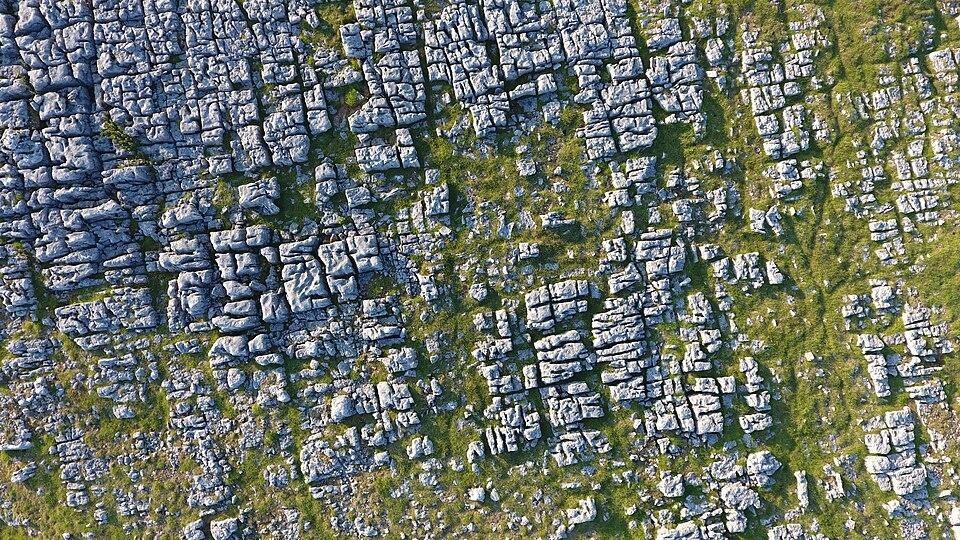
Figure 1. Exposed limestone pavement, its pale rocky surface divided by natural cracks and grooves.
Photo: Northernhenge | cc0
One striking surface feature is limestone pavement: exposed rock cut by natural fissures into shapes that can resemble laid paving stones. The resemblance is an accident of geology, not human construction. A wide view can look almost walkable, yet the broken surface tells a different story when you get close. [3]
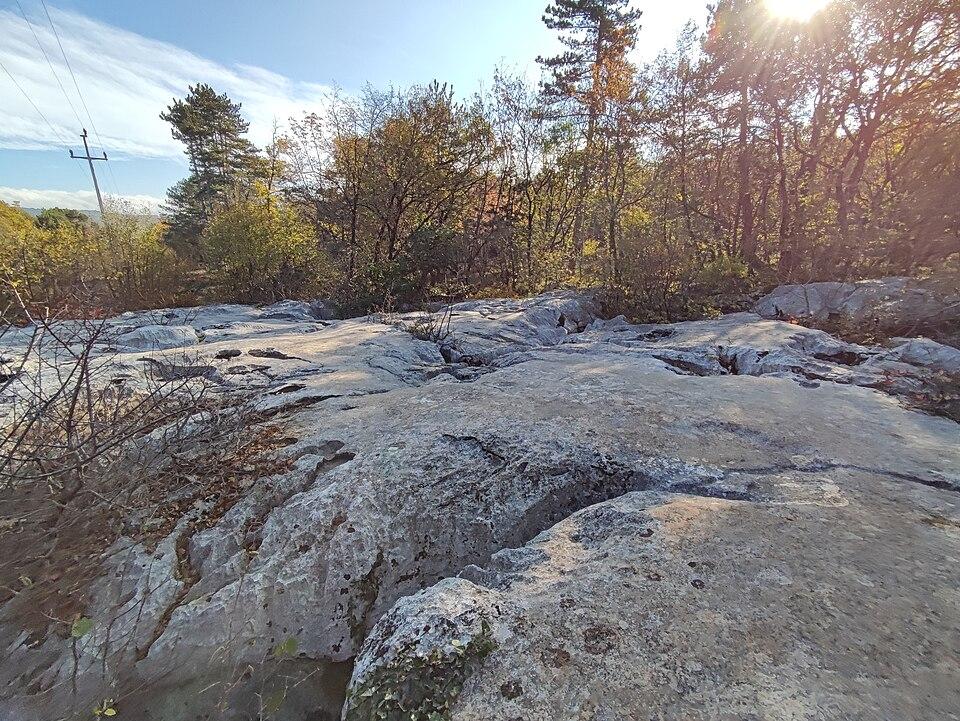
Figure 2. Weathered limestone pavement surrounded by vegetation, showing irregular exposed rock at ground level.
Photo: Ajznponar | ccby-sa4.0
Karst has another surprise: a sinkhole is a hollow or opening in the ground, sometimes formed as rock dissolves or surface material collapses. Some take the shape of broad bowls; others expose steep edges or routes into the ground. Surface water can also disappear into openings connected to underground drainage. A landscape can change character dramatically over just a few steps. [4] [1]
Below the surface, water carrying dissolved carbon dioxide can help widen cracks in limestone into cave passages. Dripping water also participates in the formation of mineral deposits. Those deposits are more than beautiful shapes: researchers study their chemistry and growth to learn about changing water supply and past environmental conditions. A study of Croatia's Nova Grgosova Cave, for example, documented seasonal changes in cave-air carbon dioxide and the chemistry of dripping water. [2] [5] [6]
Cave networks need not occupy one tidy, flat layer. Research on Isla de Mona in Puerto Rico describes caves at different elevations, linked to uplift and changes in sea level. That real setting offers a compelling image: a single hillside may hold many routes, some high, some deep, and some separated by long stretches of stone. [7]
At slope3.com, we developed Slope Ball as a colorful journey through that kind of contrast between the world above and the world below. Our creative concept borrows the feeling of moving from open, rounded hills into narrow, shadowy galleries. The course is a playful fantasy rather than a geological model: bright platforms become footholds, black openings interrupt the route, and pointed shapes make the spaces overhead matter as much as the ground beneath you. We chose a simple rolling ball so the changing terrain stays at the center of the adventure.
Story
Our imagined tale begins with Iona, a young mapmaker living above a valley of smooth, striped hills. Her favorite old chart ends in an odd place: a road drawn in faded ink stops at the foot of a hill, then continues on the other side as if the middle of the journey has vanished. Villagers call it a mistake. Iona thinks the missing route might run beneath their feet.
She paints a little orange-and-cream globe with the colors of the valley and imagines sending it along that hidden way. Far underground, the last lantern keeper waits for a message that the upper world has not forgotten him. The globe must cross split ledges and tiny stone perches while dark openings swallow the spaces in between. Sharp silhouettes hang from above, and the familiar hills give way to walls that seem to rise forever. The message is simple; finding a path to deliver it is anything but.
Iona does not draw one perfect line on her map. She leaves room for wrong turns, another try, and the courage to begin again. At the far edge of the imagined passage, a slim band of green light waits like a doorway to the next unknown place. That is the spirit of our Slope Ball story: a small traveler making progress through a much larger world, one well-timed leap at a time.
Gameplay
Your orange-and-cream ball rolls forward automatically along a side-scrolling course. You choose when it jumps: clear a spike or dark gap, land on safe ground, and prepare for the next obstacle. Hitting a dangerous object or falling into a pit ends the current attempt. Each level has a finish marked by a glowing vertical boundary and 100% progress; reaching it completes the level and opens the next challenge.
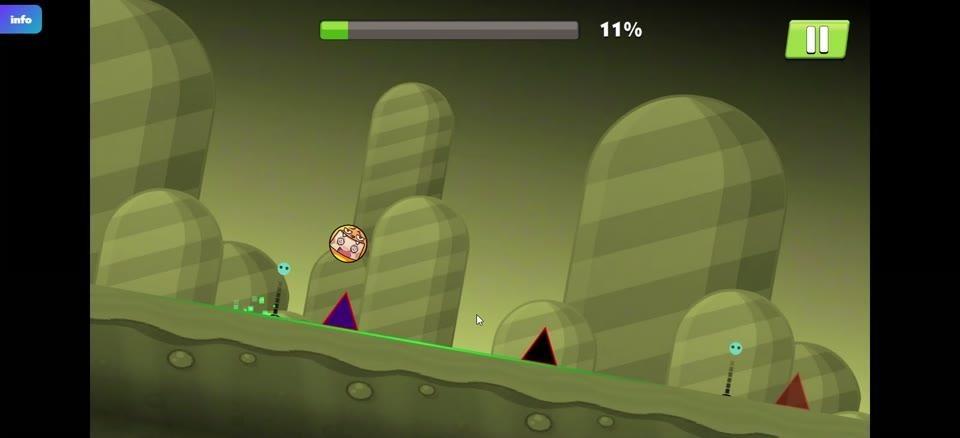
Figure 3. The patterned ball follows a sloping track toward a single sharp obstacle against rounded green hills.
The Ball and Its Landing Surfaces
The player ball is a small orange, cream, and white sphere with a dark, face-like printed pattern. It rolls over diagonal strips of gray-brown earth, some edged in green and dotted with pebble shapes. Raised purple platforms provide longer stretches of solid ground. Their bright, jagged green trim resembles grass and is decorative; the platform itself is the landing surface.
A narrow purple pillar can also catch the ball above a dark opening. These tall posts have thin green tops, so the safe landing area is easy to spot but small. For example, jump before a gap, touch down on the first narrow pillar, then make the next jump after the ball has landed. The course keeps moving, so a late decision can leave the next foothold behind.
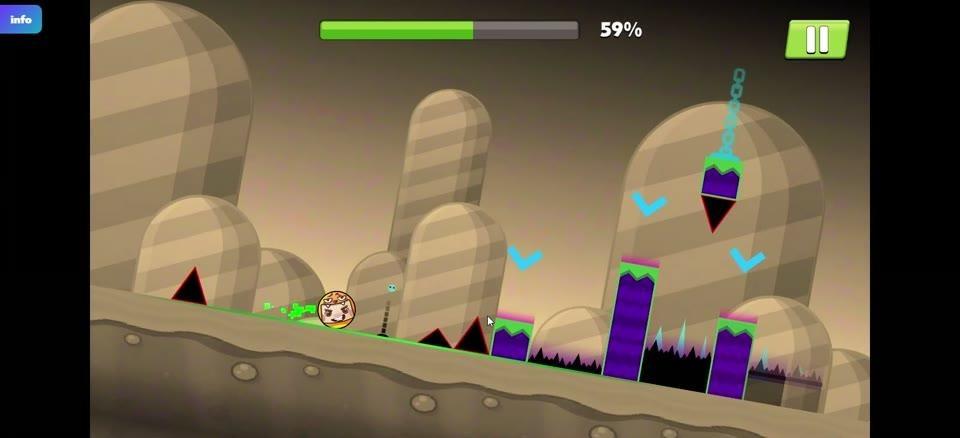
Figure 4. Narrow purple landing pillars rise from dark gaps beneath hanging obstacles.
Spikes, Pits, and Overhead Dangers
Upright triangular spikes come singly or in closely packed rows. Depending on the scene, they may be red and black, purple, or pale cyan. Jump over a single point with enough room to land safely; a row of points demands a jump that clears the whole group. Black gaps are dangerous even when no spikes are visible at the bottom: falling in ends the attempt.

Figure 5. Purple platforms and deep black openings create a broken route with little room for a missed landing.
Not every threat waits on the floor. Large striped purple slabs hang overhead, sometimes with jagged green lower edges. Pointed crystal-like fixtures, with purple and green faces and long dark tips, are also suspended above the route. Both remain still, but touching either costs the attempt. A black, round creature with jagged teeth lurks in one pit and is dangerous on contact. Watch the space above your jump as carefully as the landing below it.
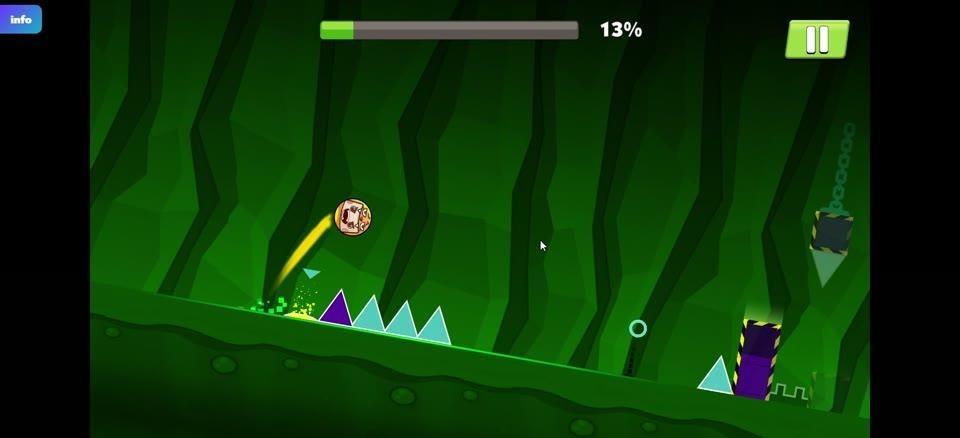
Figure 6. Dark cave scenery frames pale spikes, hanging pointed shapes, and the ball's next stretch of track.
Finishing, Failing, and Trying Again
The thin progress bar across the upper screen fills green as you move through the current level, while a white percentage shows how close you are to its end. At 100%, the glowing grid-like strip marks the finish. Completing that finite course unlocks the next level, and levels you have already unlocked remain available. The percentage tracks distance through the stage; your reward for finishing is access to the next challenge.
Figure 7. The progress display reaches 100% beside the glowing vertical finish boundary.
A collision with spikes, a hanging hazard, or the pit creature, or a fall into a dark gap, ends that run. In Normal Mode, restarting sends the ball back to the beginning and resets the stage meter to 0%. In Practice Mode, you can resume from a checkpoint you have activated. A large orange 3-2-1 countdown appears before play continues after a respawn. There is no fixed limit on retries, so losing a run means rebuilding that run's progress, not losing access to stages already unlocked.
Useful Screen Details
The light-green pause button in the upper-right corner has two white vertical bars. It opens options to resume or restart, return to the map, adjust difficulty, or switch between Normal and Practice modes. A small blue Info tab at the upper-left edge opens the slope3.com game menu. These controls sit outside the running path, leaving the stage itself easy to follow.
Small cyan V-shaped marks hover near some gaps and pillars. Thin cyan chains hang beside suspended objects, and a hollow cyan ring adds detail to one cave scene; the ring and chains are decorative. The small green flecks trailing the ball show its movement. Along the ground, delicate dark stalks tipped with pale blue dots bring a little life to the scenery.
Visual Style
We use bold outlines and broad color blocks to make Slope Ball readable at a glance. Outdoors, smooth green, purple, and tan hill shapes carry wide stripes, while the active track angles across the foreground. Sharp spikes stand apart from that soft backdrop. The ball's warm orange-and-cream pattern is easy to follow against these cooler fields, with tiny green motion flecks marking its path.
Later scenery turns darker and more angular. Tall charcoal and green rock faces replace rounded hills, and pale cyan spikes stand out against the dim cave floor. Suspended purple objects and the bright edges of platforms add distinct shapes within the shadows. These shifts give the journey a sense of entering deeper territory without changing the basic rule: look for safe ground, then time the next jump.
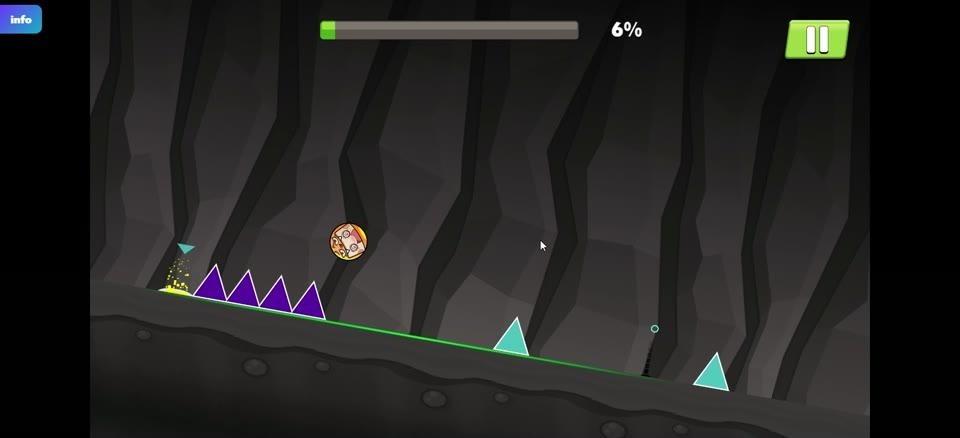
Figure 8. Angular rock walls surround a sloping route and pale pointed obstacles in a darker stage area.
Standout Features
Slope Ball keeps its basic action direct while changing what a safe jump looks like. A low spike asks for a clean hop. A row of spikes asks you to judge the whole landing distance. A narrow post above a pit leaves little space to touch down, while an overhead slab can make an otherwise tempting high jump dangerous. The shifting mix creates variety without adding a complicated set of buttons.
Players familiar with Geometry Dash will recognize the need to time movement around obstacles in auto-scrolling levels. That game features an icon-based approach and a level editor; our focus here is the rolling ball, a visible percentage toward each marked finish, and the contrast between wide slopes and small footholds. These are comparisons of play styles, not a shared story or setting. [8]
The Impossible Game also builds its one-button challenge around clearing spikes and pits with a moving cube. Slope Ball gives that familiar timing problem a different shape through its spherical traveler, raised purple pillars, overhead hazards, and the choice between a full Normal Mode restart and Practice Mode checkpoints. If the hills have caught your eye, play Slope Ball at slope3.com and follow the route into the caves. [9]
Controls
On PC
1. With the orange-and-cream ball already rolling forward, left-click, press Space, or press the Up Arrow once to make it jump.
2. When the ball has landed, use the same input to jump over the next spike or gap. Holding the input or pressing again while airborne does not alter the current jump.
On Mobile
1. Find the rolling ball in the gameplay area and tap the play area once. The ball jumps while continuing forward.
2. After the ball lands, tap again to clear the next obstacle or reach the next safe platform. Holding a tap or tapping repeatedly during a jump does not change that jump.
References
[1] Karst. https://en.wikipedia.org/wiki/Karst
[2] Speleogenesis. https://en.wikipedia.org/wiki/Speleogenesis
[3] Limestone pavement. https://en.wikipedia.org/wiki/Limestone_pavement
[4] Sinkhole. https://en.wikipedia.org/wiki/Sinkhole
[5] Speleothems as indicators of wet and dry periods. https://doi.org/10.5038/1827-806x.36.2.2
[6] Seasonality in cave dripwater and air properties – implications for speleothem palaeoclimatology, Nova Grgosova Cave (Croatia). https://doi.org/10.4154/gc.2024.16
[7] KARST DEVELOPMENT AND SPELEOGENESIS, ISLA DE MONA, PUERTO RICO. https://openalex.org/W1589530474
[8] Geometry Dash. https://en.wikipedia.org/wiki/Geometry_Dash
[9] The Impossible Game. https://en.wikipedia.org/wiki/The_Impossible_Game
Image Credits
Orton Scar Limestone Pavement.jpg - Northernhenge - cc0. https://commons.wikimedia.org/wiki/File:Orton_Scar_Limestone_Pavement.jpg License: http://creativecommons.org/publicdomain/zero/1.0/deed.en
Orlek limestone pavement.jpg - Ajznponar - ccby-sa4.0. https://commons.wikimedia.org/wiki/File:Orlek_limestone_pavement.jpg License: https://creativecommons.org/licenses/by-sa/4.0