Concept and Inspiration
Picture a hillside too steep for a broad, flat rice field. Farmers can carve it into a staircase of narrow terraces, each one holding a small patch of usable ground. These steps also help reduce soil erosion and water running off the surface, an important advantage for crops such as rice that need irrigation. [1] Bali's green Jatiluwih terraces make that hillside pattern easy to see: each level has its own place in a much larger landscape.
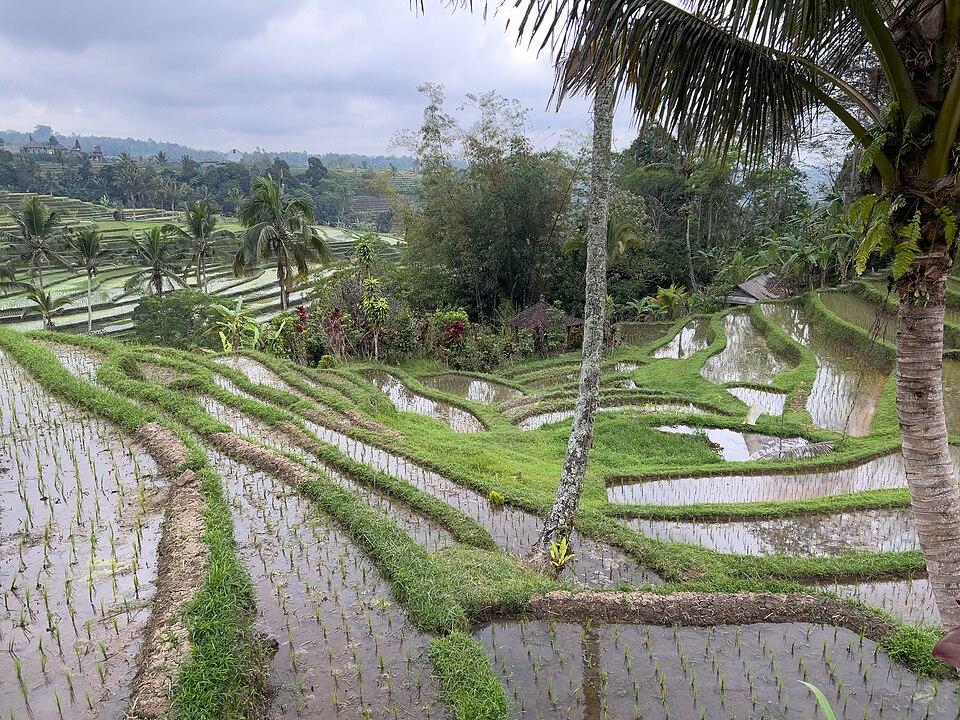
Figure 1. Stepped rice paddies spread across the green hillsides of Jatiluwih, Bali.
Photo: Stefan Fussan | ccby-sa3.0
Flat planting spaces solve only half the problem. Water still has to travel from its source to the places that need it. A channel supplied from higher ground can carry water toward a lower destination, using the difference in elevation to move the flow. [2] In Bali, the traditional subak system has organized irrigation for rice paddies since the ninth century. [3] Its fields are connected by practical decisions about how water is shared across a sloping landscape.
Subak is more than a set of ditches. It brings together terraced fields, water temples, and cooperative management of irrigation. [3] A scholarly study describes it as a local organization that preserves traditional ecological knowledge for managing and distributing farm water, combining ecological, engineering, and spiritual dimensions. [4] The channels matter, but so do the people who decide how the water reaches each field.
Water has meaning beyond irrigation in Balinese life. Temples are centers of communal worship organized through families, villages, and ritual associations. [5] Research on Balinese religious and artistic traditions also describes relationships among people, the natural world, and the sacred. [6] The photograph here shows a water-purification setting at Tirta Empul Temple. It illustrates that broader cultural relationship with water, rather than a game mechanic or an irrigation channel.
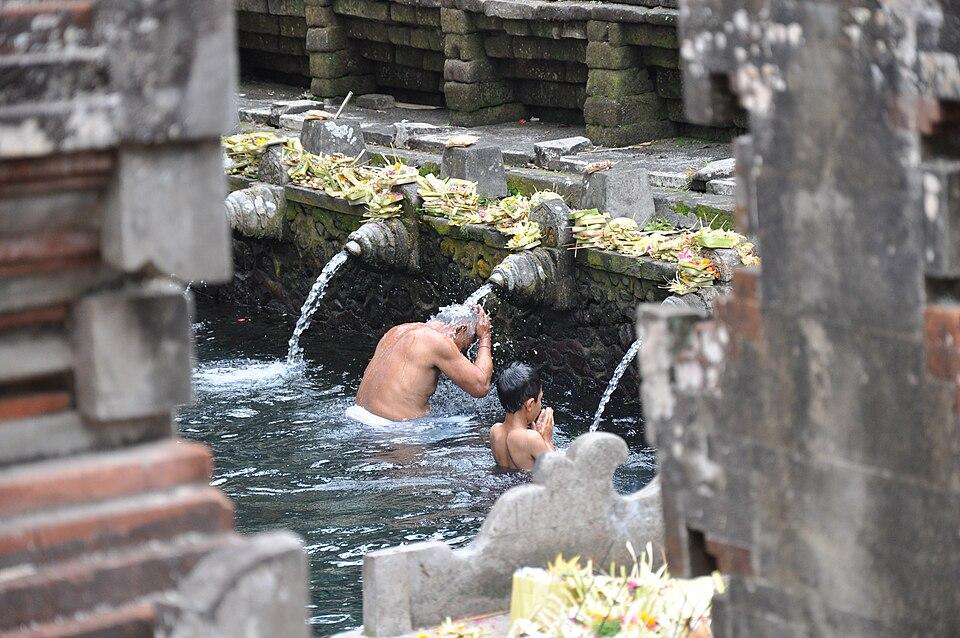
Figure 2. Visitors take part in a water-purification setting at Bali's Tirta Empul Temple.
Photo: Jorge Láscar from Melbourne, Australia | ccby2.0
At slope3.com, we developed Happy Glass around a playful, miniature version of the challenge of guiding water across uneven ground. One spout releases a limited pour. Immovable ledges interrupt its path. You add one continuous line to help the water reach a waiting glass. Instead of a distant field, a little face and a visible fill mark tell you whether your improvised channel has done its job.
Story
Beyond the puzzle grid, imagine a place called the Valley of Little Cups. Its houses cling to a terraced hillside, and a silver-blue spring sends water past stone steps each morning. The smallest cup lives on the lowest shelf. While the upper terraces catch the first trickles, that tiny cup waits with a worried face, watching every drop disappear around a corner.
Nara, a young keeper of the valley's channels, has no lever to turn the spring and no way to lift the old stone walls. She carries a pencil instead. As the day's brief pour approaches, she looks for the one place where a slender curved bridge could catch the falling water. Her first idea would send the stream into a crack; her second bends gently toward the little cup. She draws one careful line and steps back.
A few blue drops arrive, then a little stream. The cup's waterline climbs toward its mark while the last droplets hurry down the slope. When the water finally rises high enough, the cup smiles, and Nara can carry her pencil to the next terrace. This imagined journey gives our small physics puzzles a simple heart: a limited gift of water can make a big difference when you find the right route.
Gameplay
Your goal is to get enough water into the sad little glass. Draw one continuous black line anywhere in the puzzle, using no more than the available drawing length. When you finish the stroke, the fixed spout releases its limited supply of water. Your line can form a slope or bridge that guides droplets around gray barriers. Fill the glass above its marked threshold to complete the level and unlock the next one.
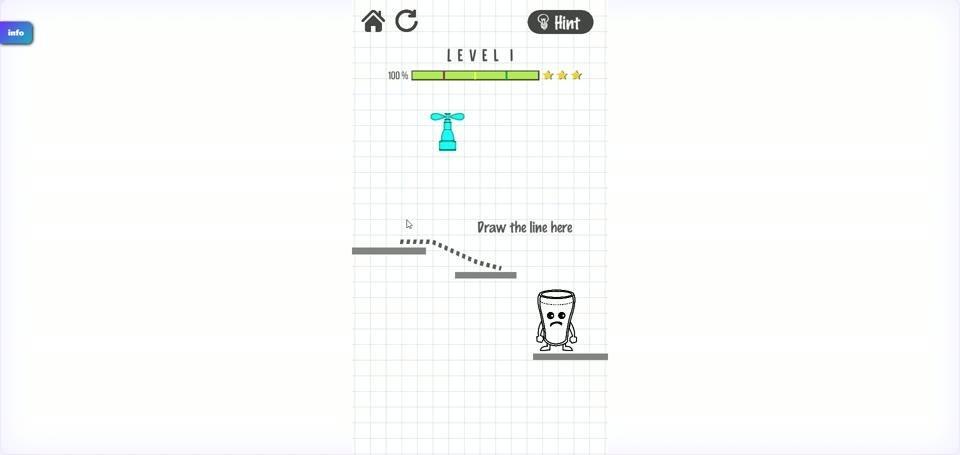
Figure 3. The opening level shows a sad glass, an overhead spout, and a dotted suggestion for the first line.
The Glass, Spout, and Flowing Water
The glass is a white, black-outlined character with eyes, a mouth, skinny arms, and little feet. Its face starts out sad. As bright cyan droplets collect inside, the glass fills with blue and looks cheerful. The marked waterline is the important target: the water must rise past it for the stage to count as complete.
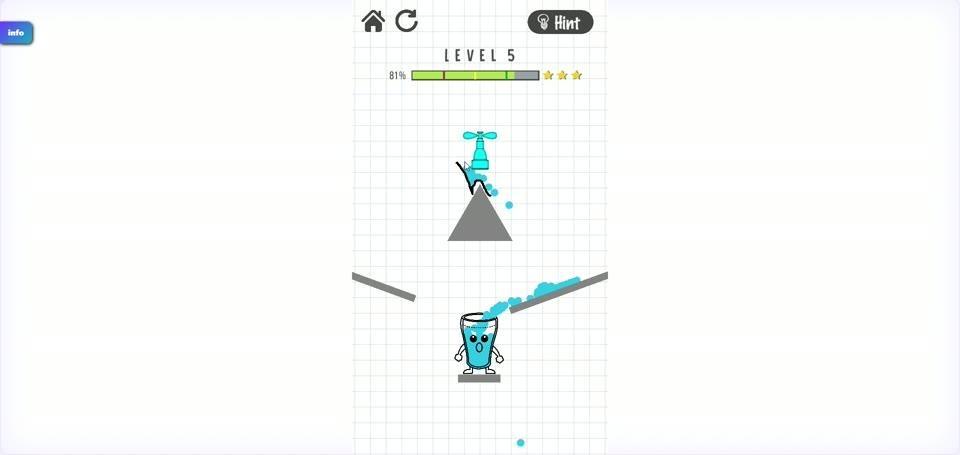
Figure 4. Cyan water reaches the smiling glass as droplets travel across a sloped route.
A turquoise, tap-shaped spout supplies the water. Some stages place it overhead; others point it sideways. Its direction stays fixed, and each attempt has a limited amount of water, so a stream that falls away from the glass cannot help fill it. Watch where the droplets naturally travel before choosing the line that will catch them.
One Line and a Limited Ink Budget
You get a single unbroken stroke per attempt. It can curve, slope, or span a gap, and you may begin it anywhere on the playfield. The green segmented bar and percentage near the top show how much drawing length remains. Longer lines use more of that allowance; you cannot keep extending a line after the budget is exhausted. A large yellow pencil marks the active end of the black stroke while you draw.
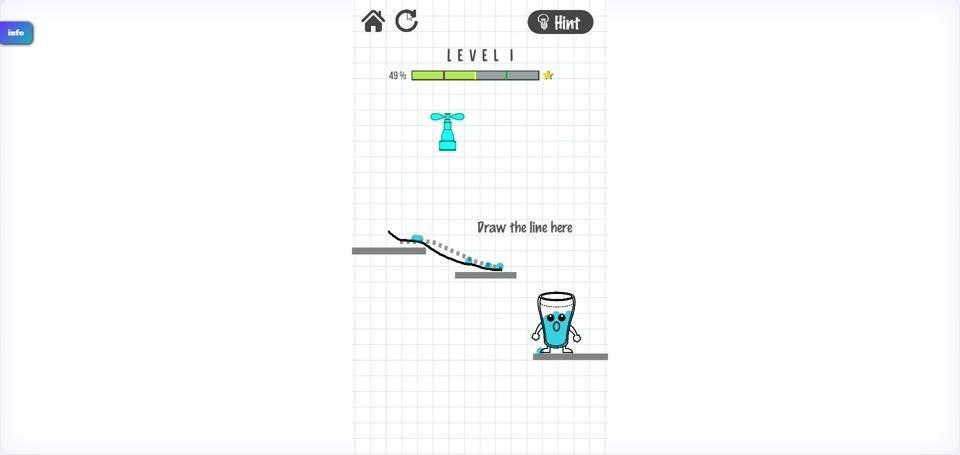
Figure 5. A drawn black path carries blue droplets across a gap toward the glass.
For example, if the spout is above a gap and the glass sits beyond it, a gently sloping line can connect the drop point to the glass's side. Once the line is fixed, the water flows over the available surfaces. A badly placed slope may let much of the small supply escape, so the useful question is where the stream will land after it leaves each edge.
Ledges, Ramps, and Fixed Obstacles
The gray structures give every level a different route to solve. Short shelves support the glass, angled ramps steer droplets, and taller paired walls leave a narrow channel between them. A broad stepped floor or an L-shaped wall can turn a direct pour into a detour. You must work around these structures, because they remain in place as you draw.
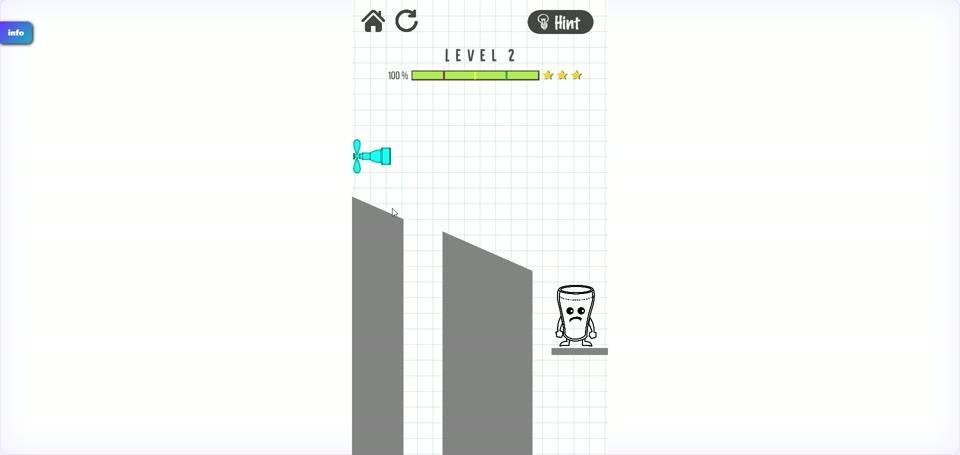
Figure 6. A sideways water spout faces tall gray walls that interrupt the route toward the glass.
Later layouts add freestanding triangles, a peaked mound on a block, two narrow vertical posts, and small gray circular pieces perched near short shelves. The circular pieces are fixed obstacles, not rolling balls. Their shapes change the space your line must cross or go around, while the pencil stroke supplies the missing connection.

Figure 7. Gray circular obstacles and small supports create another fixed layout to draw around.
Completion, Stars, Failure, and Progress
A level is won when the glass fills above its marked line. A completion screen displays stars and a forward arrow for the next unlocked stage, plus a circular arrow to replay. Stars rate how economically you drew: use less ink for a better rating, with up to three stars. The reward for completing a stage is access to the next one. Happy Glass contains 30 levels, and completing the last level finishes the game.

Figure 8. The completion panel shows two gold stars and options to advance or replay.
You lose an attempt when too little of the limited water supply reaches the glass to pass the fill mark. After failure, a five-second advertisement precedes another try. The circular-arrow restart control resets the current drawing and score; the house-shaped Home button returns to the level list and keeps your saved progress. A short, wasteful line can therefore cost the attempt, while a shorter successful one can improve the star result.
Tutorial and On-Screen Help
The first level offers a dotted curve with the words 'Draw the line here' to demonstrate the basic idea. Above the puzzle, the level number identifies your current stage. Near the upper middle are the Home and restart icons; a dark Hint button at the upper right offers a suggested line after you watch an advertisement. A small blue Info button near the upper left opens our slope3.com game menu.
Visual Style
We chose a bright, uncluttered look that makes every route easy to follow. The white playfield has a faint graph-paper grid, while solid gray walls and platforms stand out against it. The thin black line looks like a pencil mark on a sketchbook page. That contrast lets you spot the gaps before drawing across them.
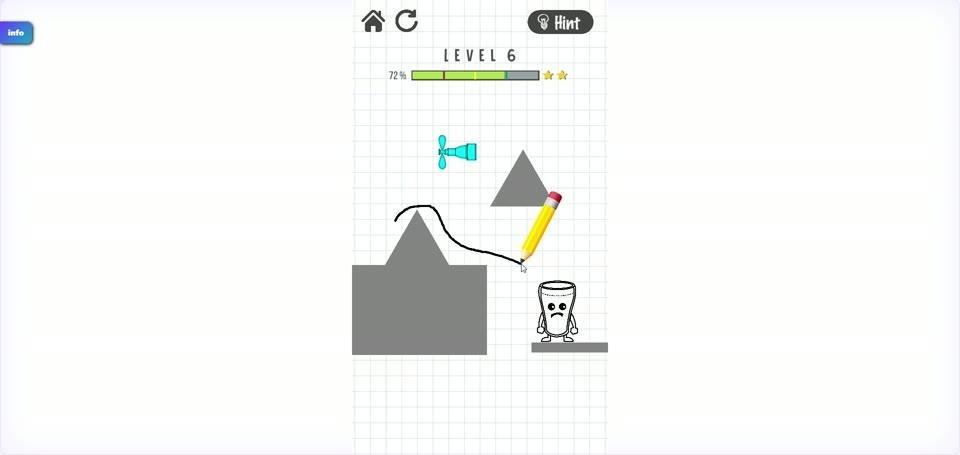
Figure 9. A yellow pencil draws a dark line over the pale grid while the green length meter remains visible above.
Turquoise is reserved for the spout and lively water droplets, so your eye follows the pour from source to glass. The yellow pencil, gold stars, and changing expression on the cup add warmth without hiding the puzzle. A drooping mouth becomes a grin as the water arrives; that tiny face makes a simple fill threshold feel like a moment worth cheering for.
Standout Features
The strongest twist is how much must be done with a single line. You cannot move the spout, roll the gray obstacles, or draw a second stroke to patch a mistake. The shrinking ink percentage asks you to make that one route count, while the fixed amount of water gives every dropped splash a consequence. Across 30 levels, new combinations of ledges, channels, peaks, and posts keep the problem fresh.
Water-routing puzzles can give a familiar idea very different personalities. Where's My Water? asks players to bring water to an alligator. [7] In Happy Glass, the destination is a small glass with a face, and you solve the route with one length-limited pencil stroke. The changing expression, fill mark, and ink-based star rating make the outcome easy to read: get enough water in, then see if you can do it with a tidier line.
Play Happy Glass on slope3.com and find out how much difference one well-placed line can make to a thirsty little cup.
Controls
PC: Mouse
1. On a level, find the spout and the glass. Hold down the left mouse button and drag to draw one continuous black support line where you want the water to travel. The percentage bar above shows the drawing length you have left.
2. Release the left mouse button to fix the line. Water then pours from the spout and can follow the new support toward the glass.
Mobile: Touch
1. On a level, locate the spout and the glass. Touch the playfield and drag one finger to draw a single unbroken black line. The green percentage bar tracks how much line length remains.
2. Lift your finger to fix the drawn line. The spout releases water, which can flow along your line and into the glass.
References
[1] Terrace (earthworks). https://en.wikipedia.org/wiki/Terrace_(earthworks)
[2] Canal. https://en.wikipedia.org/wiki/Canal
[3] Subak (irrigation). https://en.wikipedia.org/wiki/Subak_(irrigation)
[4] Sustaining subak, the balinese traditional ecological knowledge in the contemporary context of Bali. https://doi.org/10.1088/1755-1315/1306/1/012034
[5] Balinese temple. https://en.wikipedia.org/wiki/Balinese_temple
[6] RELATIONAL PRACTICES IN BALI: BALINESE HINDUISM, SUBAK, AND MUSIC. https://doi.org/10.21315/ijaps2023.19.1.8
[7] Where's My Water?. https://en.wikipedia.org/wiki/Where%27s_My_Water%3F
Image Credits
Jatiluwih rice terraces SF0002.jpg — Stefan Fussan — ccby-sa3.0. https://commons.wikimedia.org/wiki/File:Jatiluwih_rice_terraces_SF0002.jpg License: https://creativecommons.org/licenses/by-sa/3.0
Purification of the Hindu Balinese - Tirta Empul temple (17032640876).jpg — Jorge Láscar from Melbourne, Australia — ccby2.0. https://commons.wikimedia.org/wiki/File:Purification_of_the_Hindu_Balinese_-_Tirta_Empul_temple_(17032640876).jpg License: https://creativecommons.org/licenses/by/2.0