Concept and Inspiration
Inside a mechanical clock, time advances through a remarkable series of tiny stops and releases. A weight or spring drives a train of gears, but an escapement allows that train to move forward in measured steps. Each movement of a pendulum or balance wheel releases a tooth; another tooth is then caught, helping produce the familiar ticking of a mechanical clock. The steady movement of the hands depends on these repeated, precisely spaced actions. [1]
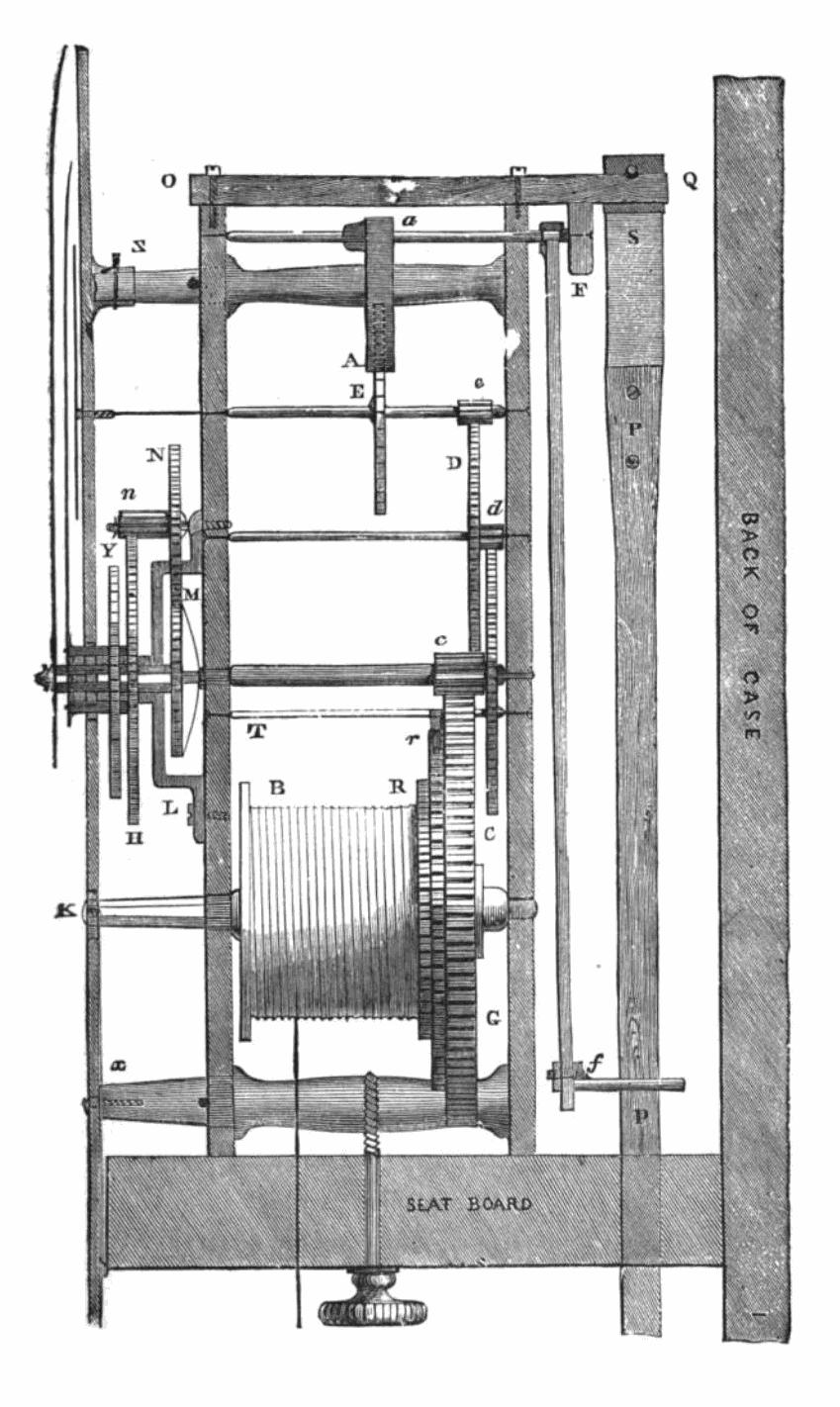
Figure 1. Historical drawing of a longcase clock movement, with the gears and pendulum mechanism arranged inside.
Photo: Edmund Beckett (Lord) Grimsthorpe | publicdomain
Clockmakers have solved that stop-and-release problem in different ways. The verge escapement, used in early mechanical clocks, let a gear train advance at regular intervals rather than measuring passing time through a continuous flow, as water clocks did. It was an important step toward mechanical timekeeping in medieval Europe. [2] An illustration of a verge escapement reveals the crown wheel and the paired pallets that alternately engage its teeth: a complicated mechanism built around a simple question of when to let go.
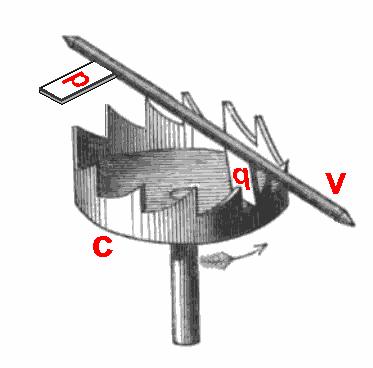
Figure 2. Labeled illustration of a verge escapement showing its crown wheel, verge, and pallets.
Photo: Henry Evers | publicdomain
Later pendulum clocks commonly used the anchor escapement, named for a component whose shape resembles a ship's anchor. Its job was to keep the pendulum moving while permitting the clock wheels to advance a set amount on each swing. [3] Even before geared clocks, sundials told time from the position of a shadow, making a moving line across a surface another familiar way to picture the passage of time. [4] Across these devices, the position of something moving matters as much as the movement itself.
That interplay between constant motion and a well-chosen instant shapes our concept for CoreBall, developed by the Slope3 team. We turned the idea into a spare arcade challenge: a white wheel keeps rotating while you decide when to send the next slender arrow toward it. Each successful arrow becomes another mark around the circle, leaving less open space for the next one. Studies of movement synchronized to predictable rhythms likewise describe the importance of anticipating upcoming events, especially as tempo changes. [5] CoreBall gives that everyday act of anticipation a crisp, visible target.
Story
Imagine a city where dawn waits for the Great Clock to finish its count. In its highest tower, a young keeper named Mira stands beneath a floating white wheel. The streets below are quiet. Bakers have cold ovens, the harbor lamps still burn, and everyone is waiting for the next beat that will move the morning forward. Mira has a handful of bright markers and one task: return the missing moments to the turning clock.
She sends the first marker into a clear opening. It holds. Another follows, then another, until the wheel begins to resemble a small, crowded sun. The marks already in place are both proof of her progress and the obstacles ahead. Mira cannot force the wheel to stop for her. She must watch, trust the pattern, and choose the opening before it passes.
Higher in the tower, the mechanism turns faster. One careless release could break the rhythm, yet each completed sequence restores another imagined heartbeat to the sleeping city. When the first rays finally touch the rooftops, Mira understands that keeping time is not about hurrying every second along. It is about knowing exactly when to act. That little tale captures the feeling we want each tense CoreBall launch to carry.
Gameplay
Your goal is to launch every numbered arrow waiting below the rotating white hub without hitting a pin already attached to it. Each launch sends one arrow toward the circle. If its path is clear, it sticks to the hub and joins the ring of pins; if it hits an existing pin, you lose that attempt and must start again. Keep finding clear openings until the numbered launch queue is empty, and you advance to the next level.
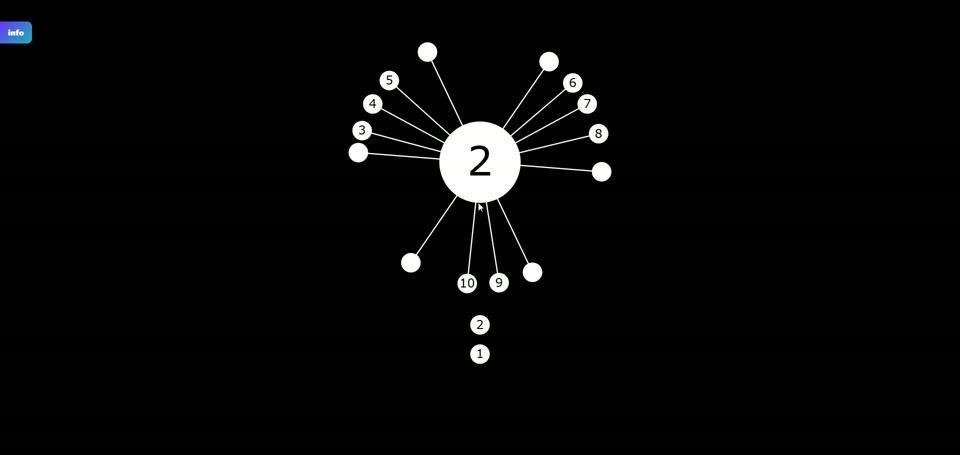
Figure 3. A numbered central hub, surrounding pins, and the launch queue beneath it.
The Rotating Hub and Its Obstacles
The big white disk at the center turns automatically. Its large black number identifies your current level. Thin white shafts radiate from the disk, each ending in a small circular tip. Some pins are there when a level begins; their unnumbered white tips identify these built-in obstacles. The layout changes from level to level, so look for the gaps before launching. As you move to higher levels, the hub spins faster and the challenge grows.
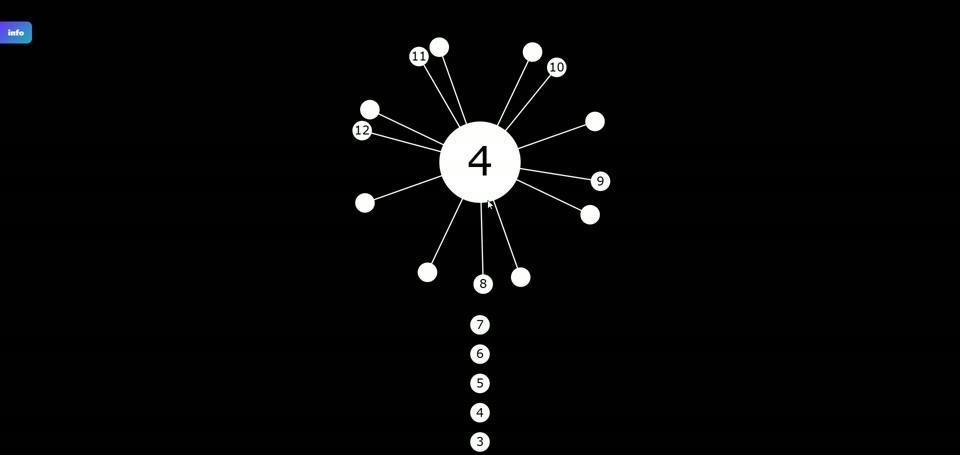
Figure 4. Thin radial pins and small white tips form a tight ring around the central disk.
Numbered Arrows and the Launch Queue
The small white circles in a vertical line beneath the hub show the arrows still waiting to be fired. Their numbers count down in order from larger to smaller values. Once launched successfully, numbered arrows remain around the wheel; their numbers show their order in the sequence. Those labels help you distinguish your placed arrows from the unnumbered pins that were already there. The queue supplies the arrows for the current level, and clearing the entire queue is what completes that level.
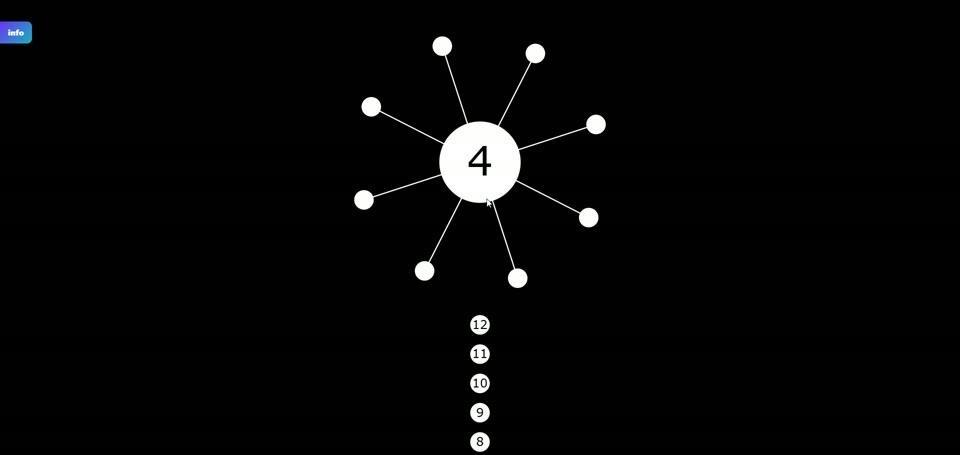
Figure 5. The numbered arrow queue lines up below a hub surrounded by white pin tips.
For example, spot an opening between two existing pins, wait until that opening lines up with the incoming arrow, and launch once. If the arrow attaches, look again: the new arrow now occupies some of the space you could previously use. Repeat for each remaining number. The next successful launch is never quite the same decision as the last.
Success, Failure, and Progress
You clear a level by attaching every arrow in its queue without a collision. Your reward is access to a new, more difficult level rather than a final victory screen: CoreBall continues through an endless sequence of stages. A collision ends the current attempt. You can replay the failed level, or use Reset to return to the first level. The next stage brings its own launch sequence, so the arrow supply is tied to the level rather than replenished whenever a single arrow lands. No numerical point formula is needed to judge a successful round: empty the queue safely and move on.
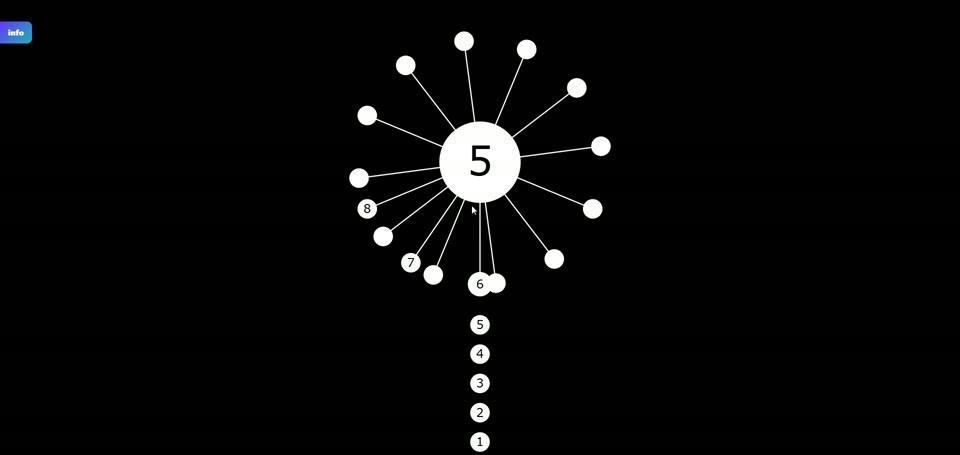
Figure 6. Another numbered stage presents a different arrangement of spokes and a waiting arrow queue.
On-Screen Information and Transitions
A small blue button in the upper-left corner opens the Slope3 game menu. The black playing area keeps your attention on the disk, obstacles, and remaining arrows. Between levels, a gray region or a briefly empty black view can appear as part of the transition before play resumes.
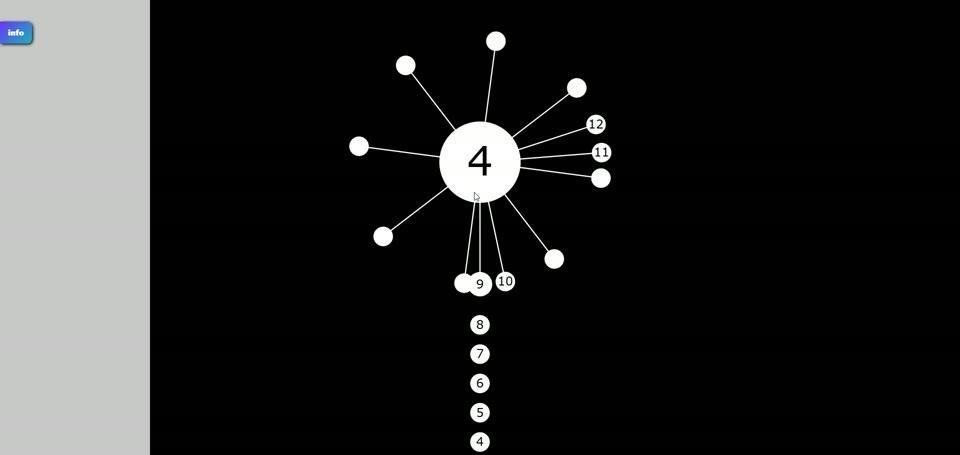
Figure 7. A gray transition region shares the screen with the numbered hub and its pins.
Visual Style
We chose an almost entirely black field and clean white geometry for CoreBall. The hub is a bold disk, the pins are fine lines, and the round tips make even a crowded arrangement easy to read. Large black level numbers sit inside the white center; smaller dark numerals identify the arrows you send into the ring. There is very little scenery to compete with the opening you are trying to hit.
The rotating spokes can resemble the hands and gears of an abstract clock, but the screen stays focused on the objects you actually use. Each added arrow changes the circle's silhouette. That visible accumulation makes a nearly full wheel feel different from a wide-open one without needing elaborate decoration.
Standout Features
CoreBall builds its challenge around a single decisive action. You do not steer an arrow after launching it; the interesting choice is when to release it toward a turning target. The existing pins set the initial difficulty, and every successful attachment changes the next available gap. Progress comes from judging moving space, one shot at a time.
The growing pace also changes how you read the wheel. Research on visual motion reports that human perception can use movement to anticipate what will appear farther along a motion path. [6] This finding is useful context for the kind of visual judgment CoreBall invites, without suggesting that playing the game measures or improves that ability. As levels speed up, the straightforward rules remain familiar while the timing becomes harder to master.
With an endless sequence of increasingly demanding stages, each cleared queue offers a small, satisfying result and another opportunity to test your timing. Try CoreBall on Slope3 and see how far your next carefully placed arrow can take you.
Controls
PC
1. Find the numbered arrow waiting below the rotating white hub and watch for an open gap between its pins.
2. Click the mouse to launch one arrow toward the hub. It attaches when it avoids the existing pins; a collision loses the attempt.
Mobile
1. Look at the numbered arrow below the hub and follow the spaces between the rotating pins.
2. Tap the screen to launch one arrow. A clear shot attaches to the hub, while hitting a pin ends the attempt.
References
[1] Escapement. https://en.wikipedia.org/wiki/Escapement
[2] Verge escapement. https://en.wikipedia.org/wiki/Verge_escapement
[3] Anchor escapement. https://en.wikipedia.org/wiki/Anchor_escapement
[4] Clock. https://en.wikipedia.org/wiki/Clock
[5] The ADaptation and Anticipation Model (ADAM) of sensorimotor synchronization. https://doi.org/10.3389/fnhum.2013.00253
[6] Visual Motion Induces a Forward Prediction of Spatial Pattern. https://doi.org/10.1016/j.cub.2011.03.031
Image Credits
Longcase clock movement.png — Edmund Beckett (Lord) Grimsthorpe — publicdomain. https://commons.wikimedia.org/wiki/File:Longcase_clock_movement.png
Verge Escapement Labelled.png — Henry Evers — publicdomain. https://commons.wikimedia.org/wiki/File:Verge_Escapement_Labelled.png