Concept and Inspiration
Space looks empty from a distance. Up close, the routes around Earth are busy with working spacecraft, retired satellites, abandoned rocket parts, and fragments left by collisions or breakups. Engineers call the unwanted human-made objects space debris. Even a tiny piece can threaten a spacecraft when objects meet at orbital speeds. [1] [2]
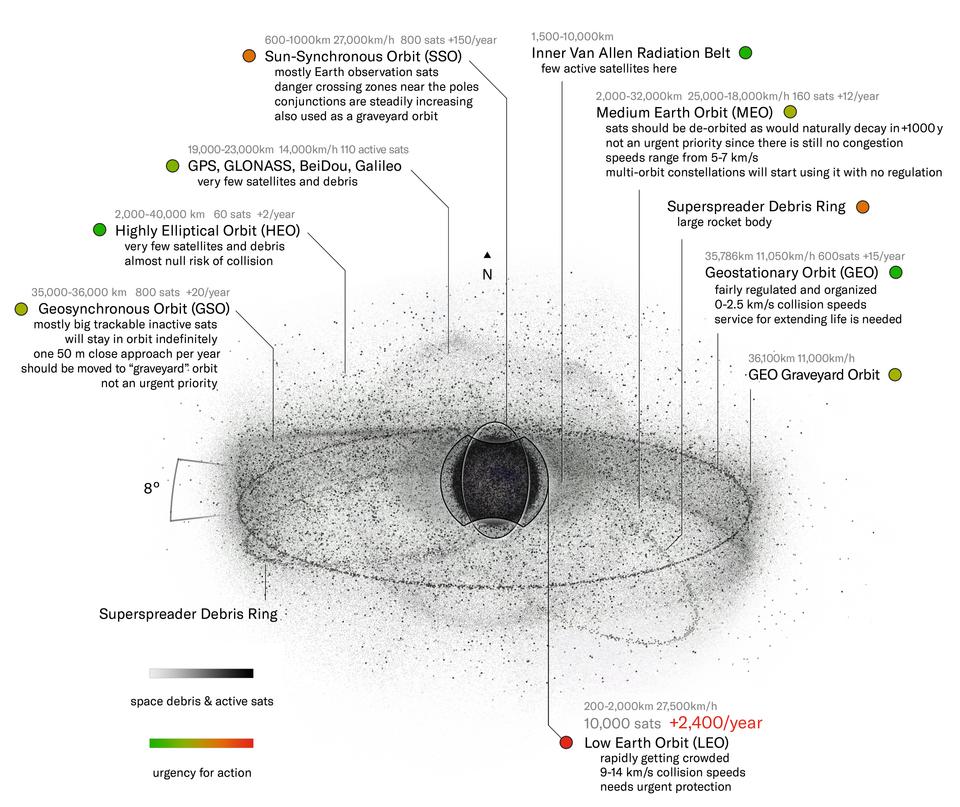
Figure 1. An illustrated overview of Earth’s orbital regions and the challenge of keeping them clear of debris.
Photo: Pablo Carlos Budassi | ccby4.0
The problem is partly one of timing. Space domain awareness involves detecting, tracking, cataloging, and identifying artificial objects in orbit. Collision-avoidance work uses predicted close approaches to decide whether a spacecraft needs to maneuver. A safe route depends on where another object will be, not simply where it is now. [3] [2]
There is another kind of traveler in space: a meteoroid, a naturally occurring small body that may come from an asteroid or comet. Unlike artificial orbital debris, it began as part of the natural space environment. A meteorite is specifically the piece that survives passage through an atmosphere and lands on the ground. [4] The rocky shapes in our game borrow that rugged look without asking you to learn orbital physics.
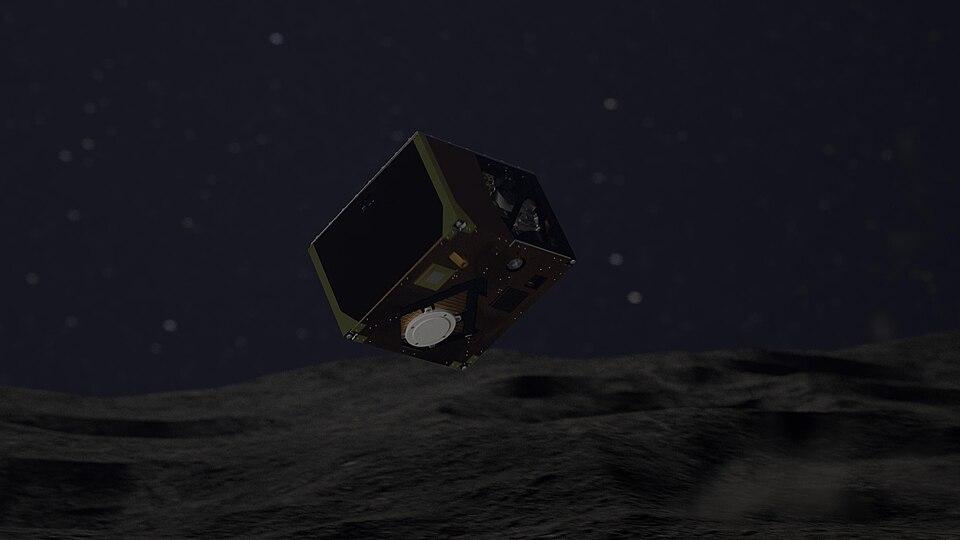
Figure 2. An artist’s rendering of the MASCOT lander approaching the rocky surface of asteroid Ryugu.
Photo: DLR German Aerospace Center | ccby2.0
At slope3.com, we developed Crossy Road around a playful version of that navigation problem. A tiny suited traveler crosses gray lanes crowded with wandering, meteorite-like blocks, then trusts moving slabs and skinny bars above a star-filled drop. We chose crisp blocky shapes so you can quickly spot a hazard, a foothold, or a coin. Every crossing asks the same practical question as a crowded route in space: is the opening still safe when you reach it?
Story
Picture a quiet transit route beyond a broken space outpost. The lights have gone dark, the station’s old paths no longer meet, and a lone courier in a pale helmet carries a beacon toward the next safe haven. From far away, the route seems like an orderly string of gray islands. Nearby, stone-like wanderers sweep across those islands, and the bridges between them drift against a field of stars.
The courier cannot clear the sky or command the platforms to wait. One careful step finds a pocket of safety; the next requires patience while a narrow foothold slides into reach. Bright golden tokens scattered along the route feel like little signs that someone passed this way before. Each successful crossing carries the beacon farther into the darkness, even when the destination remains beyond sight.
In this imagined journey, courage is measured in small decisions. The courier may stumble and begin again, but the path already traveled becomes a reason to try for one more safe landing. That sense of a lonely, determined crossing gives our colorful arcade challenge its spacefaring heart.
Gameplay
Guide your small astronaut-like character forward through gray lanes, shift sideways to avoid obstacles, and step backward when you need room to choose another path. Touch a moving gray meteorite, a pink-topped obstacle, or an upright cyan or orange obstacle, and the run ends. Small gray barriers block your path, so go around them. Across the starry gaps, land on moving platforms or narrow bars; a missed landing sends you into the void and ends the run. Keep making safe crossings to build your step score, and pick up yellow coins along the way.
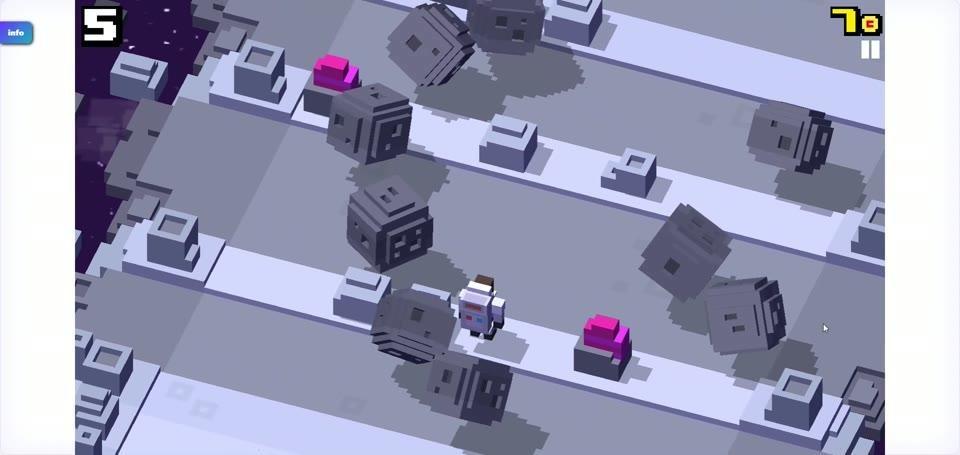
Figure 3. The white-suited traveler moves through gray lanes as large meteorite blocks threaten the route.
The Traveler, Lanes, and Hazards
Your traveler is a small white-and-gray figure with a blocky helmet. Alternating light and medium-gray strips form the route. Large, irregular gray meteorite blocks move across it; watch their changing positions before advancing. Small pale cube piles and stepped barriers block your route, so move around them. Pink-topped blocks and upright cyan and orange columns are dangerous obstacles too: touching any of them ends your run, just as a collision with a moving gray meteorite does.
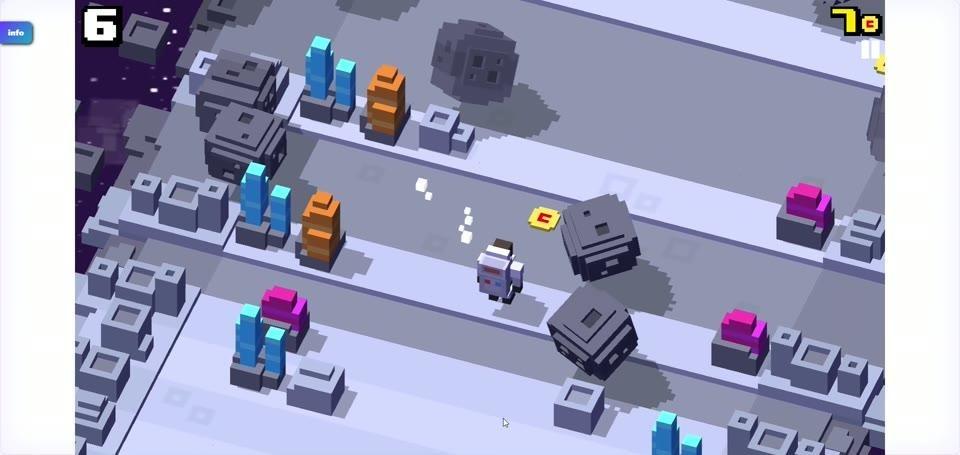
Figure 4. Gray barriers, pink-topped blocks, cyan and orange obstacle columns, moving meteorites, and yellow coins share the crossing lanes.
A typical safe sequence is simple: advance onto an open strip, move to the side of an approaching meteorite, then continue forward once its path clears. A blocked route calls for a different opening. The camera keeps moving with the course, so falling too far behind the screen also ends your run.
Crossing the Starry Gaps
The dark purple spaces between solid lanes are genuine gaps, dotted with tiny stars. Broad pale slabs glide through some openings; thin gray bars move through others. You can stand on either kind of support, but you must reach it while it is in position. Watch its movement, step onto the available surface, and continue toward the next solid landing. Stepping into an uncovered gap ends the attempt.
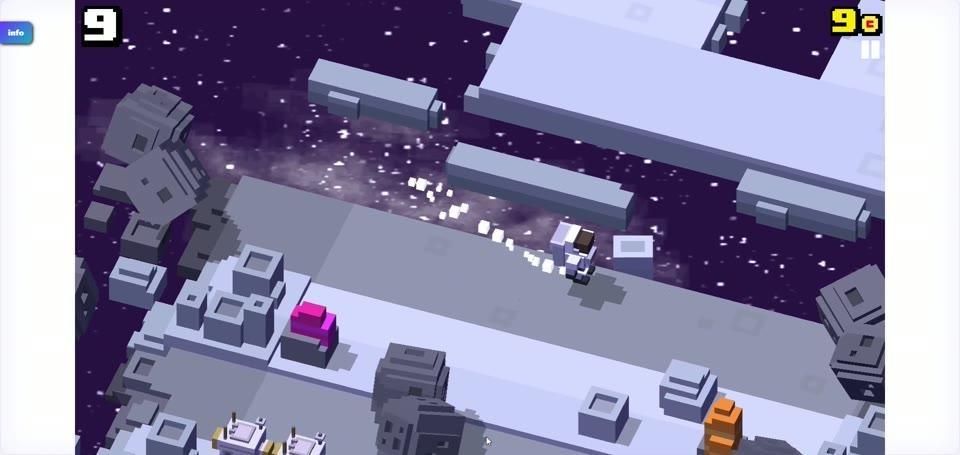
Figure 5. Pale moving platforms form temporary landing places above the dark star-filled void.
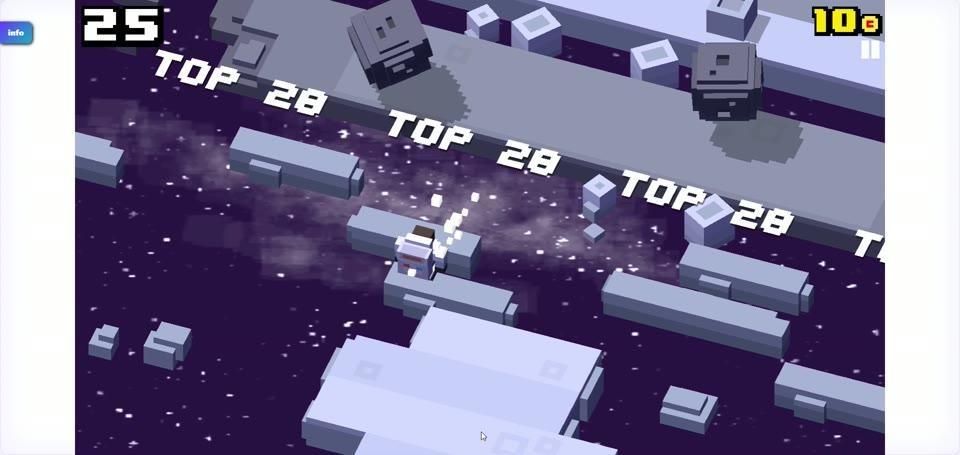
Figure 6. Narrow floating bars offer smaller moving footholds between the larger sections of the route.
Steps, Coins, and Character Collections
The large white number at the upper left is your step score. Each new lane you cross going forward adds one point; stepping backward adds no points. The small yellow counter at the upper right shows your coins, and it increases as soon as you collect one of the flat yellow squares with orange centers. Your step score measures the crossing attempt; coins are a separate resource you can keep for later.
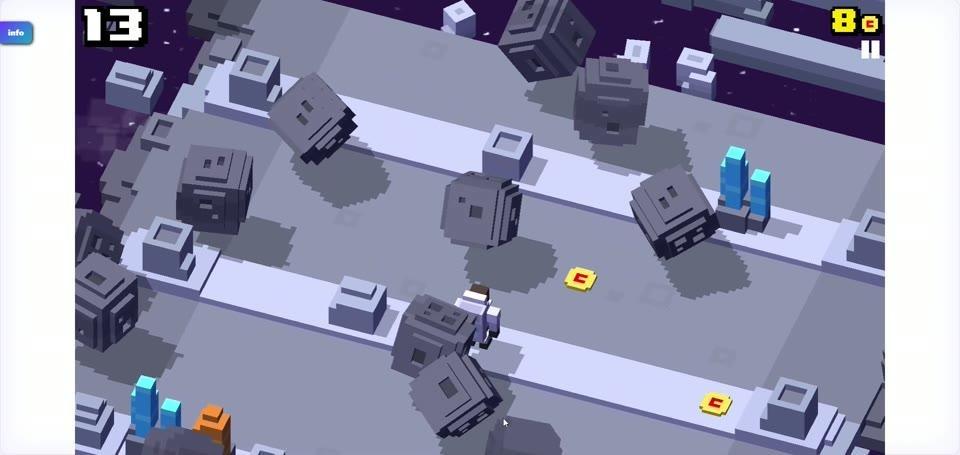
Figure 7. The upper-left step count and upper-right coin balance appear above a lane containing yellow collectible tiles.
Only one character is available at first. The selection screen displays blocky characters in ORIGINAL CAST, SPACE, and DINOSAURS collections. Coins can fund a Prize Machine attempt once you have 100; it awards a random character and can repeat one you already own. Some token-based characters require 100 tokens instead. Some secret characters require special gameplay conditions. Your step score measures progress in a run; it is not the usual currency for unlocking characters. Unlocking another traveler gives you a new look for future crossings, not an extra step toward a final level.
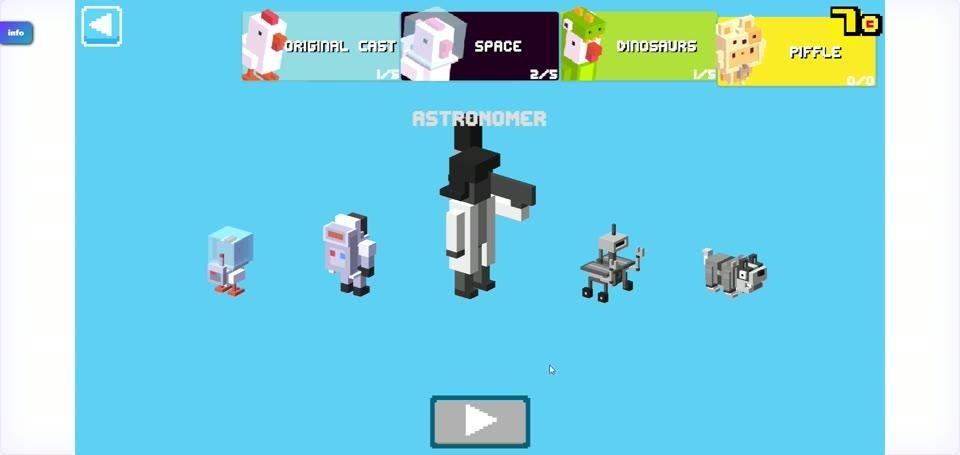
Figure 8. Character collections and blocky traveler models appear above the prominent Play button.
Endless Progress, Game Over, and Useful Icons
Crossy Road is an endless score challenge with no fixed final level or victory screen. Success means surviving longer, moving farther forward, collecting coins, and trying to beat your previous best. A collision with a lethal obstacle, a fall into space, or being left behind by the screen produces game over. The result screen shows your score and record. The current run’s score and route reset for the next attempt; collected coins, unlocked characters, and your personal-best record remain. The TOP label identifies that best result, which updates after game over when you set a new record.
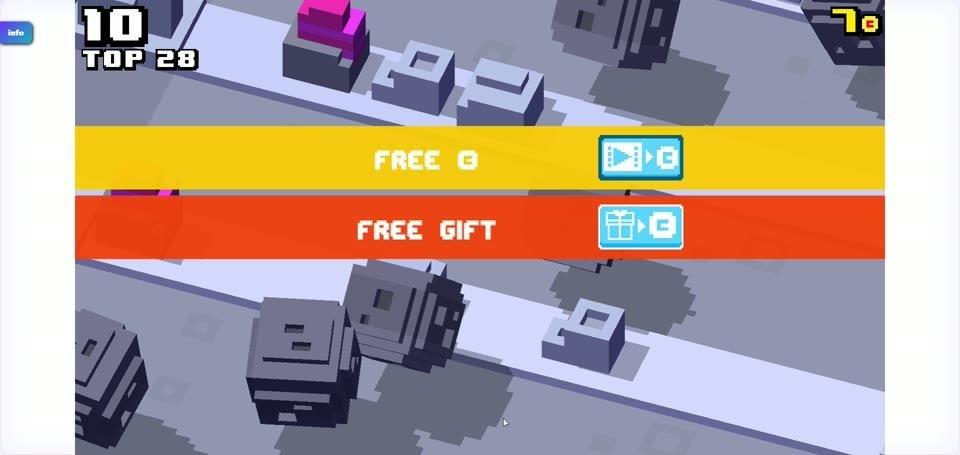
Figure 9. A game-over view displays the personal-best indicator and optional FREE and FREE GIFT reward banners.
Choose Play after the end screen to begin again from the start. The triangular Play icon also starts a run from character selection. During play, the small two-bar Pause icon near the upper right gives you a three-second break to think. A four-arrow diagram near the bottom of some screens reminds you of the movement buttons. At game over, the FREE and FREE GIFT offers let you watch an advertisement for a gift or coins if you want that extra reward.
Visual Style
Our world uses chunky voxel-style figures, flat gray strips, and clean rectangular edges. The little white helmet stands out against the lanes, while oversized gray rocks read as moving trouble. The black-purple starfield makes every missing piece of the path immediately visible. Thin bars look noticeably less forgiving than the broad pale platforms, so their shape tells you how much room you have to land.
Small touches of magenta, cyan, orange, and coin yellow break up the mostly monochrome route. Big outlined score digits stay easy to pick out in a busy scene, and the bright cyan character-selection screen gives the next run a cheerful change of pace. The oversized tilted CROSSY ROAD lettering carries the same playful blocky personality as the characters.
Standout Features
The fun comes from making tiny decisions against moving hazards. A clear lane may become dangerous a moment later; a floating platform that looks far away can slide into reach. Four-direction movement gives you options, but every step still demands attention to the next opening. The score rewards forward progress, while a growing coin balance gives each attempt something useful to carry into the next.
Classic Frogger also builds its crossing challenge around dodging traffic and using moving objects to cross unsafe ground and water; its objective is to guide frogs home. [5] Our space route swaps that familiar road-and-river scene for meteorite-like blocks, starry drops, and drifting geometric footholds. Here the main challenge continues as an endless chase for a higher step record, with coins and character collections adding reasons to return. The comparison is about how the crossings play, not a claim about either game's development history.
Real spacecraft navigation involves watching other objects' predicted paths and choosing safer maneuvers, a far more technical task than an arcade crossing. [3] [2] Crossy Road captures the readable, split-second part of that idea: look ahead, judge a moving opening, and make your move. Try another route through the stars on slope3.com.
Controls
PC Keyboard
1. Select the triangular Play button to start a run with your chosen available character.
2. Press W or the Up Arrow to move forward one step toward the next lane.
3. Press A or the Left Arrow to step left; press D or the Right Arrow to step right.
4. Press S or the Down Arrow to step backward when you need to retreat from a hazard.
Mobile Touchscreen
1. Tap the triangular Play button to begin the run.
2. Swipe up to move forward or swipe down to move backward.
3. Swipe left or right to move one step in that direction and line up your next crossing.
References
[1] Space debris. https://en.wikipedia.org/wiki/Space_debris
[2] Collision avoidance (spacecraft). https://en.wikipedia.org/wiki/Collision_avoidance_(spacecraft)
[3] Space domain awareness. https://en.wikipedia.org/wiki/Space_domain_awareness
[4] Meteoroid. https://en.wikipedia.org/wiki/Meteoroid
[5] Frogger. https://en.wikipedia.org/wiki/Frogger
Image Credits
Space sustainability urgency in earth orbits white.png — Pablo Carlos Budassi — ccby4.0. https://commons.wikimedia.org/wiki/File:Space_sustainability_urgency_in_earth_orbits_white.png License: https://creativecommons.org/licenses/by/4.0
MASCOT landing.jpg — DLR German Aerospace Center — ccby2.0. https://commons.wikimedia.org/wiki/File:MASCOT_landing.jpg License: https://creativecommons.org/licenses/by/2.0