Concept and Inspiration
A lake has geography you cannot read from its shoreline. Beneath one patch of water, conditions can change as you travel downward. Scientists study this vertical space as a water column, examining how temperature and chemical conditions vary, form layers, or mix. A quiet surface can be the roof of a surprisingly varied world. [1]
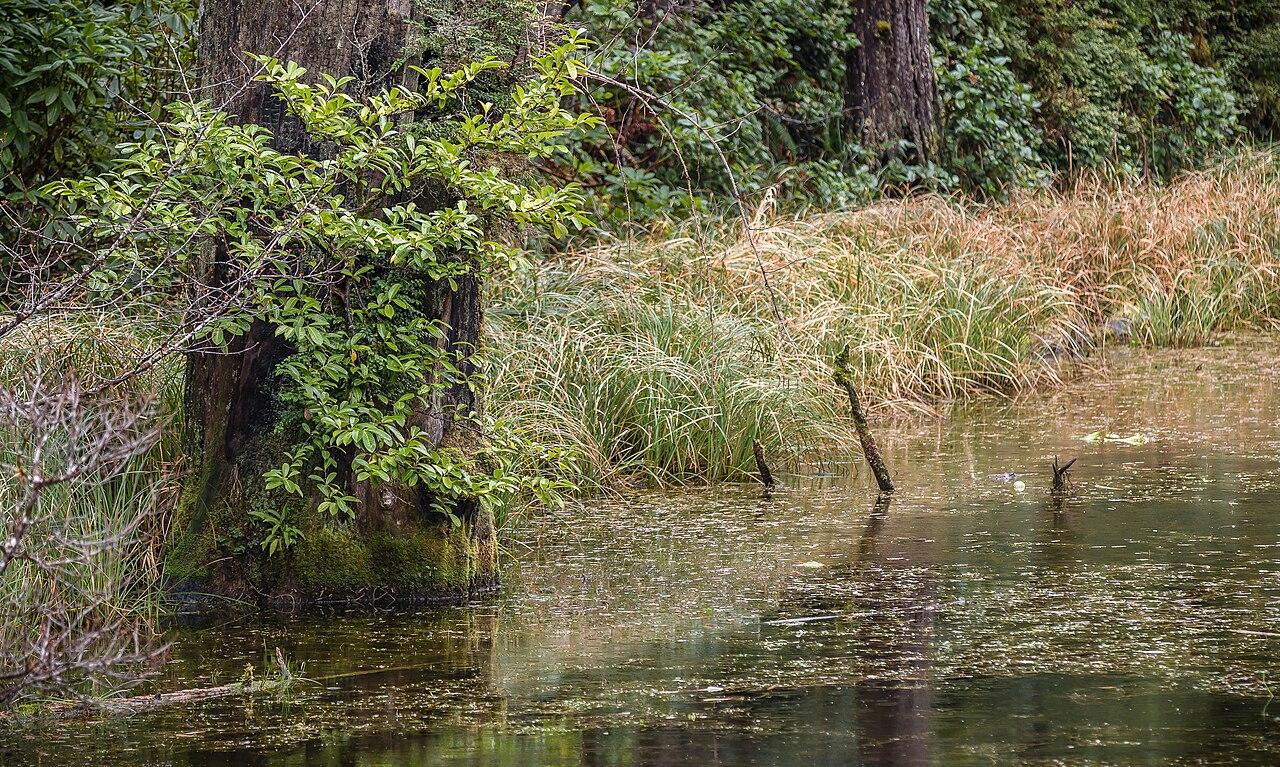
Figure 1. Shoreline vegetation beside forest-fringed Lost Lake.
Photo: BLM Oregon & Washington | publicdomain
A lake's open water, bottom, and deeper regions can offer different living conditions and support organisms adapted to them. That makes depth more than a measurement: it helps describe different places within the same body of water. [2]
During warm weather, lakes that stratify typically develop a warm upper layer, a middle region where temperature changes, and colder water below. These layers give an apparently still lake an internal structure that a view from the bank does not reveal. [3]
Light adds another boundary. The sunlit, or photic, zone receives enough sunlight for phytoplankton to photosynthesize, and its thickness varies with sunlight and water cloudiness. There is no single depth that marks the same lighting conditions everywhere. [4]
Fish do not follow a simple universal depth chart, either. Research on cisco and yellow perch in five Wisconsin lakes tested predictions based on temperature and oxygen. The findings also pointed to other influences, including avoidance of bright light by perch. Looking beneath the surface means discovering relationships that a shoreline view leaves hidden. [5] The accompanying river-survey photograph captures that act of looking more closely, with researchers using aquascopes to peer underwater.
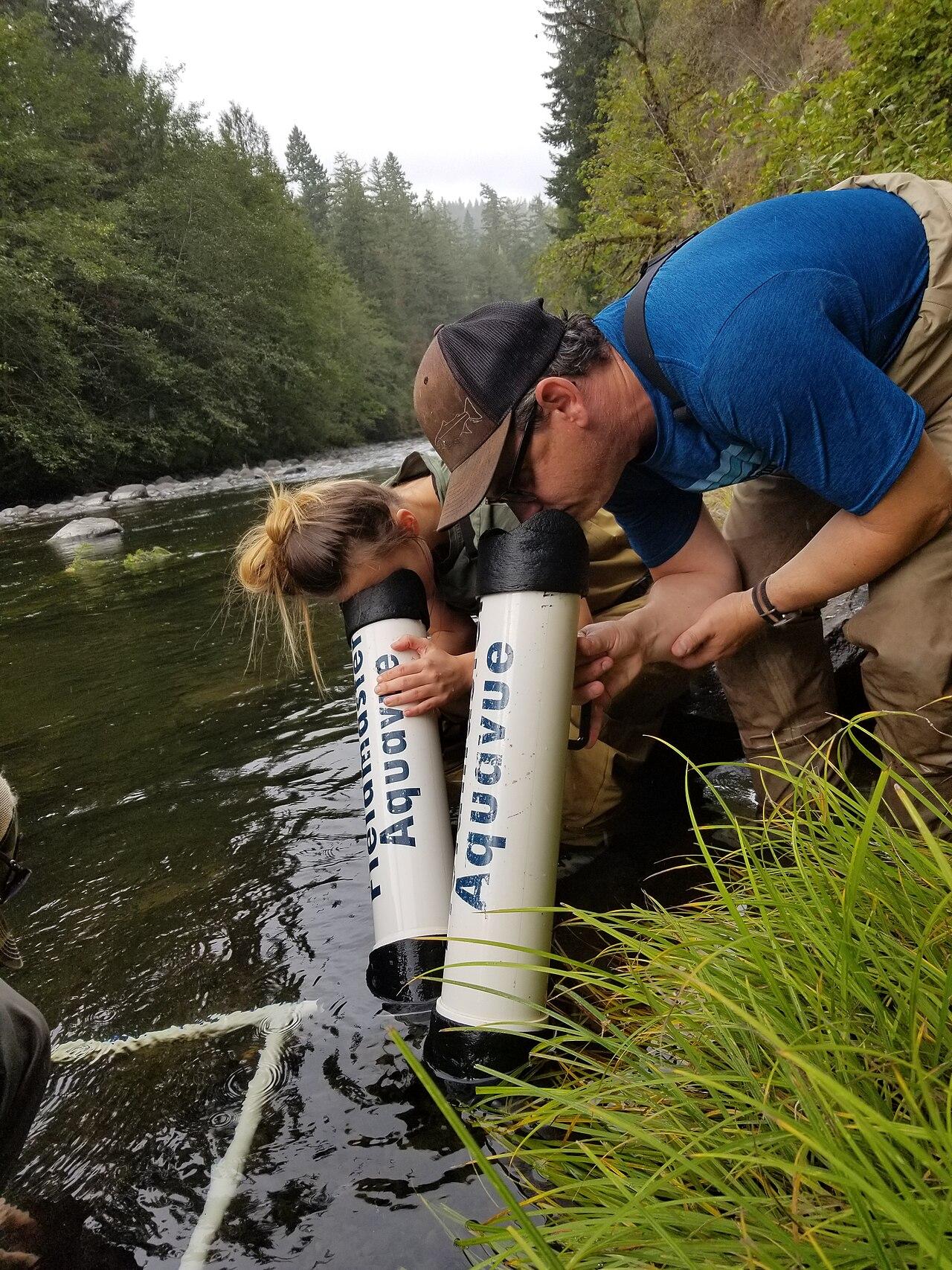
Figure 2. Researchers peer through aquascopes during a freshwater mussel survey in the Molalla River.
Photo: BLM Oregon & Washington | publicdomain
We at Slope3 developed tiny fishing around that invitation to discover more beneath a familiar surface. Our concept turns a simple fishing trip into a journey downward: the boat stays your recognizable starting point while better equipment opens deeper water and new encounters. We chose a wooded shoreline and brightly colored underwater creatures to make the contrast welcoming and clear. Increasing fish rarity and value give our game its own playful reason to keep exploring.
Story
Imagine Mara, a tackle repairer in a lakeside village, inheriting a weathered boat and a notebook. Its pages contain careful fish sketches beside a drawing of the lake, but the drawing stops halfway down. Below the last penciled line, the paper is blank. Mara decides that her inheritance is an unfinished question.
Her first morning ends with an empty hook. Back at the landing, familiar trees lean over familiar water, and nothing seems different. That evening, she repairs her tackle beneath a small lamp and opens the notebook again. The blank space has not become any smaller. Tomorrow, she decides, she will reach a little farther.
In time, her catches pay for better equipment. Then comes an unfamiliar flash of color beneath her old limit, gone almost before she can follow it. Mara returns with a new sketch and leaves the next page open. This imagined journey carries the spirit of our game: coming back to the same little boat with a better chance of finding something new.
Gameplay
Time your cast, then steer the hook sideways as the line automatically returns toward the surface. Fish that touch the hook join your catch until you reach your Max Fishes capacity. At the surface, the catch automatically becomes money based on the fish collected. Spend your earnings on upgrades, then repeat the loop to carry more fish and explore deeper water.
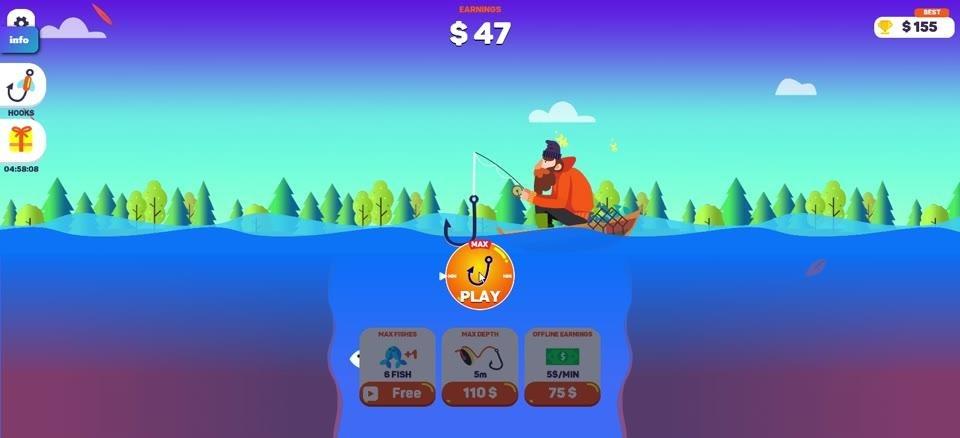
Figure 3. The angler's boat above the PLAY casting dial and upgrade cards.
Your Angler, Hook, and Catch
Your bearded angler sits in a small brown boat, wearing orange outerwear and a dark hat. You control the cast and the hook beneath the boat. A pale fishing line connects the surface setup to the curved hook, which collects fish on contact during retrieval.
Look for turquoise, lime-green, yellow, rounded white, and orange-striped fish. Different catches have monetary values, and greater depths introduce rarer, more valuable creatures. Capacity matters because a full hook cannot collect additional fish on that trip. The choice is which fish to gather before those spaces fill.

Figure 4. Colorful fish surround the hook beside a depth label and catch-value feedback.
For a first trip, guide the returning hook into a nearby fish. Once it joins the catch, steer toward another while capacity remains. When the hook reaches the surface, those catches produce money. You can then put that money toward equipment for later trips.
Depth, Capacity, and Upgrades
The Max Depth card sits on the left beneath the casting dial and increases how far down you can reach. The middle Max Fishes card increases the number of fish you can bring back per cast. These upgrades serve different needs: reaching new water and making room for a larger catch.
Cast timing works within your current depth limit. A PERFECT START marks a cast that reaches the deepest available point, giving you access to more valuable fish farther below. Small meter labels beside the underwater action help you follow your depth.
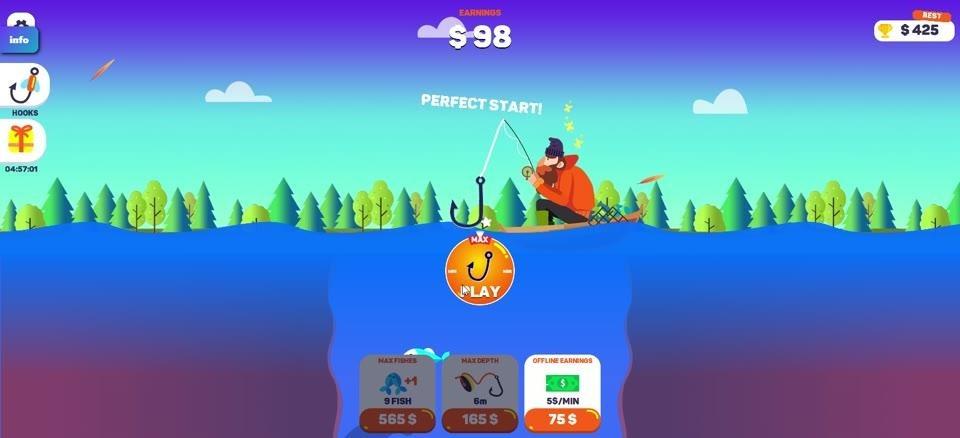
Figure 5. PERFECT START appears above the angler after a deepest-reaching cast.
Success, Rewards, and Empty Trips
There is no final victory to complete: upgrading continues indefinitely. Success means bringing back valuable catches, improving your equipment, and reaching farther on future trips. A fishing round ends when the hook returns to the surface. An empty trip earns nothing but costs you nothing; it does not take away currency or progress.
The result panel displays a monetary SCORE, a BEST figure, and a NEW RECORD notice when you set a new best. Confetti celebrates the results. Fish values determine the money from your catch; floating dollar amounts and RARE! notices give feedback during retrieval.

Figure 6. A monetary score and NEW RECORD notice on the purple results panel.
Below the result, the bright pink CLAIM x4 option requires watching an advertisement, while a smaller CLAIM button sits underneath. The panel also contains a BONUS indicator. A small gold-symbol counter at the upper left tracks money harvested from fishing trips.
Reading the Interface
During fishing, the white fish-shaped counter in the upper-right corner counts fish already caught. At the surface, the large EARNINGS total at the top center shows money available for purchases and upgrades. A yellow-and-red gift icon with a countdown sits along the left side. The small blue Info tab near the upper left returns you to our game library.
Visual Style
We chose bright 2D cartoon graphics for a fishing trip that feels approachable at a glance. Pointed green and yellow trees line the horizon beneath a cyan sky and small white clouds. The angler's orange clothing stands out against the blue lake, keeping the boat easy to recognize between trips.
Underwater, the long line draws your eye toward the hook. Colorful fish stand out against blue water, while irregular purple side regions, dark aquatic silhouettes, and turquoise fronds frame the fishing area. This contrast keeps your next possible catch easy to spot while preserving the feeling of a world extending below the boat.
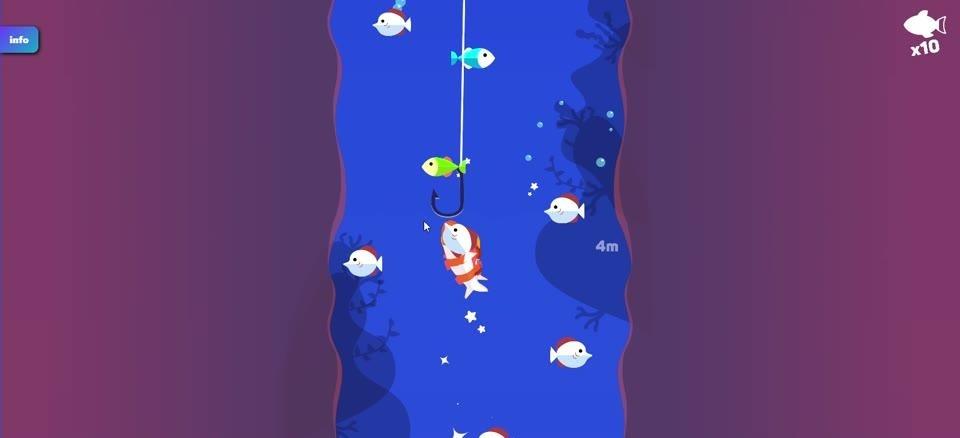
Figure 7. A pale fishing line and bright fish stand out against blue water and purple borders.
Standout Features
Automatic retrieval gives each trip a clear task: choose the hook's sideways path while its journey upward takes care of itself. Limited catch capacity makes those choices matter. You can fill up quickly, but leaving room for a more valuable encounter gives you another reason to watch the water carefully.
Ridiculous Fishing also catches fish during retrieval, but it asks players to avoid fish during descent and then shoot the catch out of the sky for upgrade money. [6] In tiny fishing, your catch converts to money at the surface, and there is no combat. Our challenge centers on cast timing, selecting fish, and choosing upgrades without strict time pressure.
Depth and capacity offer two satisfying ways to improve: discover farther below or bring more back from each trip. Neither requires leaving that familiar little boat behind. Join us on Slope3 and see what your next cast brings up.
Controls
PC: Mouse
1. Find the orange circular PLAY dial below the boat. Left-click it to time your cast within your current depth limit.
2. As the line automatically rises, hold the left mouse button and drag left or right to steer the hook into fish.
3. At the surface, click the purchase area on an upgrade card below the dial to spend your money on that upgrade.
Mobile: Touch
1. Tap the orange circular PLAY dial below the boat to time your cast within your current depth limit.
2. During automatic retrieval, touch and hold, then swipe left or right to steer the hook into fish.
3. At the surface, tap the purchase area on an upgrade card below the dial to buy that upgrade with your earnings.
References
[1] Water column. https://en.wikipedia.org/wiki/Water_column
[2] Lake ecosystem. https://en.wikipedia.org/wiki/Lake_ecosystem
[3] Lake stratification. https://en.wikipedia.org/wiki/Lake_stratification
[4] Photic zone. https://en.wikipedia.org/wiki/Photic_zone
[5] Predicting the Vertical Distribution of Fish Populations: Analysis of Cisco, Coregonus artedii, and Yellow Perch, Perca flavescens. https://doi.org/10.1139/f85-146
[6] Ridiculous Fishing. https://en.wikipedia.org/wiki/Ridiculous_Fishing
Image Credits
Lost Lake (33243252880).jpg — BLM Oregon & Washington — publicdomain. https://commons.wikimedia.org/wiki/File:Lost_Lake_(33243252880).jpg
Freshwater mussels in the Molalla River (48958493371).jpg — BLM Oregon & Washington — publicdomain. https://commons.wikimedia.org/wiki/File:Freshwater_mussels_in_the_Molalla_River_(48958493371).jpg