Concept and Inspiration
An apple tree can become a living pattern. In the centuries-old practice of espalier, growers prune branches and tie them to supports, training fruit trees into flat arrangements against walls, fences, or trellises. Some look like ladders made of leaves; others spread in carefully balanced fans. The technique brings fruit growing into narrow gardens where an ordinary spreading tree might take up too much room. [1]
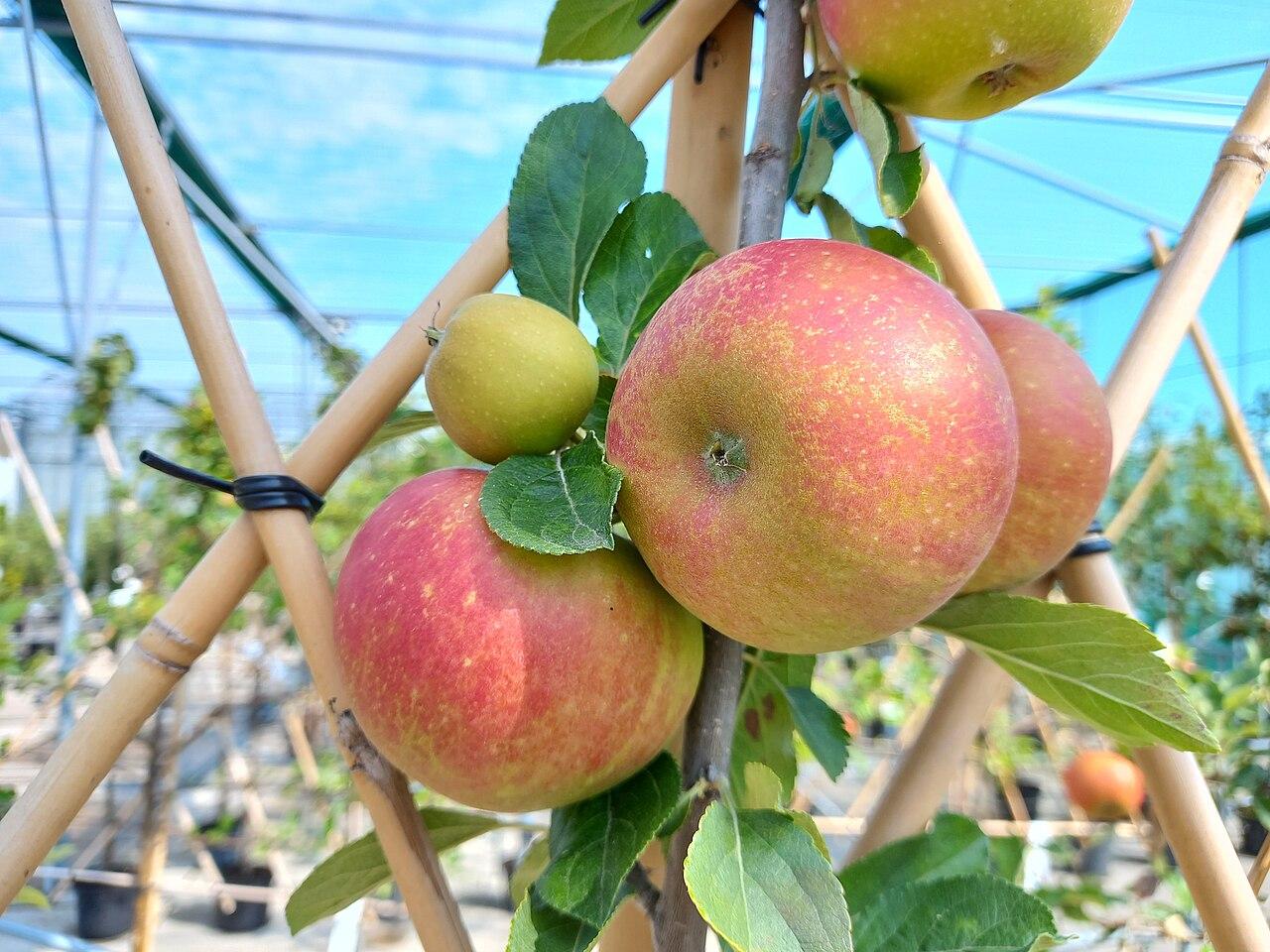
Figure 1. Red apples growing on an espalier-trained Elstar apple tree.
Photo: Frank Houweling (Fruitbomen.net) | ccby-sa4.0
The direction of a branch matters. A classic espalier can have a central trunk with paired horizontal limbs, all growing in roughly the same plane. Training a branch upright encourages extension, while guiding it horizontally can shift growth toward fruit production. In cooler climates, a nearby wall may also reflect sunlight and hold warmth after sunset. The gardener is working with a living shape, one turn and one branch at a time. [1]
These carefully directed trees also belong to the history of walled gardens. Walls could shelter plants from wind and frost, and gardeners sometimes trained fruit trees right against the masonry. Pruning helped them remove damaged growth, shape branches, and encourage flower and fruit buds. The result joined practical fruit growing with a striking piece of garden design. [2] [3]
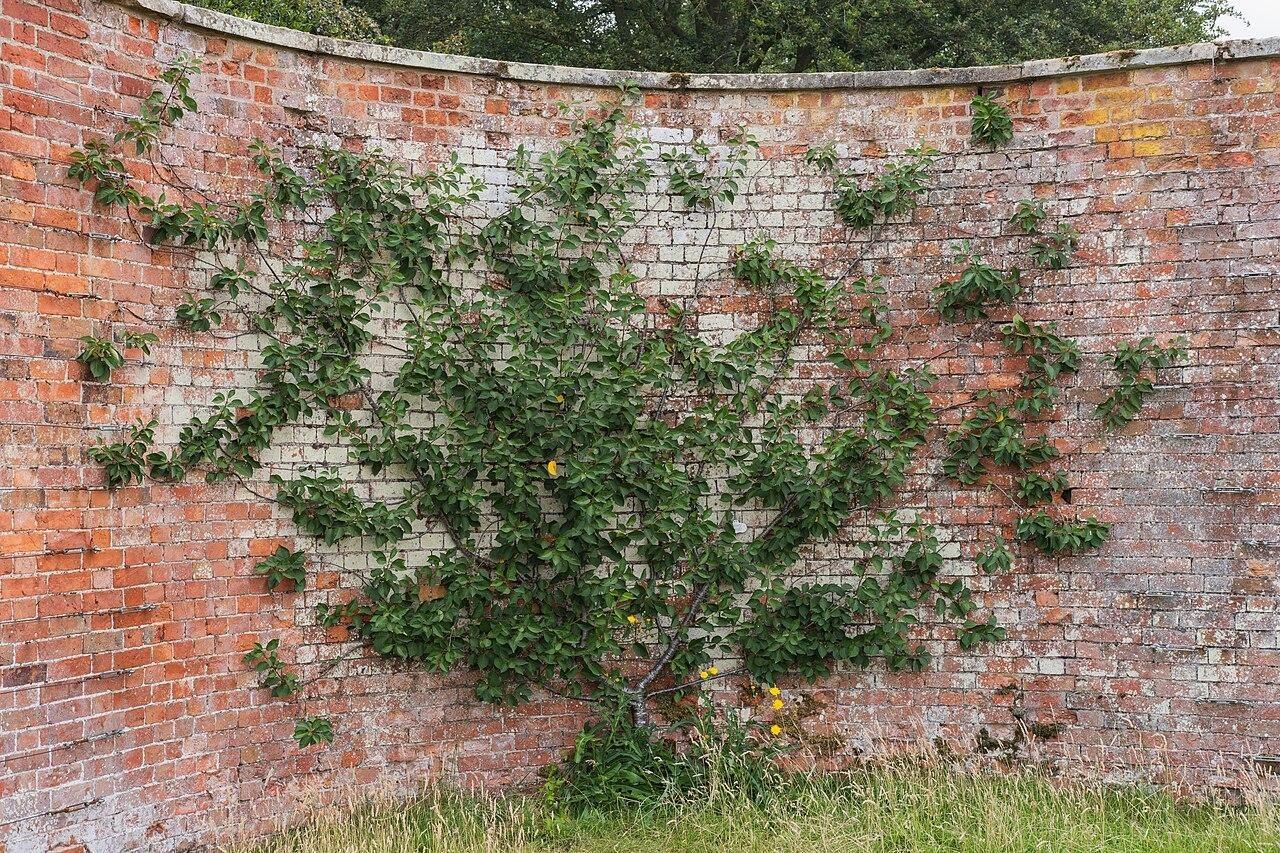
Figure 2. A fan-trained fruit tree spreads its branches across a brick garden wall.
Photo: Christian David | ccby-sa4.0
The range of possible shapes is part of the appeal. A 1938 nursery catalog offered espalier-trained apples alongside pears, plums, peaches, nectarines, and apricots. A 1939 catalog described a six-armed Palmette Verrier form intended for broad stretches of wall, trellis, or pergola. Such examples show how a garden's boundaries can become a guide for growing something beautiful. [4] [5]
Fruit-tree architecture remains a subject of study as well as an art. One study of apple cultivars grown in espalier arrangements reported different yields among varieties, including 29.45 kilograms per tree for Coe red Fuji and 16.04 for Spartan. Research on peach training systems has likewise found that flatter canopies can distribute light more uniformly. How a growing form occupies space can change what that space makes possible. [6] [7]
At slope3.com, we developed Apple Worm around a playful version of that idea: a growing green line finding a path through a carefully arranged garden. Instead of training branches, you guide a little worm among wooden ledges. An apple makes its body one segment longer, and every new shape changes the route you can consider. The orchard colors and orderly obstacles turn the art of making room for growth into a compact puzzle world.
Story
In a secluded hillside orchard, an old gardener once taught apple branches to follow the lines of wooden terraces. The trees grew into neat fans and tiers, and the paths below them wound through pockets of shade. Then the garden fell quiet. As the last light slipped across the leaves, small black spirals began to open between the platforms, like secret doors waiting for a traveler small enough to notice them.
A curious green worm with an enormous red face takes that invitation personally. Its journey is simple in spirit: find a way through each little garden chamber and reach the next spiral doorway. But the orchard has its own sense of humor. A shiny apple can make the traveler longer, just when a narrow corner demands a clever change of direction. Sometimes the sweetest prize is useful; sometimes the route forward asks for restraint.
Beyond each doorway, the terraces stand in a new arrangement. Tall posts interrupt the easy path, empty sky opens beneath the boards, and a familiar stretch of wood suddenly calls for a fresh approach. The little worm presses on through this imagined orchard, learning that growing bigger is only part of growing wiser. Every safe crossing brings it one step closer to the garden's hidden heart.
Gameplay
Guide the green worm one grid cell at a time across wooden platforms toward the black spiral exit. Change direction to navigate corners and fixed blocks, and touch a red apple when its extra body segment can help your route. Reaching the spiral completes the level and unlocks the next one. Falling off the wooden structures loses the attempt; after an advertising interruption, the same level restarts automatically. That's the core loop: move, judge the space ahead, and find a safe way out.
The Worm, Apples, and Exit
Your character is a bright-green chain of body segments with a red face and wide cartoon eyes. Each successful directional move advances its head by one cell. The small glossy red apples have a precise effect: touching one adds exactly one body segment. A worm-and-apple diagram near the top of an early level illustrates that rule. Apples often help you reach awkward places, but you do not have to collect an apple to finish every level. The dark disk marked with curved rings is your exit portal, even when it sits below a wooden board.
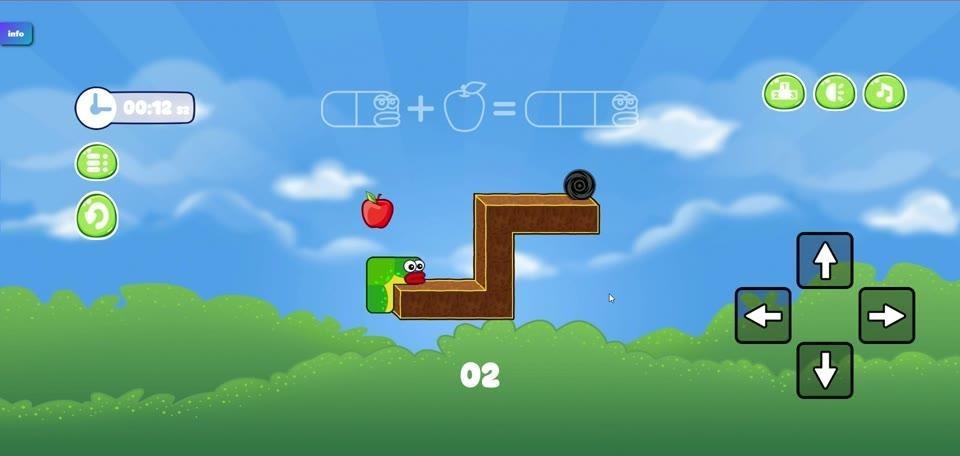
Figure 3. The green worm, a red apple, and an on-screen hint explaining how the worm grows.
Platforms, Fixed Obstacles, and Gaps
Thick brown wooden ledges make the walkways. Other pieces bend into right-angled steps, U-shaped pockets, and squared-off turns. These shapes decide where the worm can go, so study the route rather than rushing straight at the spiral. If its head meets the side of a wooden block, the move is blocked; that contact does not end the attempt. The worm's own body can block a direction too, without causing a loss.
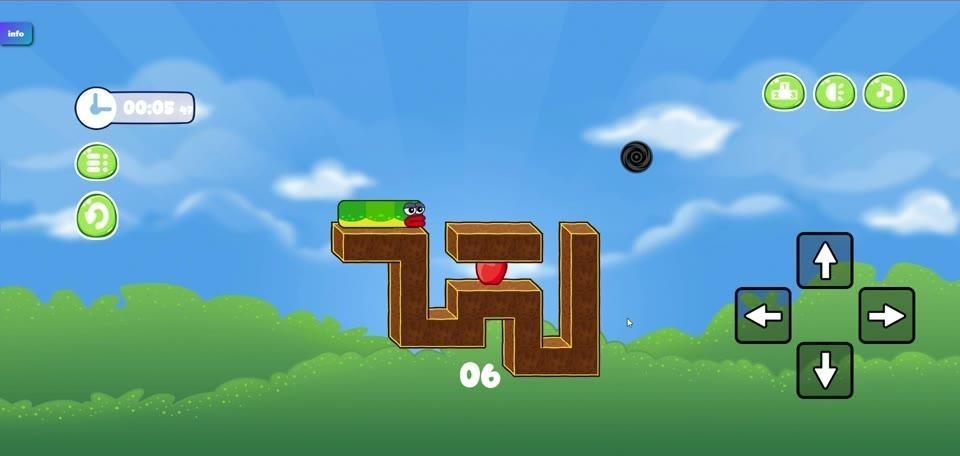
Figure 4. Right-angled wooden paths and open spaces form a compact worm puzzle.
Later layouts add tall upright wooden posts, a short separate slab above the main walkway, and a small square block. The upper slab and square block are fixed obstacles, not pieces you push around. Empty blue spaces between supports are the real danger: if the worm falls off the wooden route, the attempt is lost. For example, when a square block stands between you and the exit, find a way around it; if an apple lies on a useful detour, take it to grow, then continue toward the spiral while staying supported.
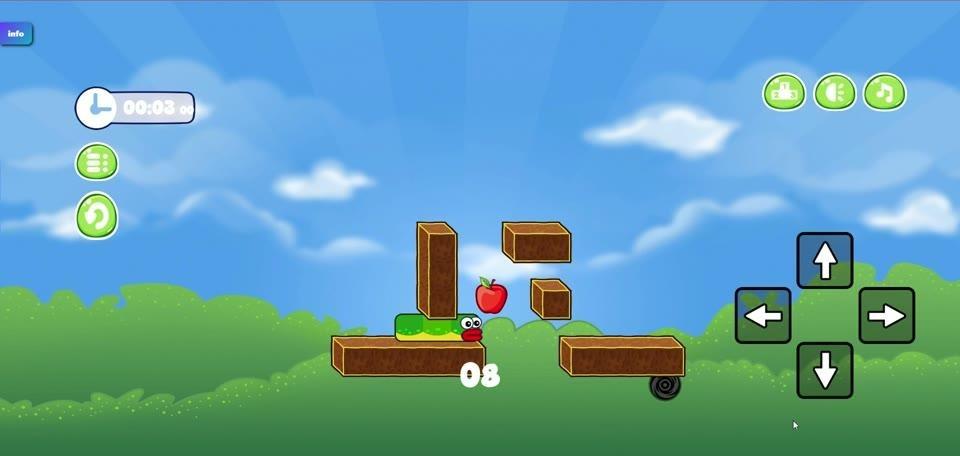
Figure 5. Tall posts, separated wooden blocks, and gaps create a more intricate level layout.
Finishing a Level and Recovering from a Fall
Apple Worm has a finite series of numbered puzzles. Success means reaching the spiral in the current level; doing so opens the next level and saves that progress. Each new stage gives you a different arrangement of wooden routes to navigate. A fall ends the current attempt. After the advertisement, the level begins again, with its step count and elapsed time reset, while levels you already unlocked remain available.
Time, Rankings, and Screen Buttons
A white rounded timer at the upper left records how long you have played the level; there is no time limit. Large two-digit numbers identify the current stage. After a successful finish, the results panel shows rankings with NO., NAME, STEP, and TIME columns. STEP counts your movements, and TIME records how long completion took. Using fewer steps and finishing faster helps your leaderboard position. You can enter and submit a name, and submitted leaderboard records are saved across visits. The results screen also displays TODAY, WEEK, MONTH, and ALL TIME categories.
The small green list button on the left opens the level-selection menu. Below it, a green curved-arrow button returns you to the menu and resets the current step and time figures. At the upper right, three green buttons provide the leaderboard, sound on/off, and music on/off controls, respectively. These buttons make it easy to check progress or adjust audio without confusing them with the game's wooden obstacles.
Visual Style
Apple Worm uses cheerful, easy-to-read cartoon art. A blue sky fades behind soft white clouds and pale sunrays, while rounded green shrubs suggest an orchard beyond the puzzle. The platforms have warm brown wood textures and light edges, making each ledge and gap clear. Against those colors, the worm's bright-green body and red face stand out immediately; the apples are small, glossy red accents worth noticing.
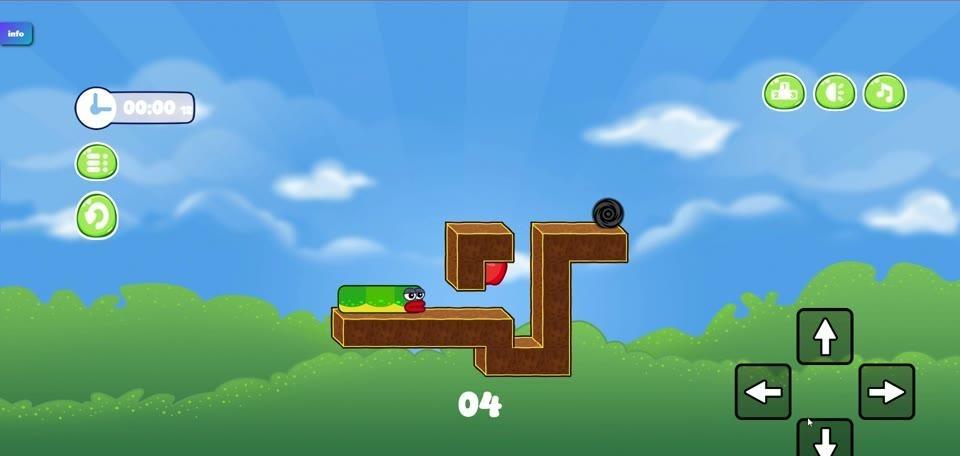
Figure 6. A colorful garden backdrop frames the worm and wood-textured puzzle paths.
The black spiral gives the exit a distinct shape, whether it is high above the worm or tucked beneath a platform. Decorative foliage and little green patches on the boards keep the garden feeling lively without changing movement rules. A large cream-colored cartoon apple core, with red peel and a green stem, adds a playful face to the results area; it is scenery, not an enemy. The simple shapes keep your attention on the next move.
Standout Features
The clever twist is that an apple changes your character's length, not just a score. One extra segment can make a route more promising, while the fixed posts and corners give you a reason to think carefully about where that longer body goes. Because an apple is helpful rather than universally required, different level layouts can call for different choices.
The rules draw a useful line between a blocked move and a costly mistake. Touching a wooden barrier or your own body stops that move, so you can reconsider. Dropping off a platform ends the attempt and leads to an ad interruption before the level restarts. That distinction makes the edge of a ledge more important than a harmless bump into a wall.
Every cleared level saves a new piece of your journey, and the leaderboard gives each puzzle a second challenge: can you reach the same exit in fewer steps or less time? With no countdown forcing a loss, you can examine the wooden route at your own pace before trying for a cleaner run. Play Apple Worm on slope3.com and see what shape your next solution takes.
Controls
PC
1. On the puzzle screen, find the green worm. Press Up Arrow or W to move its head up one cell; Down Arrow or S for down; Left Arrow or A for left; and Right Arrow or D for right.
2. Press R to restart the current level and return the worm to its starting position.
Mobile
1. On the puzzle screen, swipe up, down, left, or right to move the worm one cell in that direction.
2. When the four square arrow buttons are available on the right side, tap the up, down, left, or right arrow to move the worm one cell that way.
References
[1] Espalier. https://en.wikipedia.org/wiki/Espalier
[2] Walled garden. https://en.wikipedia.org/wiki/Walled_garden
[3] Fruit tree pruning. https://en.wikipedia.org/wiki/Fruit_tree_pruning
[4] Espalier fruit trees for spring and fall planting, 1938. https://openalex.org/W3086057372
[5] New varieties of espalier dwarf trained fruit trees for planting, 1939 [now]. https://openalex.org/W3088208594
[6] Effect of cultivars on tree growth, yield and quality attributes of apple on espalier architecture under high density planting system. https://doi.org/10.24154/jhs.2019.v14i01.005
[7] Canopy architecture impact on peach tree physiology, vigor diffusion, productivity and fruit quality. https://doi.org/10.1016/j.scienta.2025.114025
Image Credits
Appls on an Elstar espalier apple tree.jpg — Frank Houweling (Fruitbomen.net) — ccby-sa4.0. https://commons.wikimedia.org/wiki/File:Appls_on_an_Elstar_espalier_apple_tree.jpg License: https://creativecommons.org/licenses/by-sa/4.0
Fan-trained fruit tree on the garden wall, Attingham Park, Shropshire.jpg — Christian David — ccby-sa4.0. https://commons.wikimedia.org/wiki/File:Fan-trained_fruit_tree_on_the_garden_wall,_Attingham_Park,_Shropshire.jpg License: https://creativecommons.org/licenses/by-sa/4.0