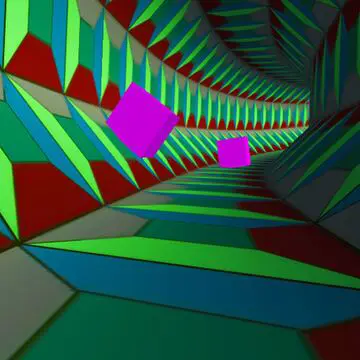
Concept and Inspiration
A ship can be painted so loudly that it becomes harder to read. During World War I, dazzle camouflage covered vessels in large, contrasting angles, stripes, and irregular blocks. The aim was not to hide a ship against the sea. These patterns were intended to make an observer misjudge its heading and movement, especially when trying to predict where it would go next. British naval use of dazzle schemes was followed by American adoption, turning ordinary hulls into striking moving puzzles. [1]
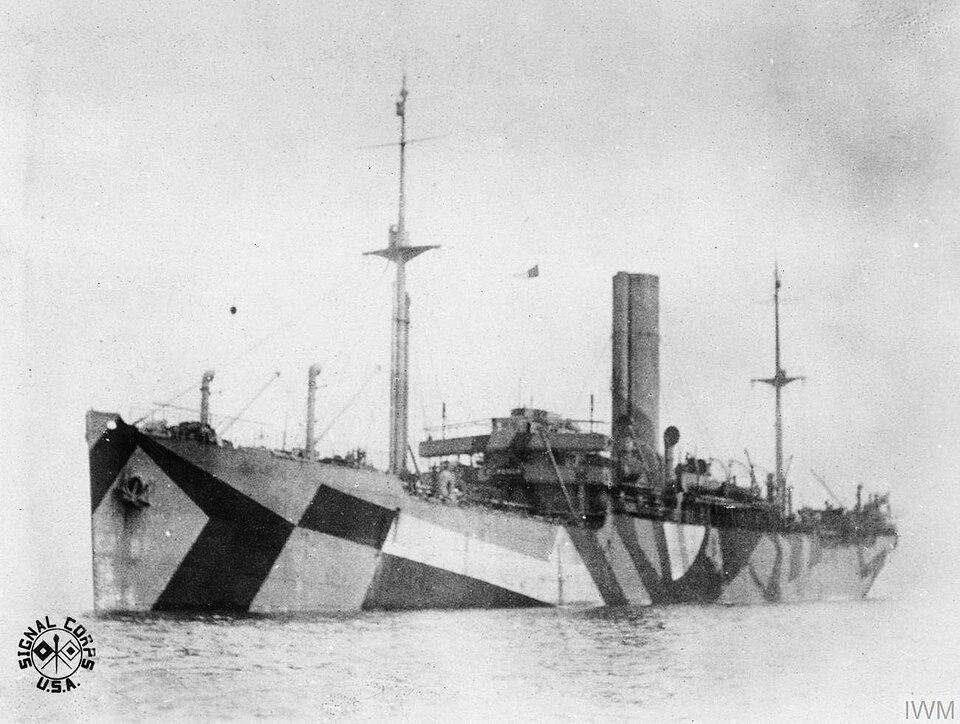
Figure 1. The dazzle-painted SS Elpenor in Liverpool, with bold diagonal shapes crossing its hull.
Photo: American official photographer | publicdomain
British artist Norman Wilkinson helped advance the idea of confusing an enemy's estimate of a ship's course. Artists also turned the concept into remarkable visual compositions: Edward Wadsworth, associated with the Vorticist movement, worked on applying dazzle patterns to British ships and later explored maritime subjects in his art. RMS Olympic's striped hull shows how curves and jagged bands could collide across one enormous surface. Individual schemes varied, and the real-world success of the wartime tactic remains difficult to pin down. [1] [2]
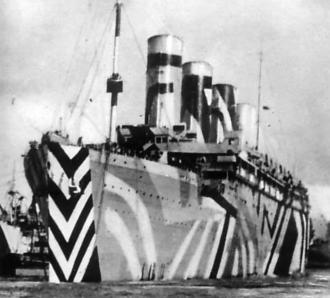
Figure 2. RMS Olympic in a high-contrast dazzle scheme of zigzags and curved bands.
Photo: G.A. Pratt | publicdomain
The visual trick is more than an old naval curiosity. A 2011 experimental study found that high-contrast dazzle patterns could alter judgments of a moving target's speed, with particularly notable effects at higher speeds. That finding does not mean stripes always make a target seem slower; it shows how a bold pattern can complicate a split-second estimate of motion. [3]
Other experiments reveal why context matters. A 2013 study found that stripe orientation and the viewing task influenced perceived speed and targeting results; in that setup, striped targets could even be judged faster. More recently, researchers using three-dimensional ship imagery reported that certain texture patterns could bias estimates of a vessel's direction, although the benefits were conditional. Dazzle is a question for the eyes, not a guaranteed optical spell. [4] [5]
At Slope3, we developed Tunnel Rush around a playful version of that visual tension. We fill a fast-moving tunnel with zigzags, vivid color shifts, and repeating shapes, then give you a simple, urgent job: read the path ahead and slip past the solid red hazards. The patterns make every stretch feel unsettled; the red obstacles give your next decision a clear consequence.
Story
Beyond a fictional harbor called Dazzle Passage, the lights are going out one district at a time. Iona, a young courier, carries a warning meant for the last beacon beyond the city. The only way forward is an old transit tunnel whose walls were painted in clashing stripes to confuse anyone following the route.
Inside, the corridor seems to change its mind at every bend. White zigzags cut across black walls. Green grids flash into violet swirls. Red shapes swing across the passage like moving barricades, while heavy slabs close off most of the way ahead. Iona has no map that can solve the next few seconds for her. She has to notice the opening, commit, and keep moving.
The beacon stays somewhere beyond the next burst of color. Each safe passage buys another stretch of road, another chance to carry the message farther. That endless pursuit captures the feeling at the heart of Tunnel Rush: when the world refuses to hold still, progress belongs to the traveler who keeps finding a way through.
Gameplay
You control the first-person view as Tunnel Rush carries you forward through a long, colorful tunnel. Steer left or right to pass through openings between red obstacles. Clear the shape and your distance keeps growing in meters; touch any red obstacle and the run ends immediately. The loop is easy to learn: spot the next gap, move into it, and repeat as the tunnel gets faster.
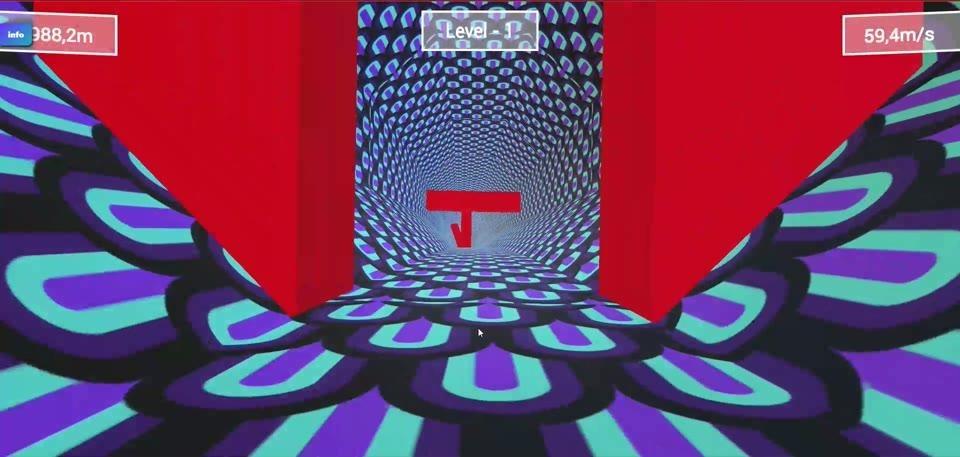
Figure 3. Broad red slabs leave a narrow clear opening through a purple-and-cyan tunnel.
Your View and the Obstacles
There is no separate ship or runner body in front of you. You guide the viewpoint itself, watching the tunnel draw closer and judging where the safe space will be. Some hazards hold their position; others rotate, so the opening you need may shift while you approach.
Sharp red triangular wedges jut into the route, and bent red chevrons rotate across your line of travel. Even the smaller red shards count as obstacles: clipping one ends the run. Broad red slabs can block most of the tunnel, leaving a gap to one side or between them. Narrow horizontal red blocks farther ahead demand the same quick read of their position. The safe choice is the empty space, never the red surface.
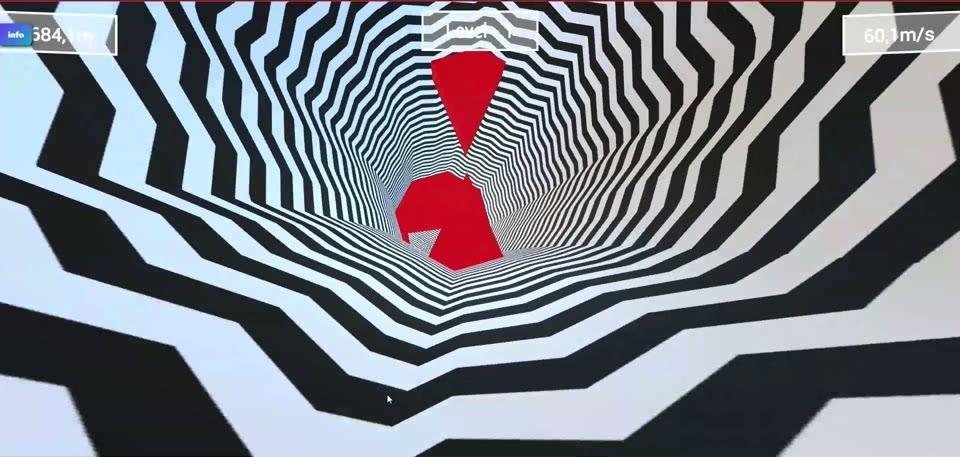
Figure 4. Red triangular wedges extend into the tunnel and threaten the open route.
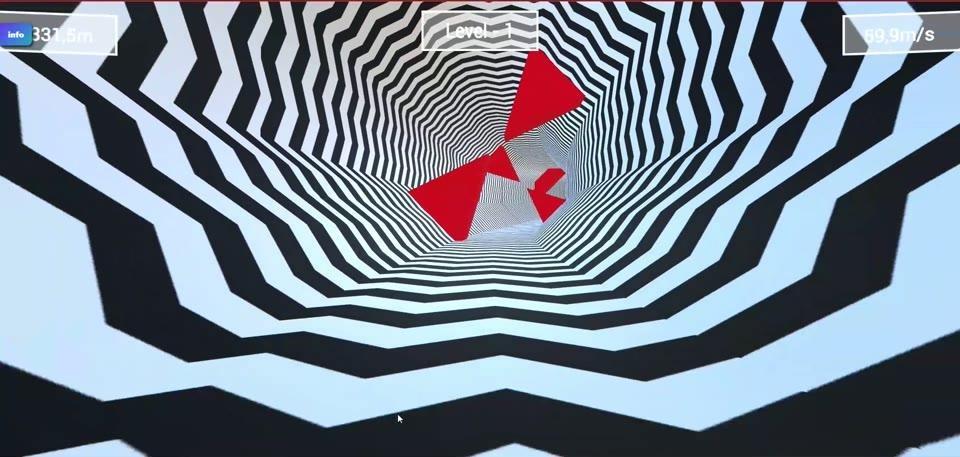
Figure 5. Black-and-white zigzag walls surround bright red rotating triangles and small hazards.
For example, when a wide slab blocks the left side, steer toward the visible opening. If a rotating triangle follows, watch its red edges and move clear before you reach it. Each clean pass lets the run continue; a single collision stops it.
Distance, Levels, and Results
Tunnel Rush is endless, so there is no final finish line or one-time victory screen to reach. Your aim is to travel farther than before. The distance covered, measured in meters, is your score; the game does not add separate points for a dodge. A successful stretch rewards you with more distance and the chance to set a better recorded result.
The top-left readout shows your distance, the top-center label identifies your current level, and the top-right readout shows speed in meters per second. As you travel far enough, the game moves from one level to the next and automatically raises the pace and difficulty. You steer, but you do not set the forward speed.
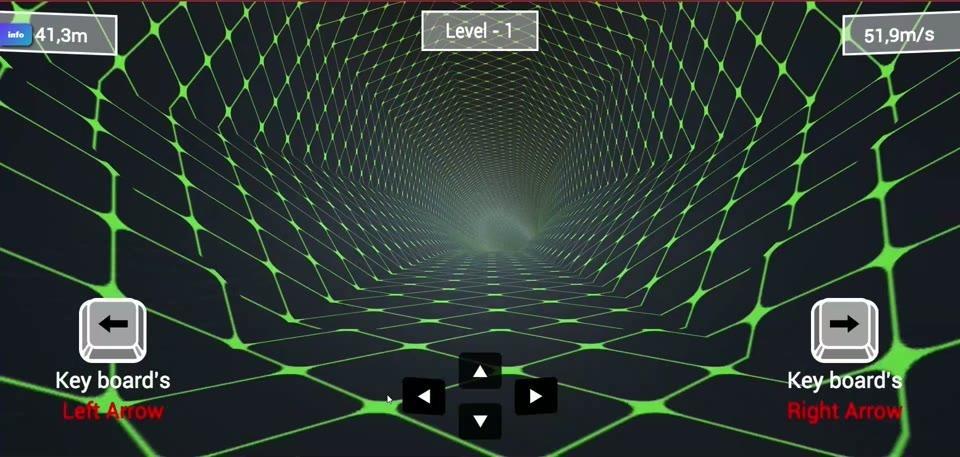
Figure 6. A neon-green lattice tunnel with the distance, level, and speed readouts above the path.
A collision ends the current run. When you restart, both the distance counter and level return to their starting state, while saved results remain available for comparison. The leaderboard lists recorded distances, including a Recent Score for the run you just finished. Its TODAY, 7 DAYS, 30 DAYS, and ALL TIME tabs let you check results over different periods.
Starting and Returning
The title screen displays TUNNEL RUSH in large yellow-orange and blue letters. Enter a player name in the field below the title, then use the triangular Play button beneath it to begin; your chosen name identifies your leaderboard results.
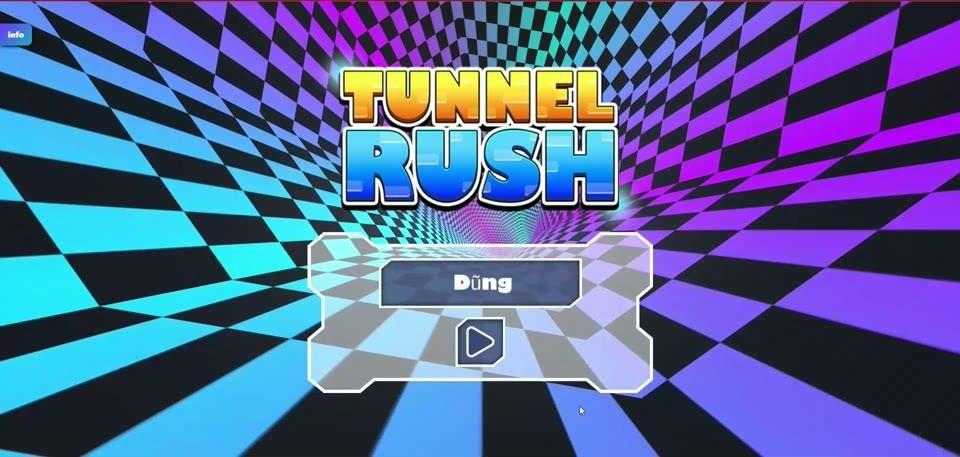
Figure 7. The Tunnel Rush title screen with a player-name field and triangular Play button.
After a run, a circular-arrow button beneath the leaderboard starts another attempt. The house-shaped button takes you back to the title screen. You can try for a longer distance without losing the recorded results of earlier runs.
Visual Style
Our tunnel changes its look dramatically as you move: one stretch shines with a neon-green lattice, another folds into high-contrast black-and-white zigzags, and another blends pink, yellow, cyan, navy, purple, green, and red into a marbled rush. Turquoise and purple petal-like repeats add another rhythm to the walls.
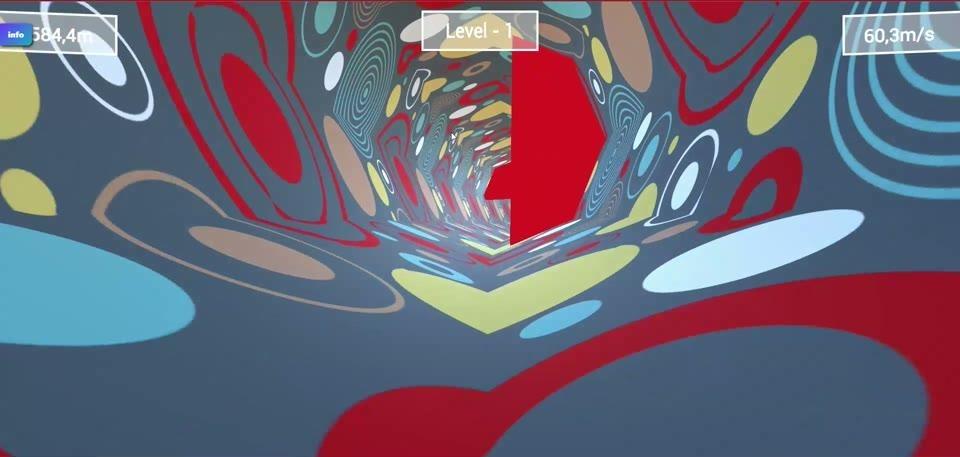
Figure 8. A rushing tunnel wrapped in bright pink, yellow, cyan, and dark marbled colors.
Elsewhere, pale white-and-blue grids carry black starburst patterns. These printed patterns and color fields are scenery, while the solid red triangles, bars, chevrons, slabs, and shards are the objects you must avoid. We chose that clear red hazard language so you can pick out a physical threat even when the background gets busy.
Standout Features
The first-person perspective makes every opening feel immediate. You do not watch a character run down a distant track; the approaching gap fills your view. Because obstacles can be fixed or rotating, you must read both where a barrier sits and how it is moving before you commit.
The game also keeps its challenge measurable. Meters traveled give each attempt a simple result, while automatic level changes and rising speed push your reactions further without asking you to manage a separate accelerator. The leaderboard turns a brief run into a distance worth chasing, with time-range filters to put recent performances beside longer-term results.
The shifting tunnel patterns give that straightforward dodge-and-survive loop a distinctive identity: the walls play tricks with your attention, but the red barriers tell you exactly what matters. Play Tunnel Rush on Slope3 and see how far you can guide your way through the color.
Controls
PC — Keyboard
1. On the title screen, select the triangular Play button below the player-name field to start a run.
2. Press the Left Arrow key or A to steer your view left.
3. Press the Right Arrow key or D to steer your view right.
Mobile — Touchscreen
1. On the title screen, tap the triangular Play button below the player-name field to begin.
2. Swipe left across the play area to steer left.
3. Swipe right across the play area to steer right.
References
[1] Dazzle camouflage. https://en.wikipedia.org/wiki/Dazzle_camouflage
[2] Edward Wadsworth. https://en.wikipedia.org/wiki/Edward_Wadsworth
[3] Dazzle Camouflage Affects Speed Perception. https://doi.org/10.1371/journal.pone.0020233
[4] Are Stripes Beneficial? Dazzle Camouflage Influences Perceived Speed and Hit Rates. https://doi.org/10.1371/journal.pone.0061173
[5] Dazzle camouflage: benefits and problems revealed. https://doi.org/10.1098/rsos.240624
Image Credits
American First World War Official Exchange Collection Q79808.jpg — American official photographer — publicdomain. https://commons.wikimedia.org/wiki/File:American_First_World_War_Official_Exchange_Collection_Q79808.jpg
RMS Olympic in WWI dazzle paint - Detail.png — G.A. Pratt — publicdomain. https://commons.wikimedia.org/wiki/File:RMS_Olympic_in_WWI_dazzle_paint_-_Detail.png