Concept and Inspiration
Picture a subway car rolling through a city with bright painted letters on its sides. Unlike a mural fixed to one wall, a painted train can carry its colors from stop to stop. In New York City, graffiti writing became closely associated with subway trains during the late 1960s and 1970s. Aerosol paint helped writers create bold, visible marks, and repeated names became part of an increasingly elaborate urban visual culture. A study of graffiti history describes the subway's letter-based signatures as a major movement of the 1970s. [1] [2]
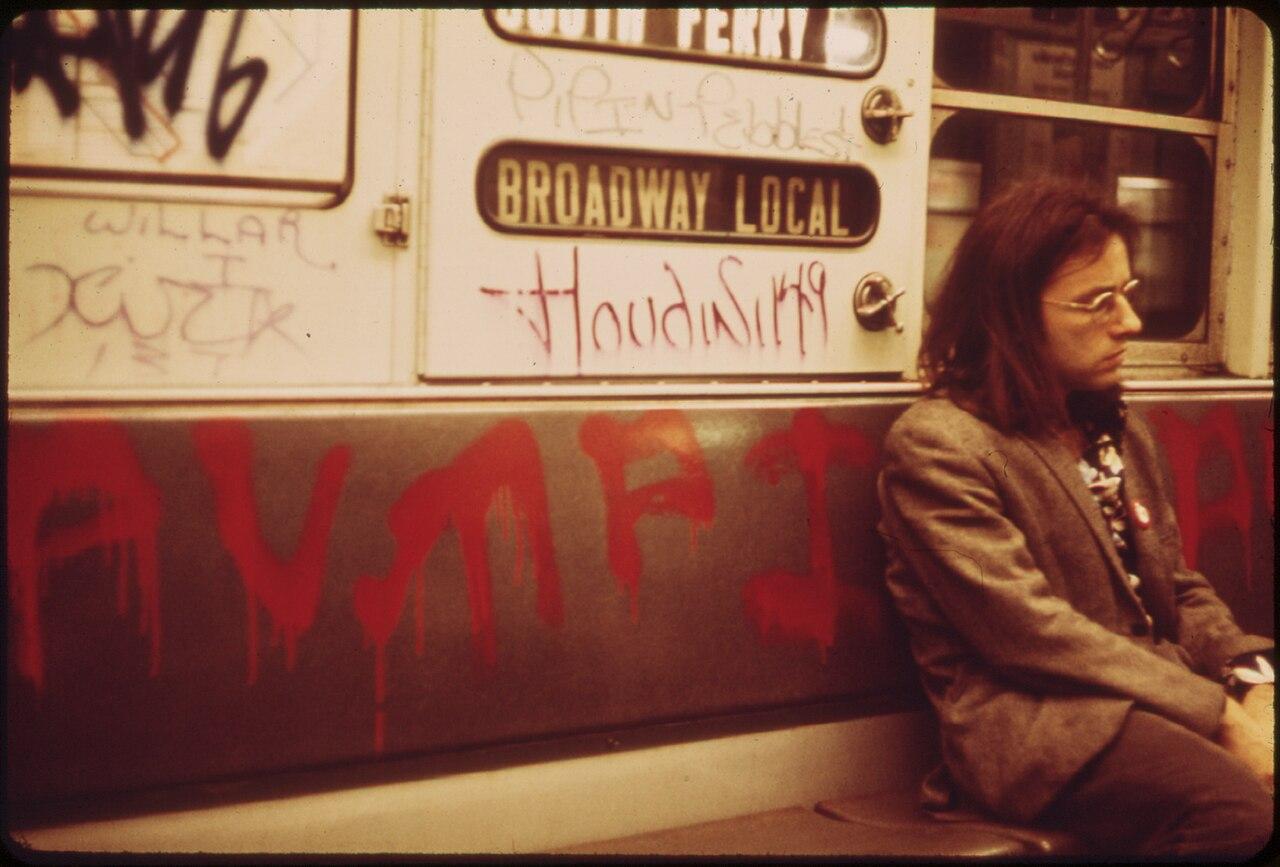
Figure 1. Spray-painted graffiti inside a New York City subway car in a historical photograph.
Photo: Erik Calonius | publicdomain
Those marks could be simple signatures, but their lettering became an art form in its own right. Some writers stretched, layered, and connected letters until a name looked almost like a moving puzzle; the intricate style known as wildstyle can be difficult to read at first glance. [3] Graffiti and street art also reach beyond trains, using spray paint, stencils, stickers, and large murals to change how ordinary city surfaces look. [4] The wall mural pictured here offers a different setting for that wider visual culture: a stationary surface filled with a painted image.
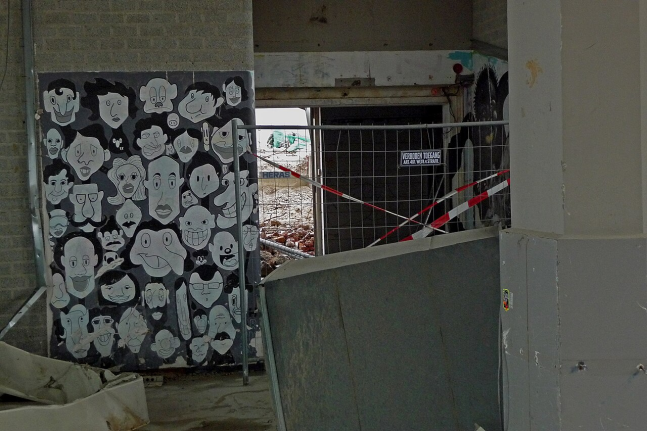
Figure 2. A graffiti mural painted on a concrete interior wall in Amsterdam.
Photo: Fons Heijnsbroek | cc0
The movement was recorded as well as painted. Martha Cooper and Henry Chalfant's 1984 book Subway Art documented early New York graffiti, while the 1983 documentary Style Wars explored graffiti alongside other parts of hip-hop culture. [5] [6] Its meaning has never been simple: a study of graffiti in Beijing and Shanghai examines it as aesthetic self-expression while acknowledging disputes over damage to property, and research on urban public space considers how graffiti can make otherwise overlooked voices visible. [7] [8] A train may carry color across a city, but who gets to paint it remains a contested question.
That contrast gives the Subway Surfers experience we developed for Slope3 its creative spark: one young artist wants to leave a mark, but the city refuses to stand still. Jake's graffiti brings the Inspector and his dog into pursuit. Painted carriages rush beside him, the rails divide the way forward, and every tunnel or bridge carries the chase into another slice of the city. We chose a bright, constantly changing railway world to turn the idea of art in motion into a playful escape you can see and steer.
Story
Morning light slides across the windows of a train yard. Jake steps back from a freshly painted burst of color on a carriage and admires it for one stolen second. Then a shout breaks the quiet. The Inspector has spotted him, with a faithful dog close by. Before Jake can decide whether his newest piece needs one more line, the chase is on. His artwork rolls away with the train, and he runs alongside the tracks as the city wakes around him.
The railway twists through a patchwork of neighborhoods. A row of painted cars becomes a flickering wall of colors; a dark tunnel swallows the morning for a moment, then releases Jake beneath towering buildings. Farther ahead, a bridge opens over blue water. Wind rushes between its cables, coins flash along the rails, and the Inspector remains an unwelcome shadow at Jake's heels. In this imagined journey, each new stretch of track is another blank page in a city-sized sketchbook, except Jake has no time to stop and draw.
He cannot take back the painted message that started the trouble. He can only choose his next opening: left of a train, over a low obstacle, beneath an overhead bar, onward into whatever lies beyond the bend. The city keeps changing, and so does his chance to escape. The story's question is wonderfully simple: how far can Jake carry his restless energy before the Inspector catches up?
Gameplay
Guide Jake as he runs forward along three railway lanes. Shift him left or right to find an open path, jump over low obstacles or onto suitable train roofs, and roll beneath overhead hazards. Collect gold coins wherever you can reach them. The run continues without a finish line, so your goal is to gather as many coins as possible before a collision lets the Inspector catch Jake. When a Hoverboard is available, you can activate it to protect him from one collision while it remains active.
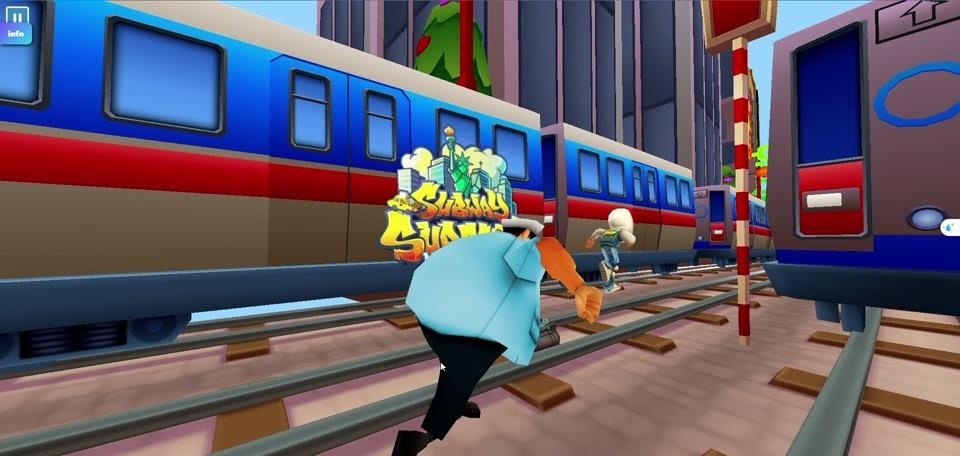
Figure 3. Jake runs beside colorful trains while the Inspector pursues him.
Jake and the Three-Lane Chase
Jake is the runner you control throughout the chase; there is no character-switching option in this game. His light cap, pale top, blue pants, and bright shoes make him easy to pick out from the tracks. The railway sleepers divide the ground into three clear routes. The Inspector, a broad figure in a light-blue shirt, follows with his dog, and a stumble can allow him to close the gap. When you spot a train ahead in Jake's lane, moving to an open neighboring lane keeps the run going.
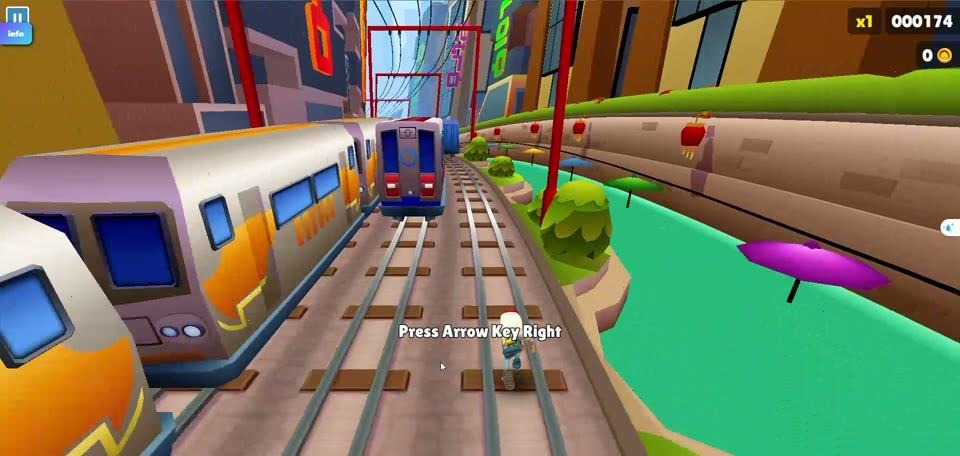
Figure 4. A lane-change tutorial appears as Jake approaches trains on parallel tracks.
The route sometimes rises above ground level. Flat or gently rounded blue, cream, and yellow train roofs provide elevated paths when a jump can reach them. That changes where you look next: the useful opening may be above the tracks rather than between two carriages. For example, Jake can shift away from an approaching train, jump onto a suitable roof, and follow a line of coins along the higher route.
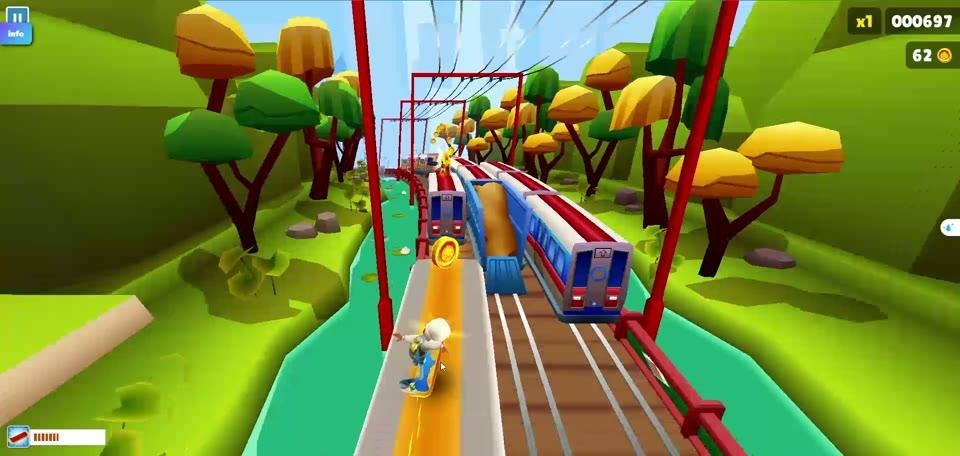
Figure 5. Jake travels along an elevated train route with gold coins ahead.
Trains, Containers, and Overhead Hazards
Full-size trains are the largest obstacles: some have blue and red sides, while others are cream-colored with orange or yellow bands. They fill entire stretches of track and force quick lane choices. Tall blue cargo containers also narrow the corridor, sometimes standing directly ahead of Jake. Look beyond the nearest object before changing lanes; a clear space beside one carriage may lead toward another obstacle.
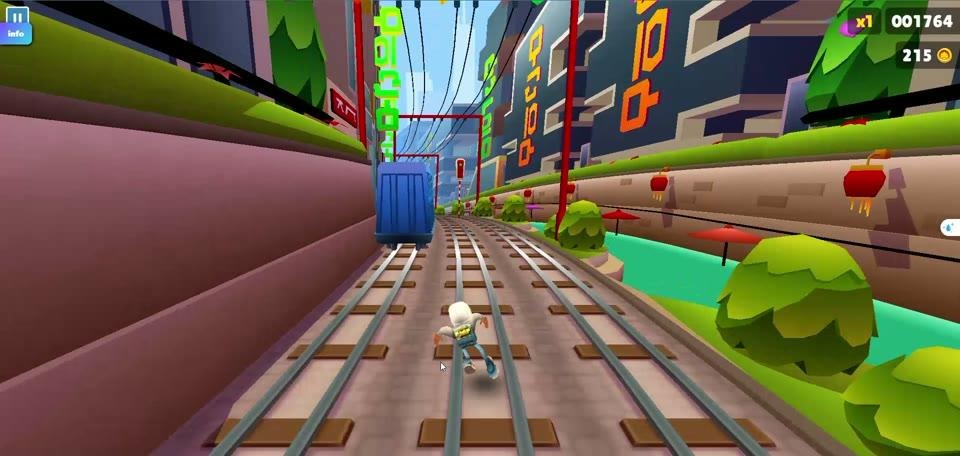
Figure 6. A tall blue cargo container blocks part of the railway route ahead.
Red-and-white chevron panels interrupt the view between railcars and near entrances. Red and dark gantry frames cross overhead, with some low obstacles requiring Jake to roll beneath them. A jump solves a low barrier; a roll solves an overhead obstruction. Choosing the wrong kind of movement leaves Jake exposed to the hazard, so first identify whether the open space lies above, below, or beside it.
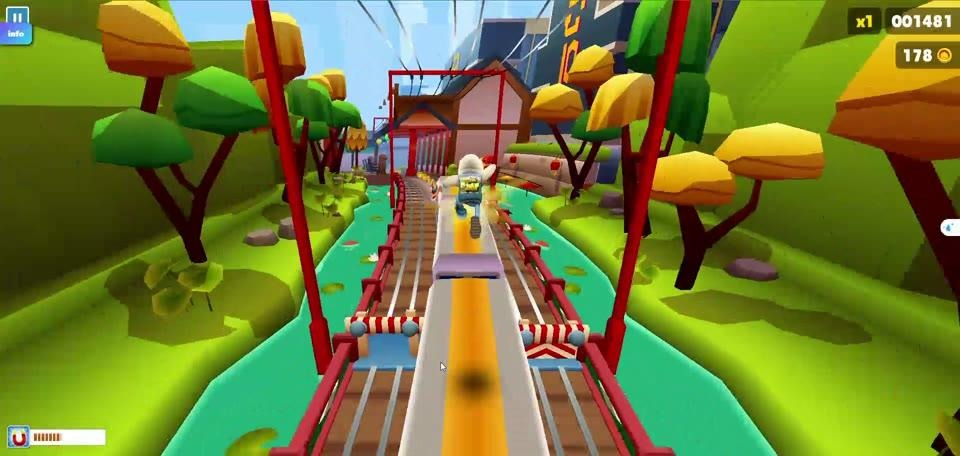
Figure 7. Striped route panels and overhead frames appear among trains and elevated paths.
Coins, Hoverboard, and the On-Screen Display
Bright gold coins are arranged in short lines along the rails and over some train roofs. Following a safe line of coins builds your collection, which serves as the leaderboard measure and a personal target to beat in later runs. The upper-right display shows the coin tally beside a larger number and a small x-value badge, letting you track the visible counters as the chase goes on.
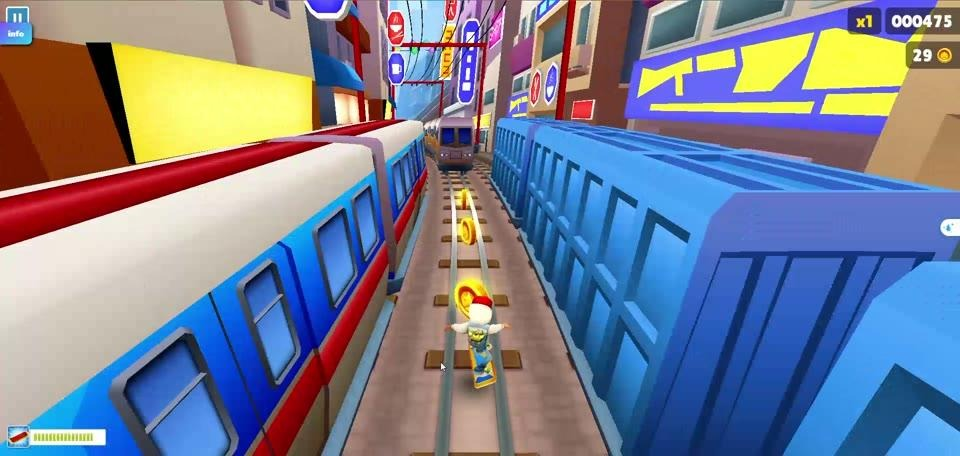
Figure 8. A row of gold coins stretches down a railway lane beside passing trains.
The Hoverboard is a small, brightly colored board beneath Jake's feet when active. Activate it when it is available, and it will protect Jake from one collision during its active period. It gives you a useful cushion when the next sequence of trains and barriers looks crowded, but it does not remove the need to read the track ahead. Early on, short on-screen prompts also show arrow-key instructions, including directions for rolling and changing lanes.
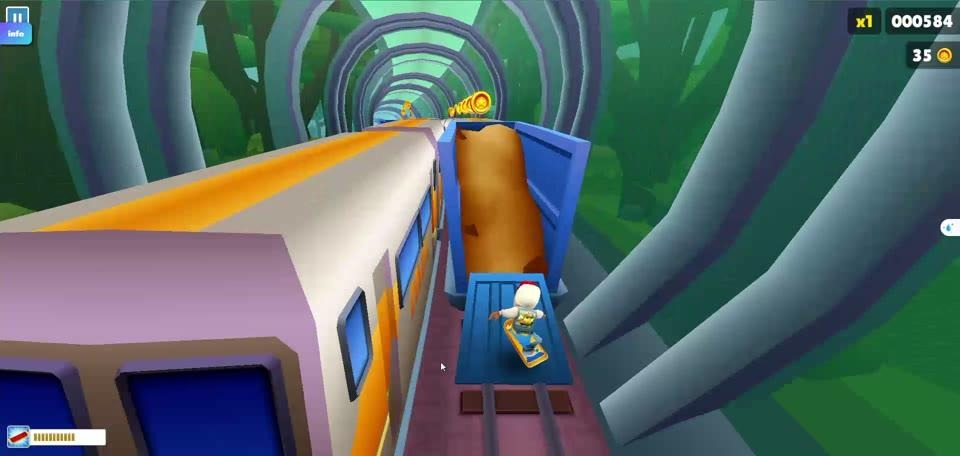
Figure 9. Jake rides above the tracks near blue cargo structures in a green tunnel.
Success, Failure, and Starting Again
Subway Surfers is an endless run, so there is no final finish line or last level to win. Success means staying ahead of the Inspector and collecting a higher coin total. The coins from a run count toward your leaderboard result, giving you a clear milestone to challenge on your next attempt. The score and coin displays rise during play, but there is no need to memorize a numerical scoring formula to understand the goal: stay moving and collect coins.
A serious collision can let the Inspector catch Jake and end the run; lesser stumbles can bring the Inspector closer. Once caught, you watch an ad before beginning another run. The new attempt starts with the current score and coin tally back at zero, and coins from the previous run do not carry over as spendable items. Your last coin total still gives you a leaderboard benchmark to aim beyond next time.
Visual Style
Our city uses strong, cheerful blocks of color: blue and cream trains, orange and yellow stripes, red trackside frames, and painted graphics that stand out against the rails. Jake remains in view from behind, so the three lanes and the next openings stay easy to follow. Large rectangular windows on the trains and bold warning panels give each obstacle a recognizable outline even as the scenery changes.
The surroundings shift from dark purple-gray railway tunnels to a bright green cylindrical passage marked by repeating ribs. Later, an open bridge spreads out beneath diagonal white cables with blue water on either side. A separate raised crossing uses red railings and tall frames. These changes give the chase a different silhouette every few moments without changing the simple three-lane view.
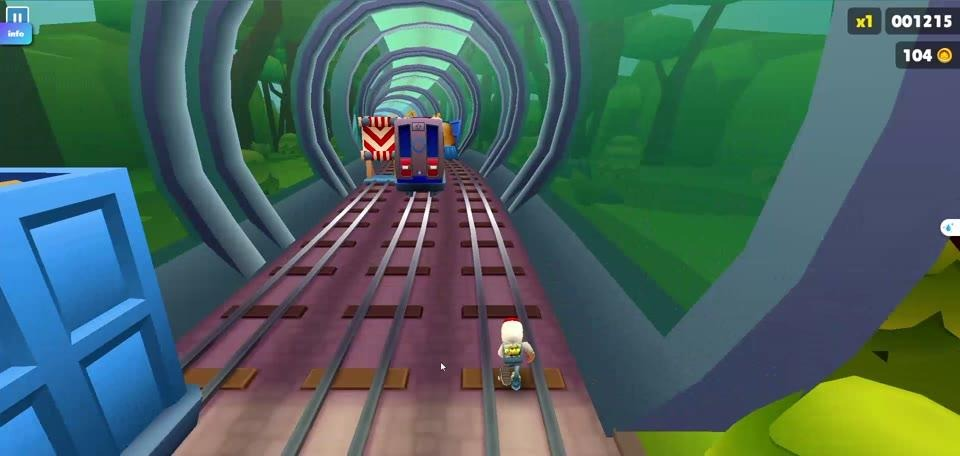
Figure 10. A green ribbed tunnel frames the railway lanes and striped structures ahead.
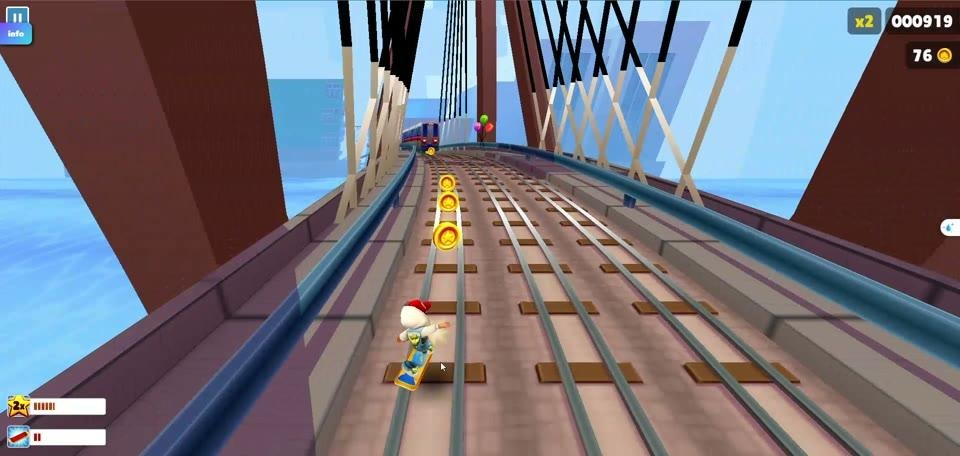
Figure 11. Jake runs across an elevated bridge with diagonal cables and water below.
Beyond the tracks are orange, blue, red, and gray buildings with oversized signs, along with rounded shrubs and angular trees in warm greens and yellows. Thin overhead wires stretch between support poles as fixed scenery. Those details make the railway feel connected to a larger city, while the brightest objects on the route remain the trains, warning markings, and lines of coins you need to notice.
Standout Features
Three lanes keep the basic choice readable while the obstacles keep changing it. A train may close one lane, a blue container may occupy the next, and an overhead bar may call for a roll instead of a jump. You are constantly deciding where the next safe opening will be, with train roofs adding a second height to consider.
The coin-focused endless format gives each attempt a purpose without demanding that you reach a finish line. Temple Run 2 is another established endless runner, but Subway Surfers builds its immediate choices around parallel railway lanes, full-size railcars, elevated roofs, and the Inspector's pursuit. [9] Here, the one-collision protection of an available Hoverboard adds another practical choice when a crowded section comes into view.
We also like how the setting changes the mood without changing the controls. A line of coins through a dim tunnel feels different from the same tempting line on a high bridge above water. The graffiti-colored trains keep Jake's escape tied to the opening chase, while the shifting city scenery rewards a quick glance between obstacles. Play Subway Surfers on Slope3 and see how far your next coin run can go. Besides this running game, you can enhance your control skills with the adventure in Slope.
Controls
PC
1. Press the Left Arrow (←) or Right Arrow (→) to move Jake into the lane on that side.
2. Press the Up Arrow (↑) to jump over a low obstacle or onto a suitable train roof.
3. Press the Down Arrow (↓) to roll under an overhead obstruction.
4. Press Space when a Hoverboard is available to activate its one-collision protection.
Mobile
1. Swipe left or right across the screen to change Jake's running lane in that direction.
2. Swipe up to make Jake jump over a low obstacle.
3. Swipe down to make Jake roll under an overhead obstruction.
4. Double-tap the screen when a Hoverboard is available to activate it.
References
[1] Graffiti in New York City. https://en.wikipedia.org/wiki/Graffiti_in_New_York_City
[2] From graffiti to the street art movement : negotiating art worlds, urban spaces, and visual culture, c. 1970-2008.. https://openalex.org/W170835841
[3] Wildstyle. https://en.wikipedia.org/wiki/Wildstyle
[4] Visual culture of the street and the creation of graffiti at fine art studies. https://openalex.org/W1564482897
[5] Subway Art. https://en.wikipedia.org/wiki/Subway_Art
[6] Style Wars. https://en.wikipedia.org/wiki/Style_Wars
[7] Graffiti in China – Chinese Graffiti?. https://doi.org/10.22439/cjas.v29i1.4021
[8] Urban Prophets: Creating Graffiti as a Means of Negotiating the Constructs of Urban Public Spaces. https://doi.org/10.21810/strm.v7i2.128
[9] Temple Run 2. https://en.wikipedia.org/wiki/Temple_Run_2
Image Credits
VANDALS HAVE SPRAY-PAINTED THIS SUBWAY CAR - NARA - 548273.jpg — Erik Calonius — publicdomain. https://commons.wikimedia.org/wiki/File:VANDALS_HAVE_SPRAY-PAINTED_THIS_SUBWAY_CAR_-_NARA_-_548273.jpg
A photo of a graffiti mural on the basement level of the former CS Post building Amsterdam, Oosterdokseiland; high rfesolution image, FotoDutch, 2011.jpg — Fons Heijnsbroek — cc0. https://commons.wikimedia.org/wiki/File:A_photo_of_a_graffiti_mural_on_the_basement_level_of_the_former_CS_Post_building_Amsterdam,_Oosterdokseiland;_high_rfesolution_image,_FotoDutch,_2011.jpg License: http://creativecommons.org/publicdomain/zero/1.0/deed.en