Concept and Inspiration
Imagine counting with little stones. Once you have two stones worth the same amount, you can trade them for one worth twice as much. Repeat that exchange and a modest pile becomes a single, powerful number. That simple step resembles carrying in arithmetic, where a value moves into a higher place during addition. [1]
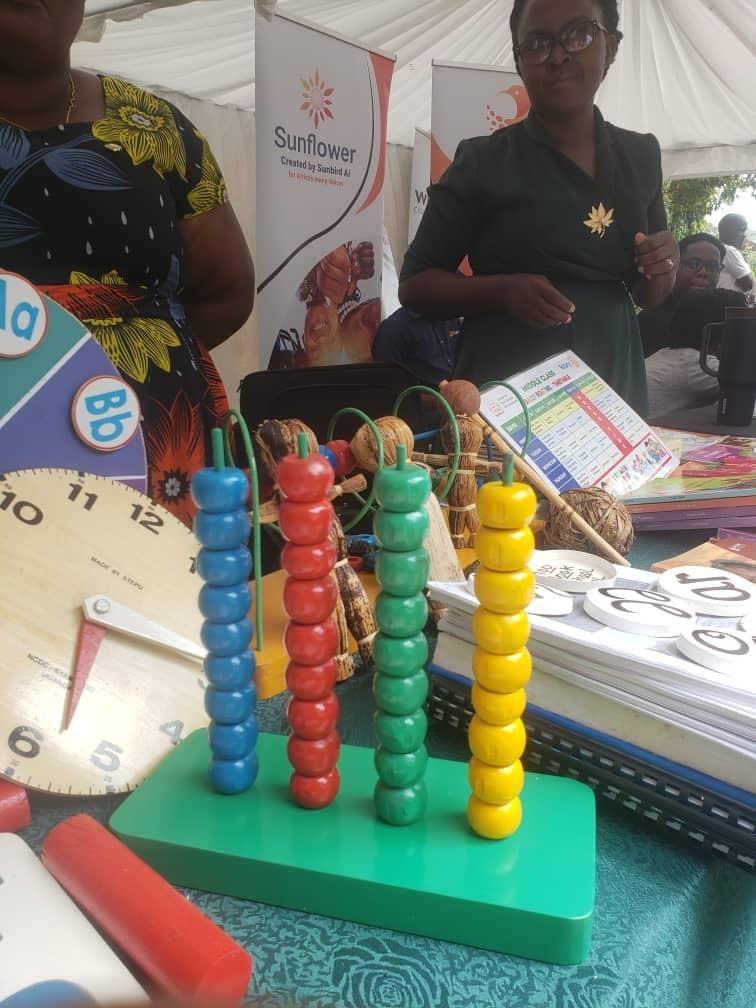
Figure 1. A wooden abacus with beads arranged on rods, illustrating hands-on counting.
Photo: Nabunje Leticia | ccby-sa4.0
Place value gives this idea its reach. In a positional numeral system, a digit's position determines which power of the base it represents. [2] Binary uses just 0 and 1, with successive positions representing powers of two. [3] The familiar doubling sequence—2, 4, 8, 16, and onward-makes each new size easy to recognize, even as the numbers become enormous.
The same number-building principle matters in electronic counting. Digital counters track changes and can store a count in binary form; many use circuits that update their state as signals arrive. [4] A circuit diagram makes that hidden progression visible as a set of connected parts, while the abacus shows the older, tactile pleasure of keeping track of quantities. [4]
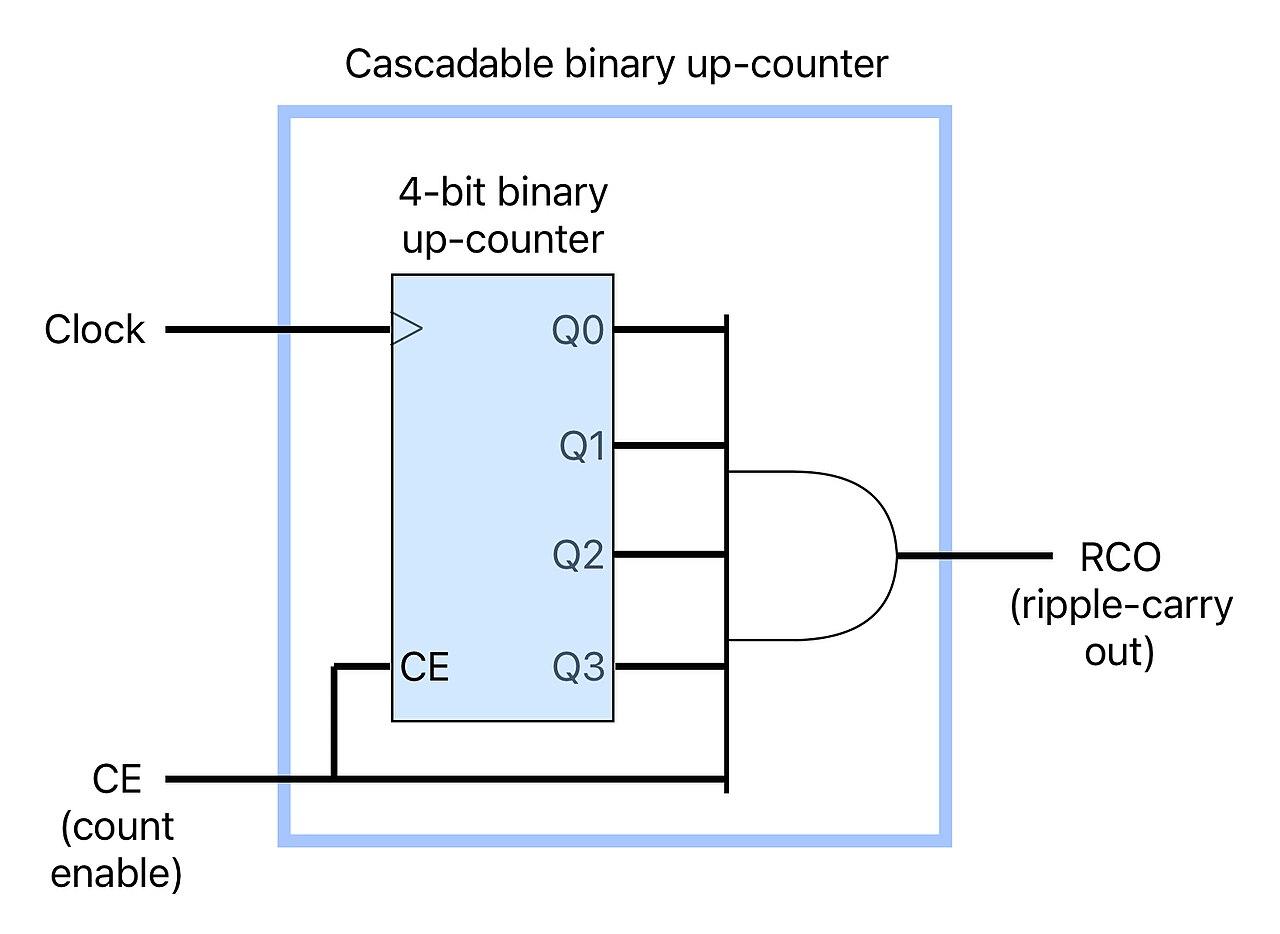
Figure 2. A circuit diagram of a four-bit binary up-counter, showing connected logic elements.
Photo: Lambtron | ccby-sa4.0
We developed Cubes 2048 at Slope3 around a playful version of that exchange: numbers become moving cubes, equal values combine into their sum, and every larger cube changes what you can collect in a crowded arena. Our game turns an orderly counting pattern into a contest for space, timing, and the coveted 2048.
Story
In the imagined city of Ledger, the great counting beacon has gone dark. Its streets are covered in numbered stones, but the spark needed to light the tower survives in one tiny traveler: a cube marked 2. Ahead lies a square filled with scattered numbers, wandering processions, and walls that leave no easy road around danger.
The traveler gathers smaller stones, and matching values fold together like pairs of sparks joining into one brighter flame. As its procession grows, the city answers with stronger rivals. Some can be overtaken; others must be given a wide berth. A sudden rush through an opening could save the journey - or carry the little procession straight into trouble.
Ledger's legend says the beacon will shine again when a surviving traveler bears the number 2048. Until then, each new number is a small victory, each rival a choice, and every turn another chance to build something greater from two equal pieces.
Gameplay
Steer your leading numbered cube through the arena, collect loose cubes valued below your current lead cube, and grow the chain following behind you. When two cubes in your chain have the same value, they meet and merge automatically into one cube worth their sum, regardless of their earlier positions in the chain. Keep collecting and combining to build toward 2048 while avoiding opponents whose stronger cubes can take yours.
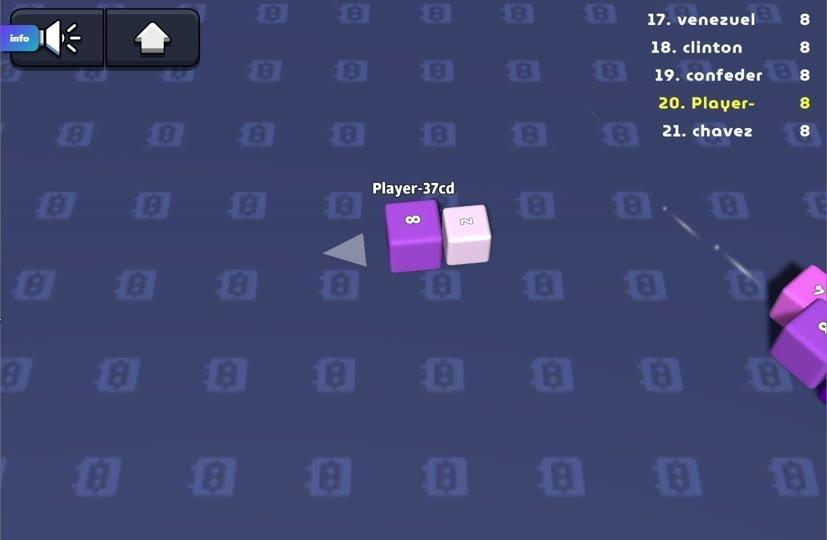
Figure 3. A numbered lead cube pulling a growing chain across the patterned arena.
Your Cubes and the Merge Rule
Your name floats above the lead cube; the other numbered cubes follow its path. Small pale and pink blocks carry values such as 2, 4, and 8. Purple and blue blocks show 16, 32, and 64, while large cyan blocks can display 128, 256, or 512. The higher your leading value climbs, the wider the range of smaller cubes you can absorb.
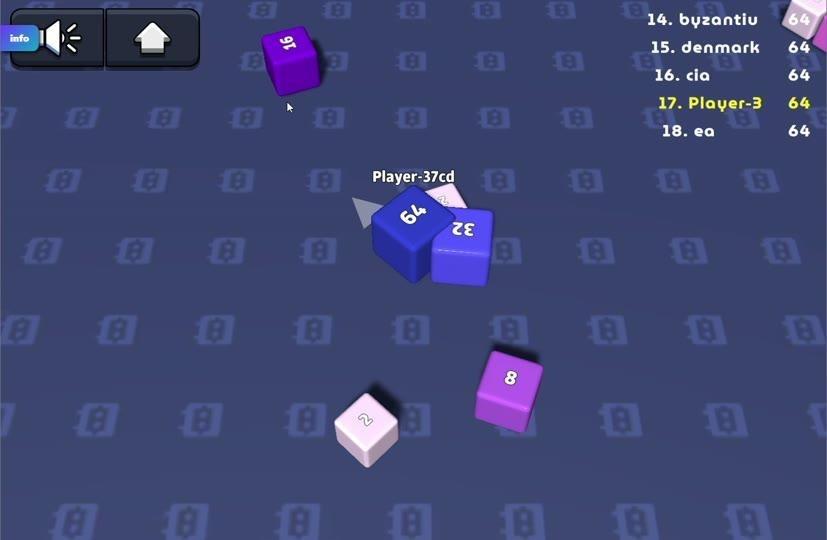
Figure 4. Loose numbered cubes scattered among moving chains in the arena.
For example, two collected 8 cubes combine into 16; another 16 can eventually pair with that new cube to make 32. Matching cubes merge automatically within your chain, so you can focus on navigating rather than arranging every block by hand. A loose cube must be smaller than your lead value to be collected.
Rivals, Walls, and Speed
Other chains travel under names such as reddit, ireland, and somalia; they may belong to other players or computer-controlled opponents. When rival cubes clash, a larger-value cube beats a smaller one and takes it. Equal-value cubes do not consume each other. If your strongest cube is higher than every cube in an opponent's chain, you can take that chain's cubes and eliminate that opponent. A stronger rival can do the same to you.
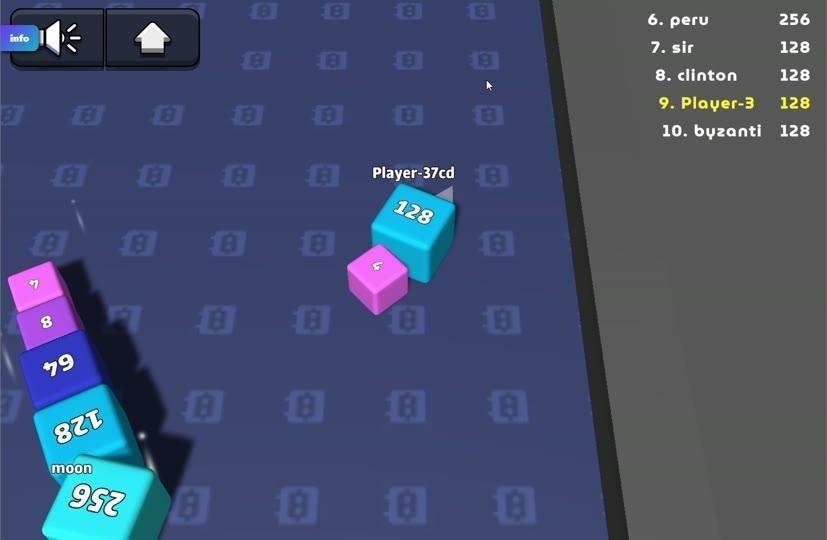
Figure 5. Large cyan cubes moving near other named rival chains.
Gray walls keep everyone inside a finite square arena. Touching a wall carries no penalty, but the confined space makes encounters harder to avoid. A gray triangular marker indicates your travel direction. Boosting briefly increases speed for a chase, a pickup, or an escape; its energy runs down and must recharge before another full burst. A dark front-facing meter with a blue fill shows the remaining boost energy.
Progress, Victory, and Restart
The upper-right leaderboard displays each competitor's leading cube value, alongside names and positions; your entry is highlighted in yellow. It reflects your strongest current cube rather than adding every cube in your chain. Getting a bigger number moves you toward the goal and can improve your standing, but there is no separate confirmed points formula or bonus to calculate.
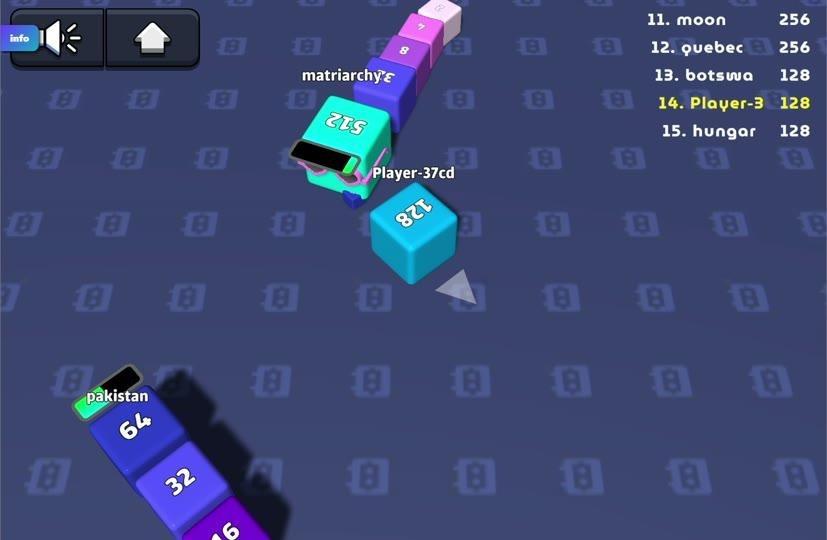
Figure 6. A high-value player chain with the ranked leaderboard visible at upper right.
Reach a cube value of 2048 to finish successfully. If a stronger opponent consumes all your cubes, you lose and the run ends. Starting again resets your cube progression to its initial value of 2, so you rebuild your chain and ranking from the beginning. This is a contest with a defined target, rather than an endless survival mode.
On-Screen Information
Floating name labels help you distinguish your chain from nearby rivals. At the upper left, a speaker icon toggles game audio and a house icon returns to the main menu. The small blue Info control belongs to Slope3's site menu. Brief cyan diamond outlines on the floor are movement effects, not extra items to collect.
Visual Style
We chose a tilted overhead view so you can track both your lead cube and the procession behind it. Soft shadows and bright top faces give the blocks depth against the dark blue-purple arena and its repeating square pattern. As values increase, cubes shift from pale pink through violet and blue toward luminous cyan, making major advances easy to spot.
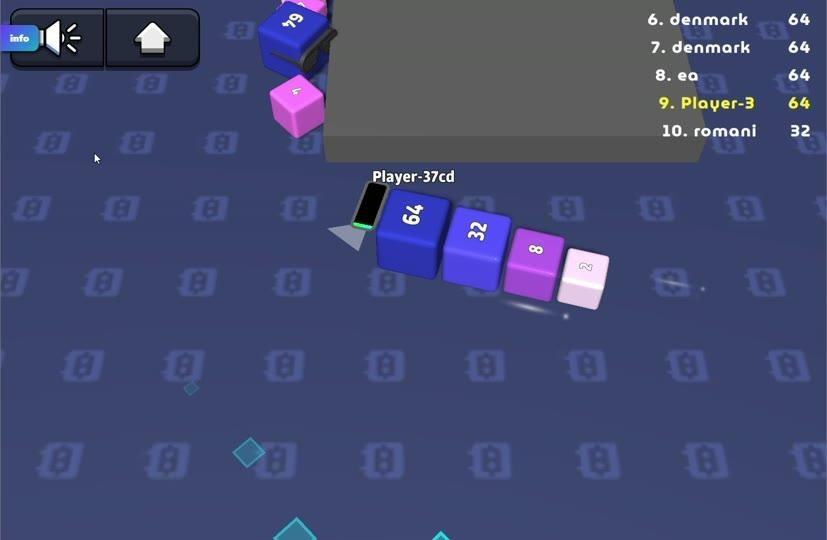
Figure 7. Colored numbered chains, a dark tiled floor, and small cyan movement effects.
Numbers sit prominently on the cube tops, while names and the compact leaderboard identify competing chains without hiding the playfield. Thick gray borders make the arena's limits visible. Even when several processions crowd the same stretch of floor, the contrasting colors and bold numerals keep the next decision readable.
Standout Features
Cubes 2048 gives number merging a moving, competitive twist. You steer a train of cubes rather than arranging a static set of tiles, and the next useful pickup depends on your current lead value. Automatic merging rewards successful collection while letting you keep an eye on nearby rivals.
The broader 2048 name is also associated with a separate puzzle video game. [5] Here the memorable numerical target meets arena movement, opponent encounters, a live ranking, and a rechargeable burst of speed. The counting idea still echoes binary place values, but every increase also changes which smaller opponents and loose cubes you can take. [3]
Whether you prefer carefully gathering loose cubes or making a daring run past another chain, each choice builds toward the same clear finish line. Try Cubes 2048 on Slope3 and see how far your little 2 can grow.
Controls
PC
1. Move the mouse cursor in the direction you want to travel. The leading cube turns toward it and the rest of your chain follows.
2. Hold the left mouse button or Space to boost your chain's speed. Release the button or key to return to normal speed; after the boost runs out, allow its energy to recharge before using it again.
Mobile
1. Touch and hold the playfield, then drag your finger to steer the leading cube. The trailing chain follows your turns.
2. Tap the on-screen boost button to accelerate. Once the boost ends, movement returns to normal speed; wait for the button to recharge before boosting again.
References
[1] Carry (arithmetic). https://en.wikipedia.org/wiki/Carry_(arithmetic)
[2] Positional notation. https://en.wikipedia.org/wiki/Positional_notation
[3] Binary number. https://en.wikipedia.org/wiki/Binary_number
[4] Counter (digital). https://en.wikipedia.org/wiki/Counter_(digital)
[5] 2048. https://en.wikipedia.org/wiki/2048
Image Credits
Wooden abacus.jpg — Nabunje Leticia — ccby-sa4.0. https://commons.wikimedia.org/wiki/File:Wooden_abacus.jpg License: https://creativecommons.org/licenses/by-sa/4.0
Cascadable binary up-counter.jpg — Lambtron — ccby-sa4.0. https://commons.wikimedia.org/wiki/File:Cascadable_binary_up-counter.jpg License: https://creativecommons.org/licenses/by-sa/4.0