Concept and Inspiration
An oscilloscope turns changing electrical voltage into a visible trace across time, letting engineers read behavior that would otherwise remain invisible. The shape of such a trace is called a waveform, and its rises, falls, pulses, and repeating patterns give a signal a form the eye can follow. [1] [2]
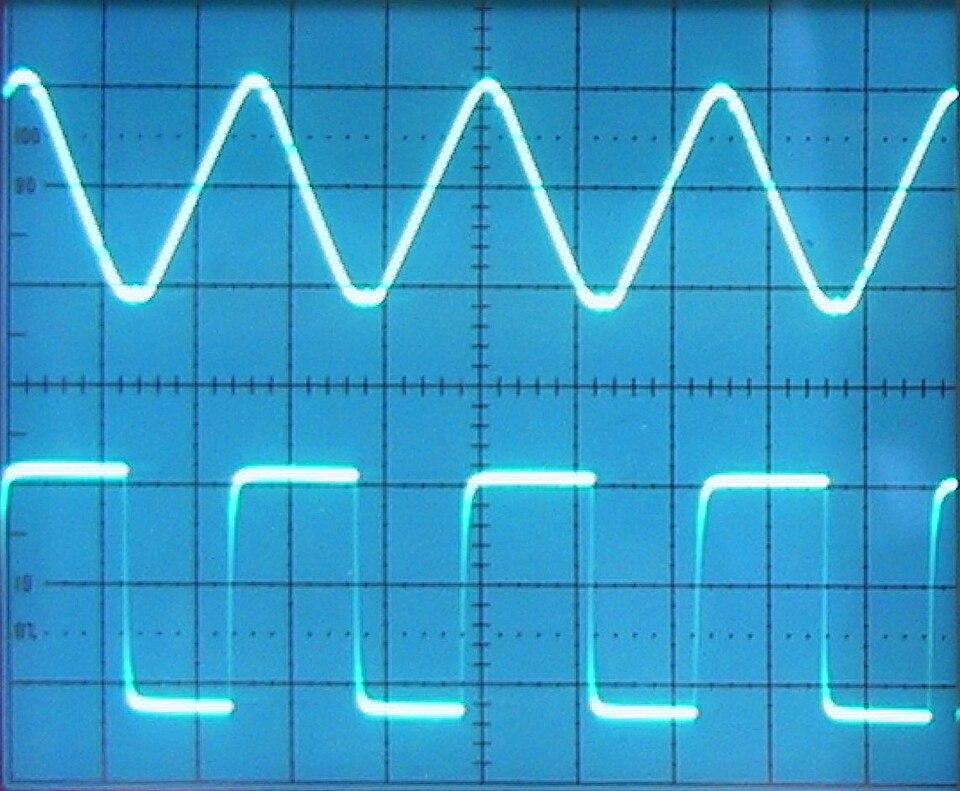
Figure 1. An oscilloscope screen displaying triangular and rectangular waveforms as visible traces.
Photo: User:Xato | cc0
Older display technology made this idea especially physical. In a cathode ray tube, electron beams are steered toward a phosphor-coated screen to create visible marks, while electronic test equipment can generate signals and capture how a device responds. [3] [4]
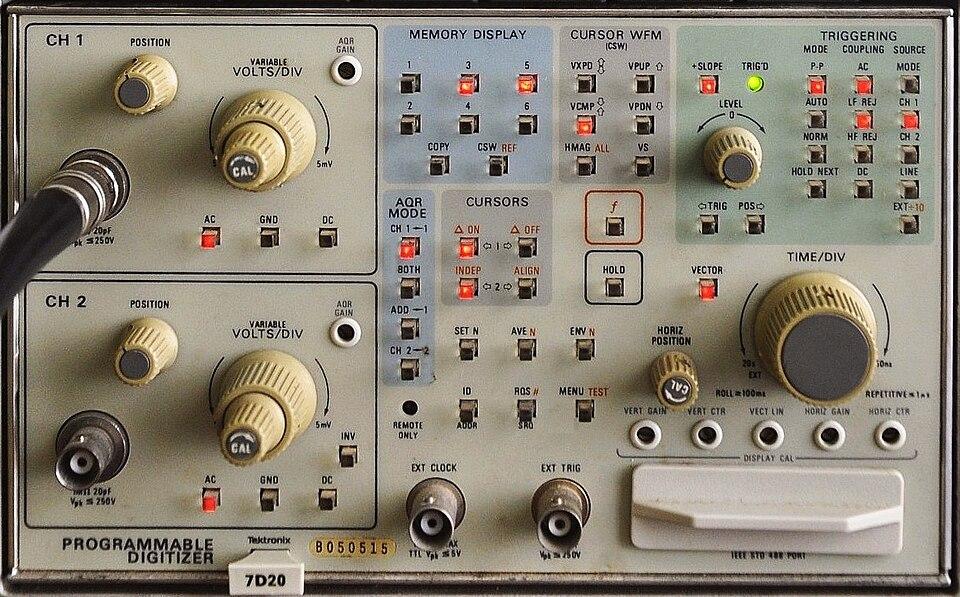
Figure 2. A Tektronix oscilloscope plug-in built to capture, store, and display electronic signal data.
Photo: Pittigrilli | ccby-sa4.0
Human tracking adds another layer to the idea. Research on visual-motor control has found that prediction can help compensate for sensory-motor delay, while feedback becomes important for correcting positional error when visual information is limited. [5] [6]
We developed Geometry Arrow around that language of moving traces. Instead of watching a signal line cross a screen, you guide an arrow through a world built from sharp slopes, narrow channels, grid structures, and spikes. Its preserved zigzag trail turns every rise and fall into a visible record of the route you just took.
Story
In our story, Arrow-7 is a living signal sent into a failing communications grid. The network once carried clean information across the city, but its paths have fractured into jagged towers, compressed channels, and unstable geometric barriers. Arrow-7 cannot stop. It has to keep moving through the damaged system while searching for a route that still connects one chamber to the next.
Each stretch of the grid feels like a different fault in the network. Long white platforms become rigid circuit boundaries. Rows of spikes resemble dangerous bursts in the signal path. Diamond obstacles hang in open space, while steep grid pyramids and suspended blocks squeeze the safe route into thinner gaps. Behind Arrow-7, the retained zigzag trace records every correction like a diagnostic line being drawn in real time.
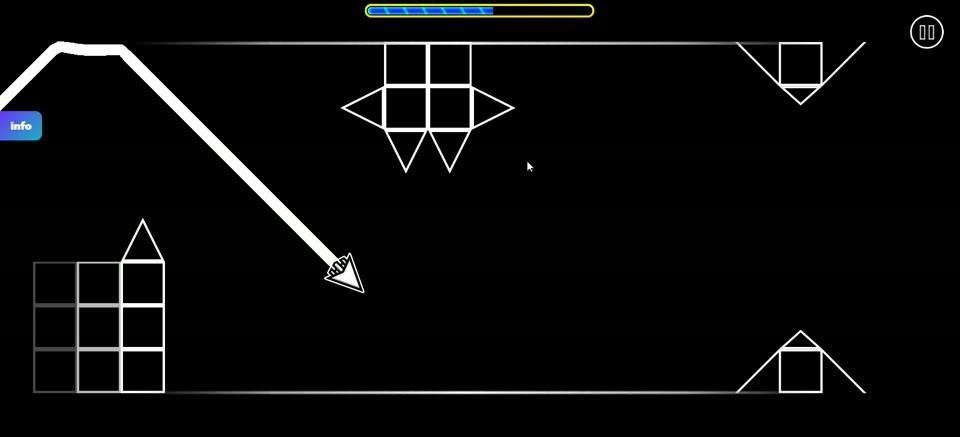
Figure 3. The arrow threads between white geometric structures while its angular movement trail remains behind it.
At the far end of a level waits the green gate, the point where the damaged signal can synchronize again. Reaching it completes that section of the journey. The larger mission is to clear the game's finite sequence of levels and work toward the final unlockable stage, restoring one part of the imagined network at a time.
Gameplay
Geometry Arrow is a precision obstacle-navigation game. The arrow moves continuously through a side-scrolling course while you change its vertical direction between rising and falling diagonals. Your goal is to keep that moving line inside safe space, avoid confirmed collision hazards, and reach the green gate at the end of the level. The top progress bar shows how far through the current level you have traveled, but reaching 100 percent alone does not complete the stage. The arrow must reach the gate.
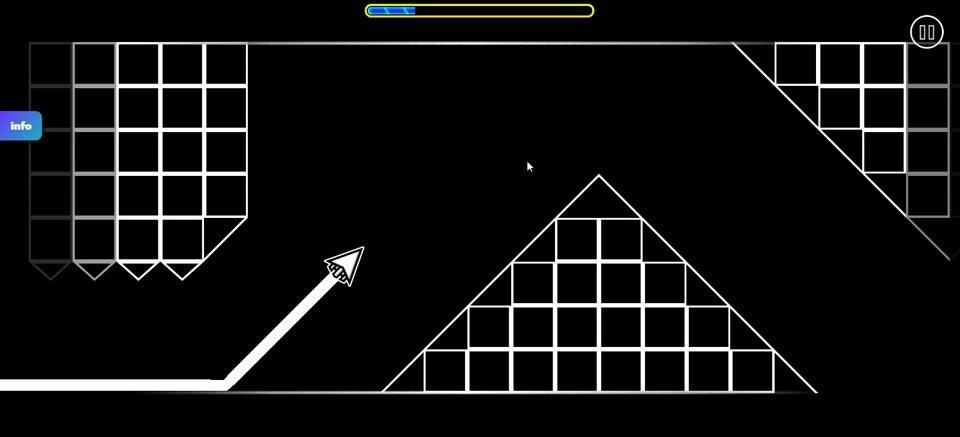
Figure 4. The arrow follows a diagonal route through a black course bordered by white geometric hazards.
The Arrow and Its Trail
The player icon is a small white outlined arrowhead that advances from left to right as the course scrolls. Its route alternates between upward and downward diagonals. A thick angular trail remains behind the arrow, so the path you have already taken stays visible instead of disappearing immediately.
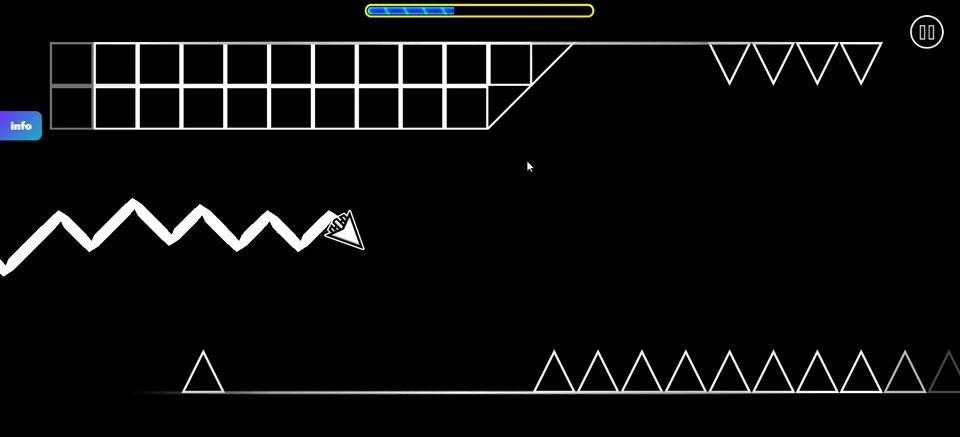
Figure 5. The white arrow leaves a persistent zigzag trail as it changes height through the course.
Obstacles and Collision Surfaces
Single triangular spikes, floor spike rows, ceiling spike rows, and suspended spiked blocks are hazards. Touching a spike ends the current attempt. Rectangular grid platforms and sloped grid ramps shape the route, while the danger depends on the spikes or other confirmed obstacles attached to or placed around them.
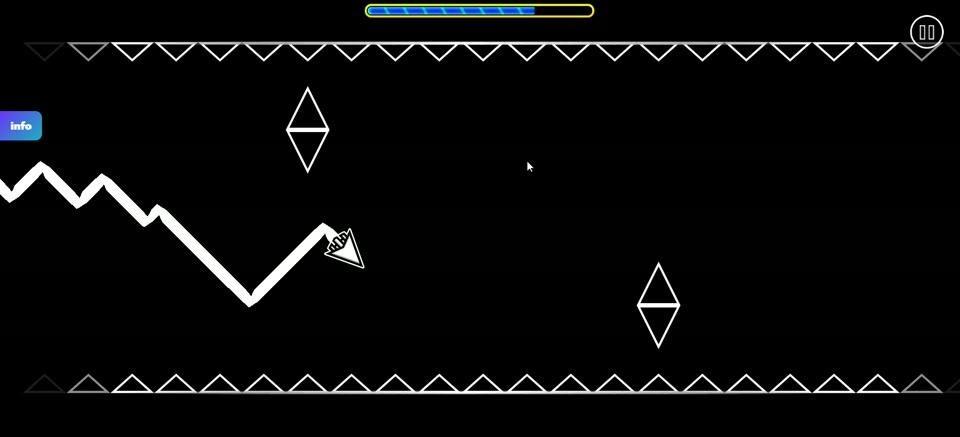
Figure 6. Spike rows and grid structures tighten the route above and below the moving arrow.
Large grid pyramids and vertical towers take up substantial space and force the route around their edges. Floating outlined diamonds are obstacles as well. House-like line structures are part of the collision layout rather than background decoration, so their position matters when you choose the next diagonal path.
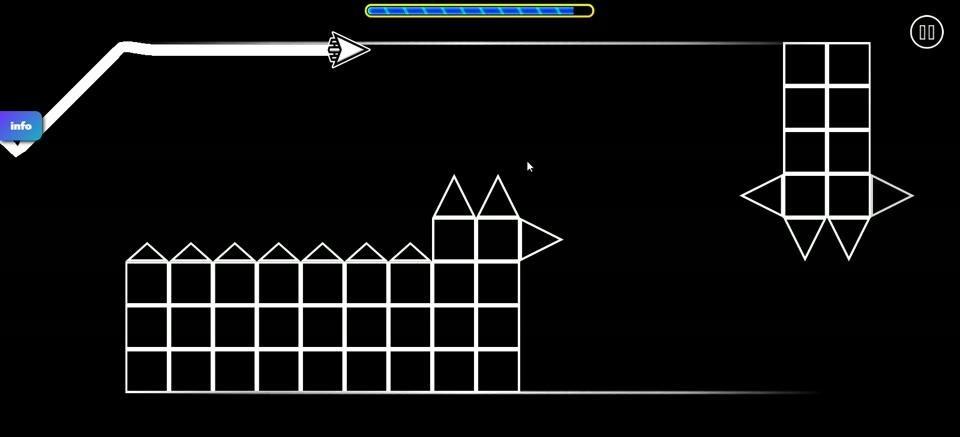
Figure 7. Large grid shapes, narrow gaps, and outlined geometric obstacles define the available route.
Flat floor and ceiling lines are an important exception. The arrow can make contact with some plain floor or ceiling surfaces and continue sliding along them. Spikes or obstacle shapes attached to those surfaces remain dangerous, so the safest reading of the course comes from watching the actual geometry ahead rather than treating every white line as an instant failure zone.
Progress, Failure, and Completion
The blue fill inside the yellow-outlined bar near the top tracks your percentage through the current level. If you hit a spike or another confirmed obstacle, the attempt ends and the level restarts from the beginning at 0 percent. There are no mid-level checkpoints in the confirmed rules, so every failed run sends you back to the start of that stage.
A successful run ends when the arrow reaches the green gate at the far end of the course. The completion panel then displays informational statistics such as the attempt number, jumps, and elapsed time. These values are statistics rather than a numeric score or reward formula. Geometry Arrow uses level progress instead of a conventional score counter.

Figure 8. The level-complete panel records the finished attempt with attempt, jump, and time statistics.
After completion, the circular-arrow button lets you replay the level. The list button returns to the main menu and level list. The game follows a finite level structure rather than an endless mode, and clearing stages advances you toward the final unlockable stage.

Figure 9. A later run begins with an attempt label, showing the game returning to active level play.
A First Run in Practice
A typical sequence is simple to understand and hard to execute cleanly. You enter a corridor with the arrow already moving forward. You change its vertical direction to climb past a lower spike row, reverse the diagonal to stay beneath an upper hazard, and continue adjusting through the next gap. One bad contact with a spike or obstacle ends the attempt and resets the level. Hold the route together until the arrow reaches the green gate, and the level is complete.
Visual Style
We chose a nearly monochrome course so the geometry stays readable at speed. The background is black, while the player, platforms, spikes, towers, ramps, and most structural outlines are white. This contrast makes narrow openings easy to identify even when several obstacle types crowd the same part of the screen.

Figure 10. White line geometry stands sharply against the black background during a fast obstacle sequence.
The visual language mixes thin outlines with heavier movement marks. Rectangular cells build walls and platforms, triangles form spikes and slopes, and the arrow's thicker zigzag trail cuts through them as a record of motion. Small color accents are reserved for interface elements such as the blue progress fill, its yellow border, and green result buttons, keeping the playfield itself visually focused.
Standout Features
The persistent zigzag trail gives Geometry Arrow a clear visual identity. Every correction remains visible behind the player, so a successful passage becomes a geometric drawing of the route itself. That fits our signal-trace concept while also giving immediate visual feedback about how sharply and how often the path changed.
The course also varies the kind of space you must read. Open stretches can quickly narrow into spike corridors, large grid pyramids redirect the route, vertical towers divide the screen, and suspended blocks create hazards from above. The challenge comes from continuously judging the next safe diagonal rather than moving between static stopping points.
Geometry Dash offers a useful genre comparison because it also centers on guiding an icon through obstacle-filled levels, and most of its developer-made levels use auto-scrolling movement. [7] Geometry Arrow focuses that broad obstacle-navigation idea into a more specialized rising-and-falling path, where the preserved trace and tight geometric corridors make continuous vertical correction the main skill.
Controls
Movement
On PC, press and hold the left mouse button to make the arrow travel diagonally upward. Release the button to make it travel diagonally downward.
On mobile, touch and hold the screen to make the arrow travel diagonally upward. Lift your finger to make it travel diagonally downward.
References
[1] Oscilloscope. https://en.wikipedia.org/wiki/Oscilloscope
[2] Waveform. https://en.wikipedia.org/wiki/Waveform
[3] Cathode ray tube. https://en.wikipedia.org/wiki/Cathode_ray_tube
[4] Electronic test equipment. https://en.wikipedia.org/wiki/Electronic_test_equipment
[5] Intermittently-visual Tracking Experiments Reveal the Roles of Error-correction and Predictive Mechanisms in the Human Visual-motor Control System. https://doi.org/10.9746/sicetr.46.391
[6] Analysis of motor control strategy for frontal and sagittal planes of circular tracking movements using visual feedback noise from velocity change and depth information. https://doi.org/10.1371/journal.pone.0241138
[7] Geometry Dash. https://en.wikipedia.org/wiki/Geometry_Dash
Image Credits
Triangular wave and square wave on oscilloscope screen (cropped).jpg - User:Xato - cc0. https://commons.wikimedia.org/wiki/File:Triangular_wave_and_square_wave_on_oscilloscope_screen_(cropped).jpg License: http://creativecommons.org/publicdomain/zero/1.0/deed.en
Tektronix digitizing plug-in 7D20 for 7000 mainframe oscilloscope.jpg - Pittigrilli - ccby-sa4.0. https://commons.wikimedia.org/wiki/File:Tektronix_digitizing_plug-in_7D20_for_7000_mainframe_oscilloscope.jpg License: https://creativecommons.org/licenses/by-sa/4.0