Concept and Inspiration
A looping black streak on pavement can tell a story after the car has gone. Tires can leave skid marks when a wheel slides or spins against the road, and investigators may examine those traces to estimate how fast a vehicle was moving before an incident. Yet a mark alone never tells the whole story: a vehicle can also slide on a slippery surface without leaving a visible trace. [1]
Reading a road mark takes more than recognizing its shape. Traffic collision reconstruction brings together the vehicle, driver, road conditions, and physics to understand what happened. [2] One useful idea is slip angle: the difference between where a tire points and the direction it actually travels. As that angle changes, so does the sideways force a tire can generate. [3] Real racing tires are engineered for those demanding contact conditions, even though a photograph of the tires cannot reveal the forces at work.
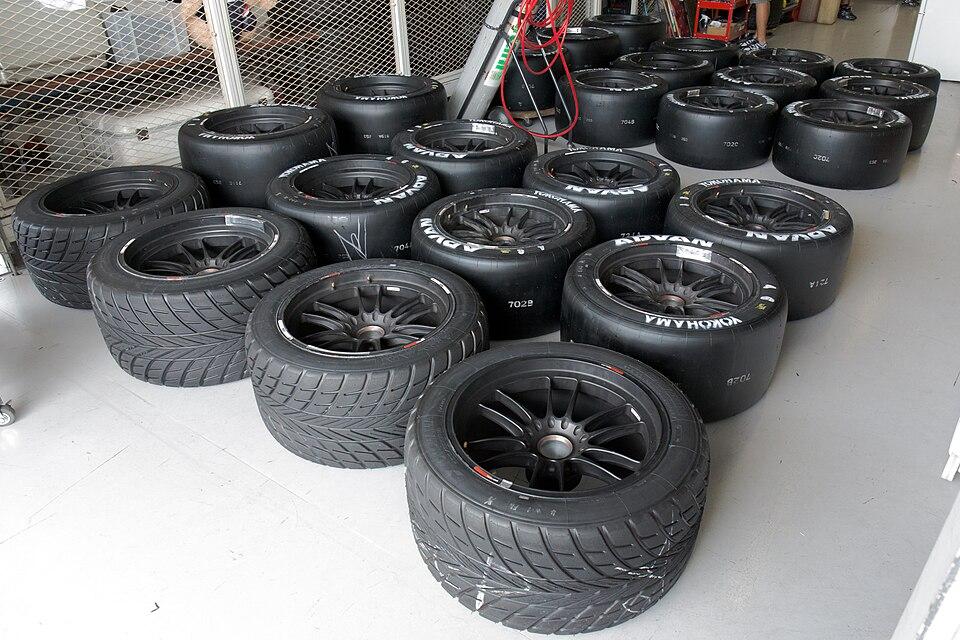
Figure 1. Yokohama racing tires photographed at the 2014 Super GT event at Suzuka.
Photo: Morio | ccby-sa4.0
Drifting turns the idea of a sliding tire into a deliberate driving skill. A driver intentionally oversteers while maintaining control through the corner; competitive drifting grew popular in Japan in the 1970s and later reached audiences around the world. [4] Judges in real drift competitions consider factors such as speed, angle, style, and the line through a turn. [4] The resulting tire arcs can look almost drawn onto the track, but each curve comes from a series of moving decisions.
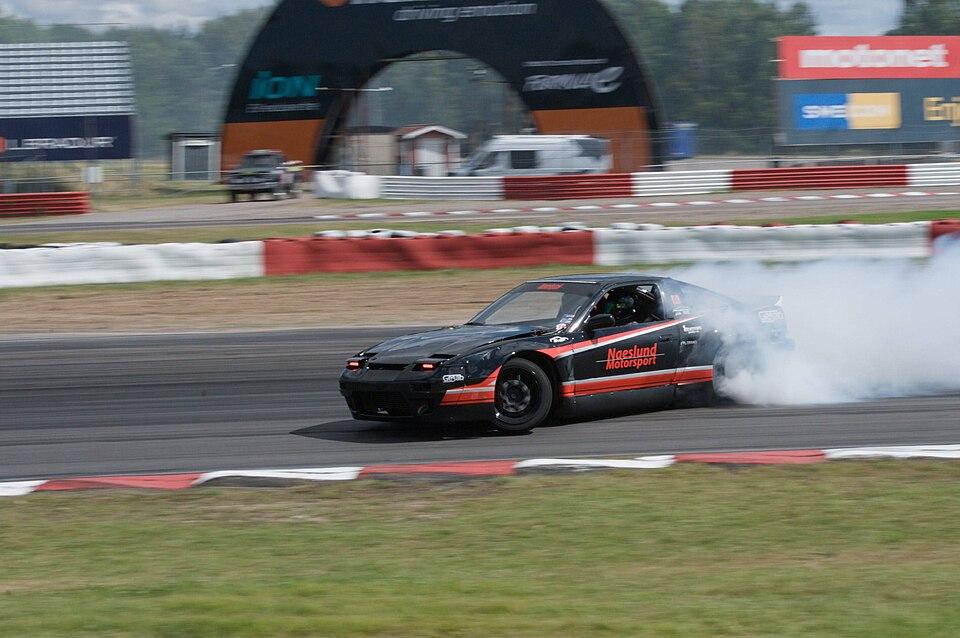
Figure 2. A car drifting around a turn on a real racetrack.
Photo: Duniti | ccby-sa4.0
The science behind that motion is richer than a simple skid. Research has used signals from steering torque to estimate tire slip angle and the limits of lateral grip. [5] Another study tested a sensor inside a tire that could estimate both slip angle and tire-road friction from the tire's deformation. [6] And research on drifting describes how large sideways slip makes stable control a difficult balancing act. [7]
We developed Drift F1 for Slope3 around a playful version of that visible record of motion. Our small blue car traces paired black lines across bright roads suspended in open sky. A clean arc through a corner feels like a signature; a line carried too far ends at the edge. We made the tire trails easy to read so each turn leaves a clear reminder of the choice behind it.
Story
High above the city, the Sky Circuit Festival keeps a gallery of great racing lines. Each black curve tells of a driver who found a way through a difficult corner. One season, the festival's oldest route fades from the gallery wall, leaving a blank space where its boldest turn once curled. A young driver named Mira decides that the missing mark deserves a new companion, not a hurried imitation.
Mira takes a compact blue car onto a chain of painted roads floating above the clouds. Green squares give way to pink stripes, golden coins wink from the next stretch, and thin rising bridges point toward platforms across the blue emptiness. At every hard bend, she has to choose when to commit and when to let the car carry its line forward. One mistake sends her back to the start of that course, where the turn waits to be learned again.
As the festival's 35 courses unfold, the gallery begins to fill with new arcs. Some are tidy; others swing wide before finding the road again. On the last route, Mira realizes that a memorable line is not one inherited from an old champion. It is the trail she earns by knowing when to turn, when to let go, and when to try once more.
Gameplay
Hold the turn input to steer and drift the small light-blue car around a bend on the elevated course. Release it to stop turning and continue along the car's current heading; repeat as the road changes direction. Follow the required route and reach or cross the checkered FINISH band without falling off to complete the level and unlock the next one. If the car falls off the course, the attempt ends; choose Retry to play the same level again.
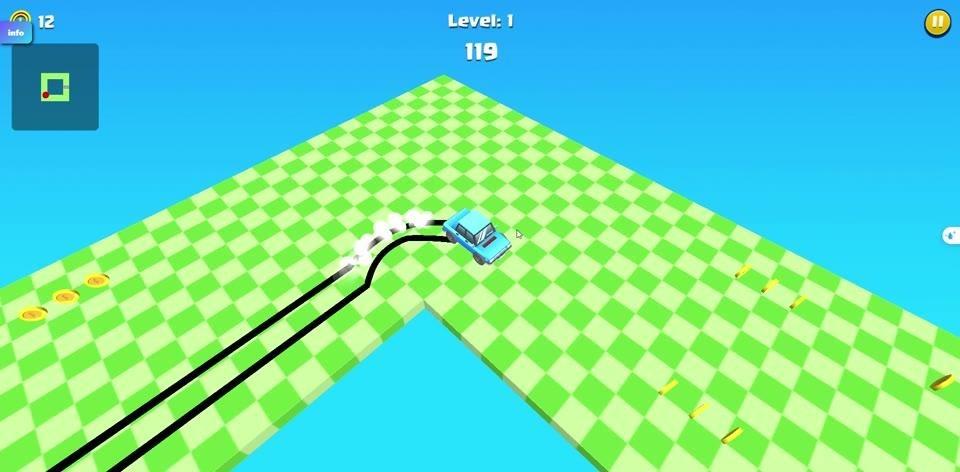
Figure 3. The light-blue car follows a raised green-and-white course edged by open sky.
The Car and the Course
The car is a small, boxy blue racer with dark windows and four visible wheels. The beginner tutorial puts it on a red-and-blue checkered road under a 'Tap and Hold To Turn' prompt. A white pointing hand highlights the instruction, while a row of dots marks the tutorial steps.
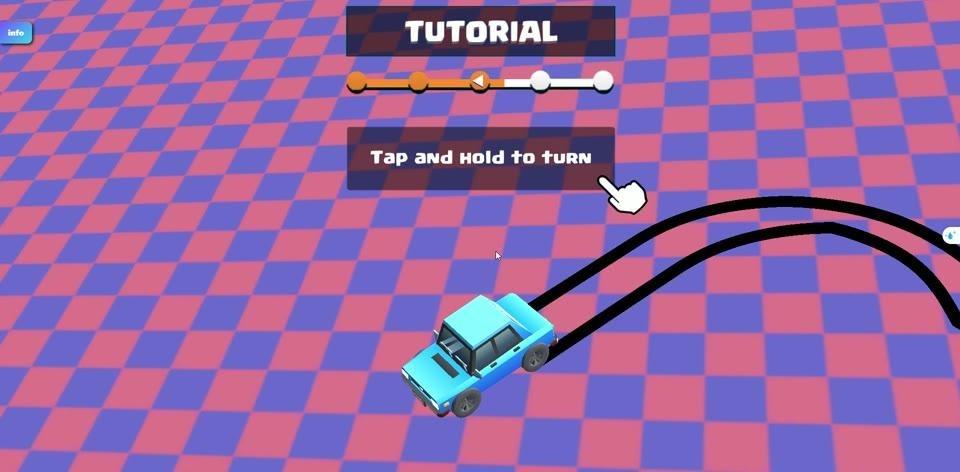
Figure 4. The tutorial pairs a blue racer with a red-and-blue road and a hold-to-turn prompt.
The main tracks use pale green-and-white squares or narrow diagonal pink-and-white stripes. Their edges form abrupt bends, sometimes close to right angles. Twin black tire trails curl across the surfaces, making the route through a turn visible. For a straightforward first run, follow a green stretch, begin your drift before a sharp bend, then stop turning as the road lines up ahead.
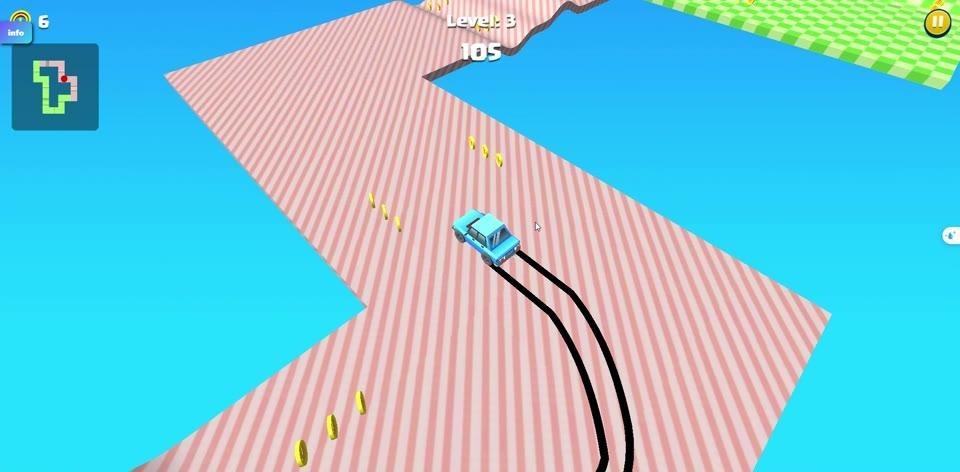
Figure 5. Pink-striped track sections twist around sharp corners beside open cyan space.
Ramps, Gaps, and Uneven Ground
Some broad platforms are separated by open gaps. The narrow road sections that lead toward them rise like ramps, launching your car across the empty space to the next part of the track. Keep the car aligned with the approaching road: the cyan area beyond the edges offers no safe place to land.
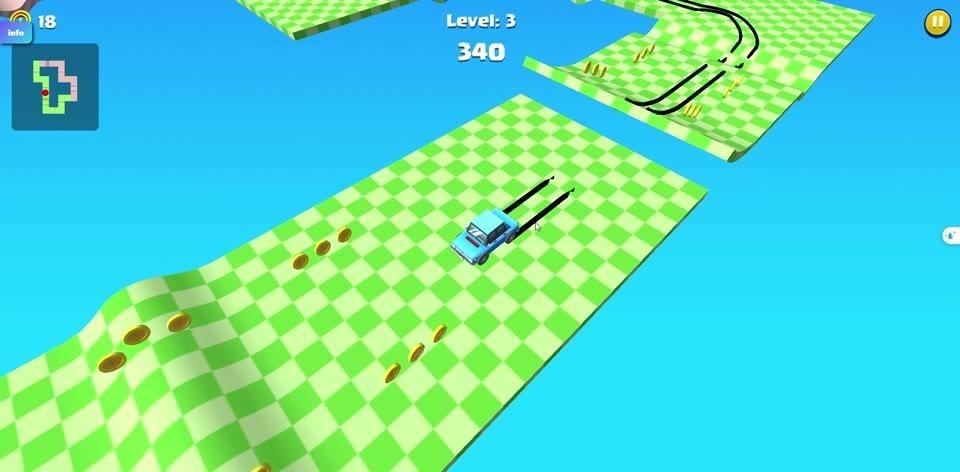
Figure 6. A narrow elevated connection approaches a gap between floating road sections.
Rounded humps interrupt parts of the green checkerboard road. They affect the car's speed slightly, but they do not change its steering direction or grip. The main danger remains the course edge, especially where a bend follows an uneven or narrow section.
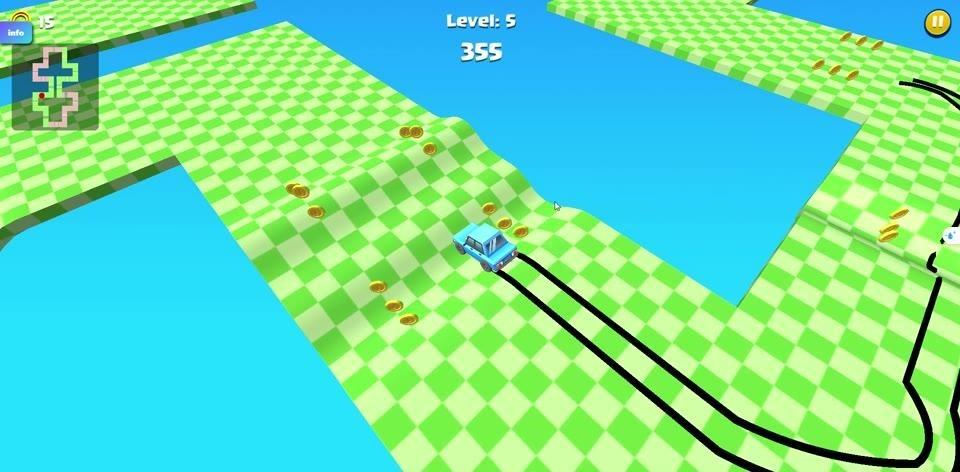
Figure 7. The green checkerboard road rises and dips in a series of rounded humps.
Coins and Drift Points
Shiny gold coins stand along sections of the road. Collecting them adds to your coin total, displayed in the small numbered badge at the upper left. Coins are currency for buying other cars, and you do not need to collect every coin to finish a level.
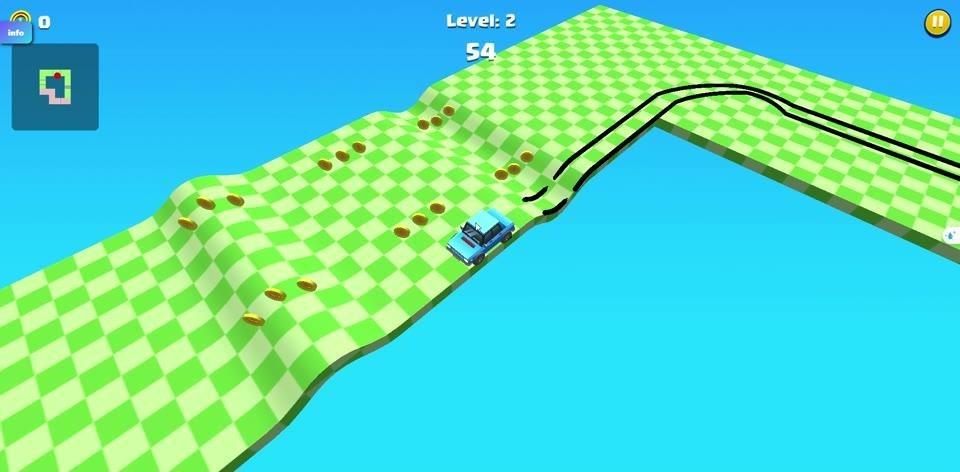
Figure 8. Gold coins and a compact score display accompany the car on the raised course.
Drift points are a separate measure of performance. The large white number beneath the level label increases as you drift, based on the time or distance spent sliding. You can build a higher score by sustaining successful drifts while staying on the road; no fixed point-per-second formula is required to understand the aim.
Winning, Losing, and Moving On
A level counts as complete when you have followed its required course and your car reaches or crosses the black-and-white finish band without falling. The nearby gray sign carries large red FINISH letters. A successful run brings a celebratory scene with colorful confetti and a results display, and Next or Continue takes you to the newly unlocked level.
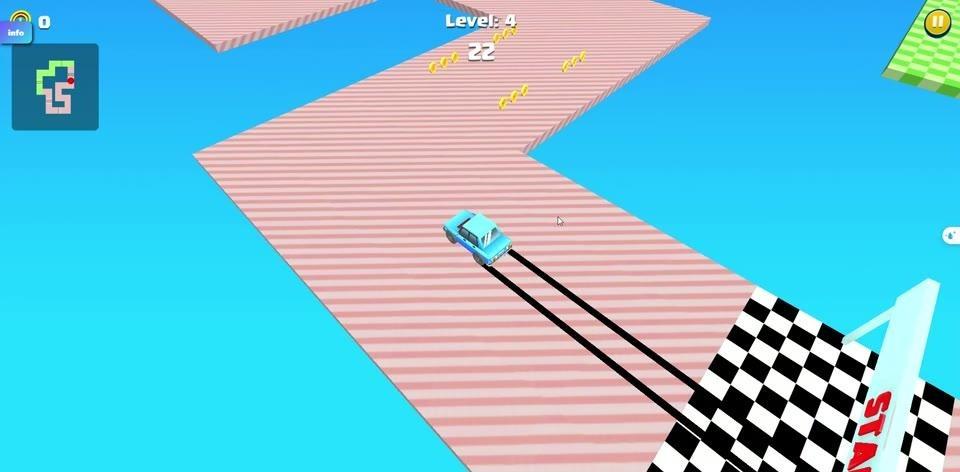
Figure 9. The striped roadway leads toward a bold FINISH sign and checkered end band.
If the car falls off the track, that attempt is over. Choose Retry or Restart to begin the current level again; the drift score and coins earned during the failed attempt reset. Levels you already completed stay unlocked. Drift F1 has 35 numbered levels rather than an endless sequence, and completing Level 35 finishes the current set of courses.
Map, Pause Menu, and Leaderboard
At the top center, the Level label identifies the current course. A small dark square at the upper left contains a multicolored outline of the course map. The yellow circular button with two dark bars in the upper-right corner pauses the game and opens a menu where you can resume play or return to the main screen.
At a finish, the transparent leaderboard offers Today, Week, Month, and All Time views with rank, name, and score columns. Rankings reflect drifting performance and are saved online. You can enter a player name and submit it; the separate numeric field beside the name shows your highest score. The yellow Home button below the results returns to the main menu.
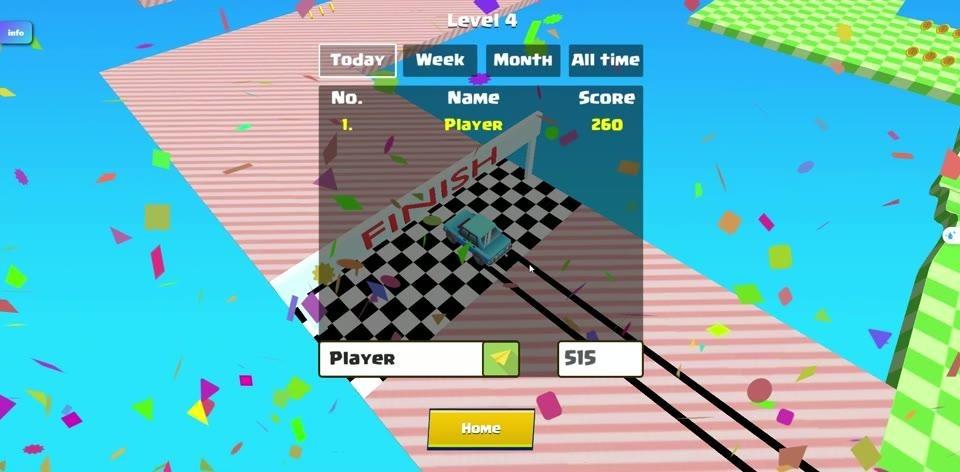
Figure 10. The finish screen shows confetti, leaderboard tabs, a player-name field, and Home.
Visual Style
Drift F1 keeps the scene bold and legible. The vivid cyan backdrop makes the raised roads feel suspended above empty space, while green checkerboards and pink diagonal stripes clearly mark the drivable surface. Tight, hard-edged corners stand out against that uncluttered background.
The pale blue car is simple enough to track through quick turns. Paired black tire marks contrast with the light road tiles and reveal the shape of a recent drift. Gold coins catch the eye along the route, while white score digits, the colored mini-map, and the red FINISH lettering provide clear landmarks.
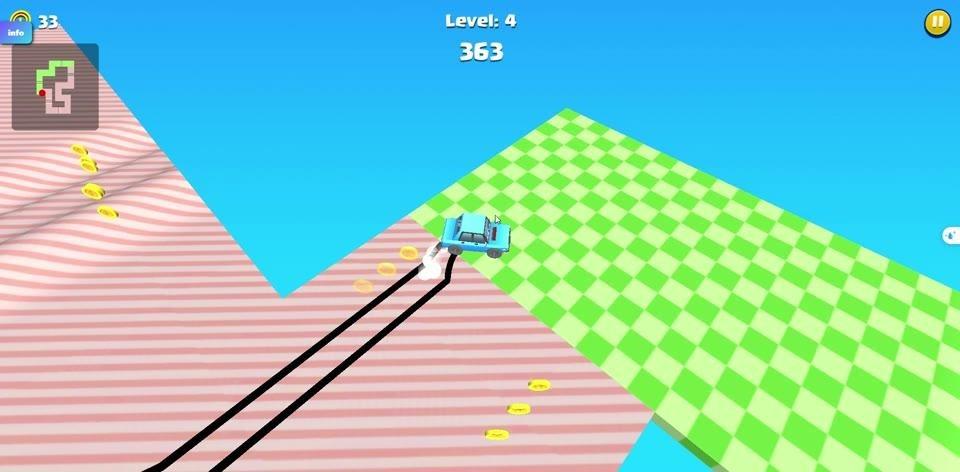
Figure 11. The pale blue car and black tire streaks contrast with pink-striped floating roadway.
The red-and-blue tutorial surface has its own bright checkerboard look, and the finish scenes add falling confetti around the results board. Those changes give the opening instructions and the end of each successful course a distinct appearance.
Standout Features
One turning action carries much of the challenge. The important choice is how long to keep turning before sending the car forward. Because the twin black trails remain visible along the route, you can read the arc of a drift as well as the corner ahead.
Real drifting competitions look at the line, speed, angle, and showmanship of a sliding car. [4] Our arcade scoring has a simpler focus: earn points while drifting, gather coins for new cars, and still reach the end of the course. A wide slide can look satisfying, but it only helps if the car stays on the platform.
Rising connectors let the road become a jump, while gentle humps change the pace without rewriting the steering rules. With 35 levels, clear retry and next-level choices, and online drift rankings, there is always another line to refine. Play Drift F1 on Slope3 and see what trail your next turn leaves behind.
Controls
PC
1. Hold the left mouse button or the Space key to turn and drift the car.
2. Release the mouse button or Space to stop turning. The car continues moving in its current direction.
Mobile
1. Touch and hold the game screen to turn and drift the car.
2. Lift your finger to stop turning. The car continues along its current heading.
References
[1] Skid mark. https://en.wikipedia.org/wiki/Skid_mark
[2] Traffic collision reconstruction. https://en.wikipedia.org/wiki/Traffic_collision_reconstruction
[3] Slip angle. https://en.wikipedia.org/wiki/Slip_angle
[4] Drifting (motorsport). https://en.wikipedia.org/wiki/Drifting_(motorsport)
[5] Estimation of Tire Slip Angle and Friction Limits Using Steering Torque. https://doi.org/10.1109/tcst.2009.2031099
[6] Estimation of Tire-Road Friction Coefficient Using a Novel Wireless Piezoelectric Tire Sensor. https://doi.org/10.1109/jsen.2010.2053198
[7] On the Dynamics of Automobile Drifting. https://doi.org/10.4271/2006-01-1019
Image Credits
Yokohama Advan tires (GT300) 2014 Super GT Suzuka.jpg — Morio — ccby-sa4.0. https://commons.wikimedia.org/wiki/File:Yokohama_Advan_tires_(GT300)_2014_Super_GT_Suzuka.jpg License: https://creativecommons.org/licenses/by-sa/4.0
Drifting car on racetrack.jpg — Duniti — ccby-sa4.0. https://commons.wikimedia.org/wiki/File:Drifting_car_on_racetrack.jpg License: https://creativecommons.org/licenses/by-sa/4.0