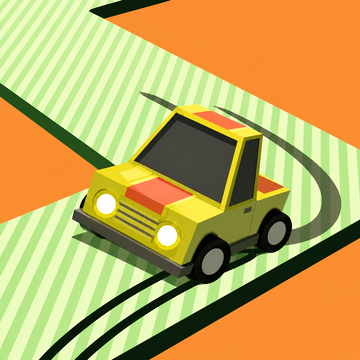
Concept and Inspiration
A road across a mountain does not always take the shortest path. Mountain passes give travelers a way through high terrain, and their routes have long mattered to trade, migration, and movement between regions. [1] Where a slope is especially steep, a hairpin turn bends the road back on itself, allowing the route to change direction sharply instead of charging straight uphill. The bend gets its name from its resemblance to a folded hairpin. [2]
Some mountain roads turn that practical solution into a striking landscape. Italy's Stelvio Pass rises to about 9,045 feet in the Eastern Alps, where the winding road follows the mountain terrain. [3] Norway's Trollstigen is known for eleven hairpin bends along a steep mountain route. [4] From above, such roads resemble ribbons folded across the hillside: the destination may be ahead, but the road keeps asking travelers to change direction.
The road is only one part of that landscape. Retaining walls, cut slopes, and the ground below the pavement shape how a mountain route looks and feels. This view from Hot Springs National Park shows a retaining wall and cribbing beneath West Mountain Road, a reminder that a hillside road has a built structure as well as a line to follow.
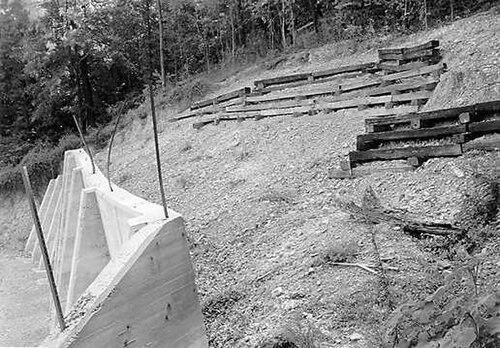
Figure 1. A retaining wall and cribbing below West Mountain Road in Hot Springs National Park.
Photo: George A. Grant | publicdomain
A different mountainside view places a retaining wall beside the railway landscape near Conway Mountain. The wall, hillside, and long view beyond it capture something familiar about travel through steep country: the route has a clear edge, and the land continues well past that edge.
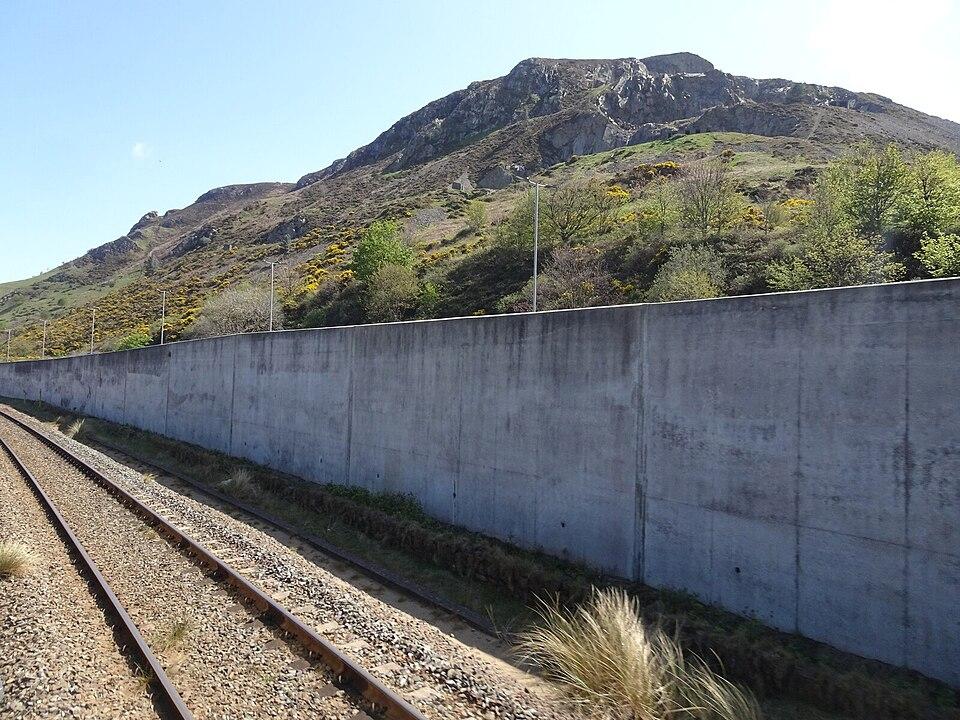
Figure 2. A retaining wall and Conway Mountain seen from a train in Wales.
Photo: Nigel Thompson | ccby-sa2.0
Curves are also a problem of careful judgment. A study of mountain-road geometry examined factors such as curve radius and road grade, finding that radius had the strongest relationship with average speed among the factors studied. [5] Other road-design research considers how horizontal curves, vertical alignment, speed, gradient, and banking work together. [6] On real mountain bends, passenger comfort is affected by the sideways acceleration of turning, too. [7]
Drivers do more than react to the pavement immediately beneath the wheels. Research on steering through bends found that drivers look along the upcoming path while also glancing farther ahead to anticipate its shape. [8] At slope3.com, we developed Drift Boss around a playful version of that switchback challenge: see the next bend, make a timely turn, and keep moving. Our striped road floats above a wide orange void, replacing mountain scenery with a bold, readable test of your next decision.
Story
Far beyond a sunlit valley, a small signal tower stands on the last ridge. Its light has faded, and the road leading there has become a thin zigzag over a sea of orange haze. Mira, a young keeper of mountain routes, sets out with a hand-drawn map, a little green car, and a simple promise: someone must find a way across before the last light disappears.
From the starting ledge, the journey looks almost easy. One stretch runs straight ahead. Then it snaps sideways. Another corner folds back in the opposite direction, and suddenly the distant tower feels much farther away. Mira learns to read each approaching bend as a choice she has only a moment to make. The road gives her no broad shoulder on which to reconsider.
Small golden glints punctuate the winding route, like markers left by travelers who knew how valuable a safe crossing could be. A perfect stretch leaves two dark traces curving neatly around a corner. A missed turn drops away into open space. Yet the map still holds more lines to draw, and another attempt begins with the same hopeful little car at the edge of the unknown.
There is no monster waiting at the next bend and no need for a grand speech. Mira's challenge is the road itself: the narrow distance between arriving safely and turning a heartbeat too late. Each new crossing adds another curve to her imagined map, carrying the hope of reaching that distant signal a little farther forward.
Gameplay
Your little green car drives forward automatically along a narrow, elevated zigzag road. You control whether it drifts right or left, changing direction as each bend arrives. Stay on the striped pavement and your distance score climbs; collect golden coins along the route for spending on cars and boosts. Drift beyond an unprotected edge and the car falls, ending that run unless a Car Insurance rescue is active. Then you can start again and try to travel farther.
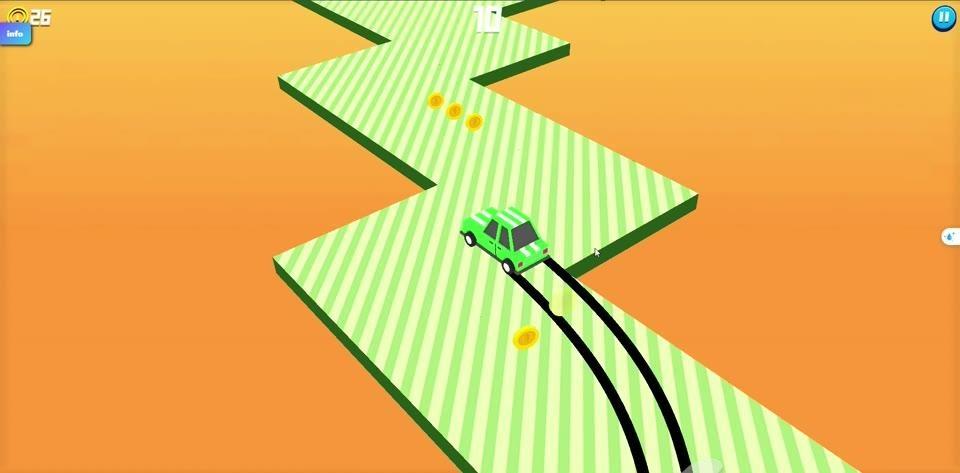
Figure 3. The green car heads onto a narrow striped road suspended over orange space.
The Car, the Road, and Every Corner
The player car is a compact, lime-green vehicle with a pale roof, dark windows, and visible wheels. It rolls ahead without an accelerator command, leaving you to manage its side-to-side drift. The road consists of mint-green and white stripes with darker green edges. It is raised above open orange space, with no guardrail to catch a turn taken too wide.
Alternating tight bends are the main obstacles. A straight section gives you time to line up the next move, but the next corner may demand the opposite direction. For example, guide the car through a rightward bend, switch toward the left as the road folds back, and stay centered enough to reach the next straight. The result of each successful turn is simple and visible: the car remains on the road and keeps moving.
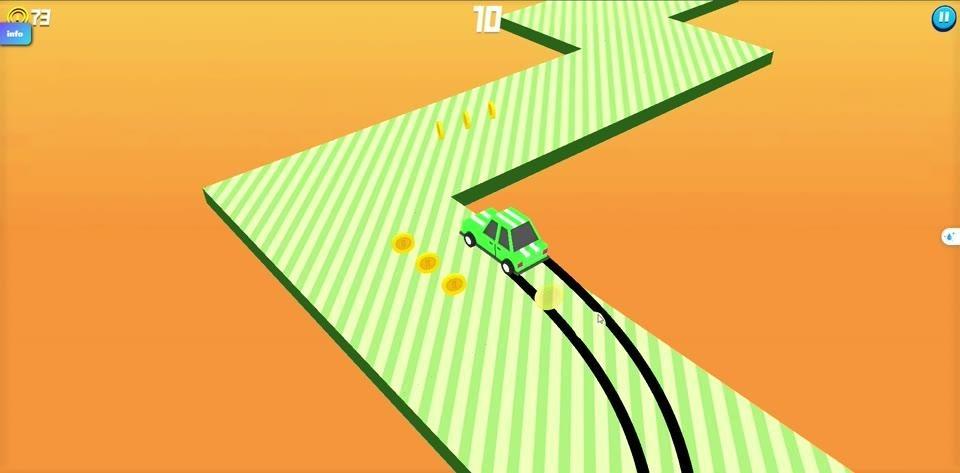
Figure 4. Sharp alternating corners make the raised road the central challenge.
Coins, Boosters, and the Prize Wheel
Glowing yellow coins sit along the driving route. Passing through a coin collects it, adding to the currency you can use to buy pre-run boosters and unlock other cars. The coin counter in the upper-left corner lets you follow what you have collected, while the distance score sits near the top center of the screen. Going after a coin still means keeping the car on the road: a shiny pickup is only useful if you make the turn.
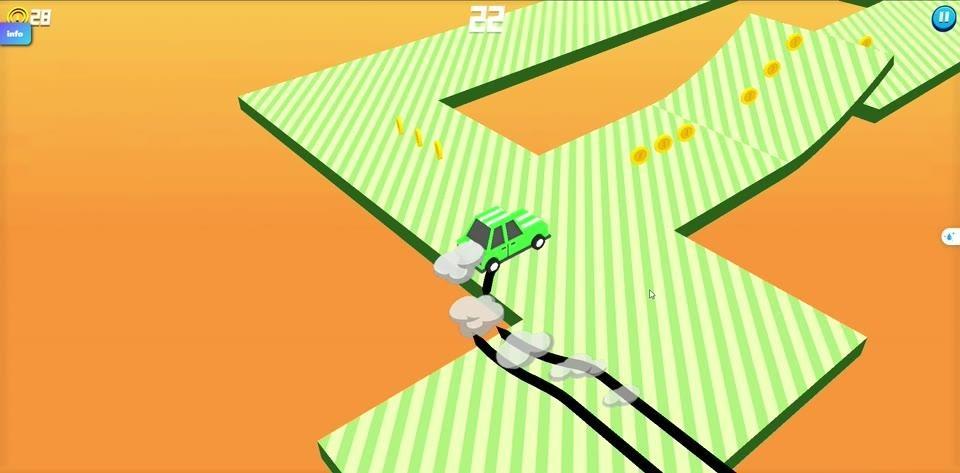
Figure 5. Golden coins line the striped roadway beside the moving green car.
Before a drive, the Select Booster panel offers three clear options. Double Score costs 25 coins and doubles the score earned during that run. Car Insurance costs 50 coins and rescues the car from one fall before its protection is used up. Coin Rush costs 75 coins and puts more collectible coins on the road for that run. Pick a boost when it suits your goal, then use Start Drift to begin.

Figure 6. The Select Booster panel presents Double Score, Car Insurance, and Coin Rush.
A separate Spin to Win panel adds a reward-wheel activity. Its circular wheel is divided into colored prize segments, and a SPIN button starts the wheel when a spin is available. Rewards can include coins or boosters, giving you another way to build up resources between drives.
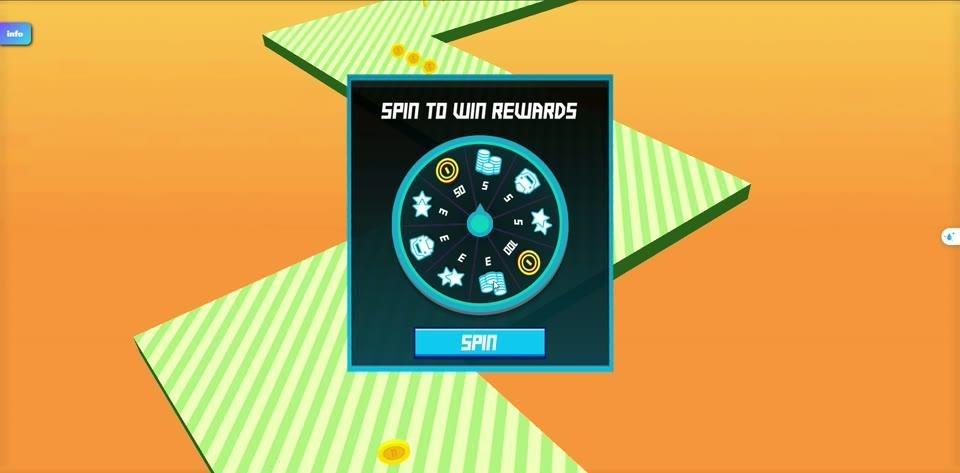
Figure 7. The colorful Spin to Win wheel offers a separate prize activity.
Scoring, Success, and Game Over
The large white number near the top of the screen is your current run's distance-based score. It rises as you travel farther; Double Score increases that gain when selected. Your immediate success is a longer drive and a higher score, rather than crossing a visible finish line. Coins are a separate reward used for boosters and car unlocks, so collecting them serves a different purpose from building the distance score.
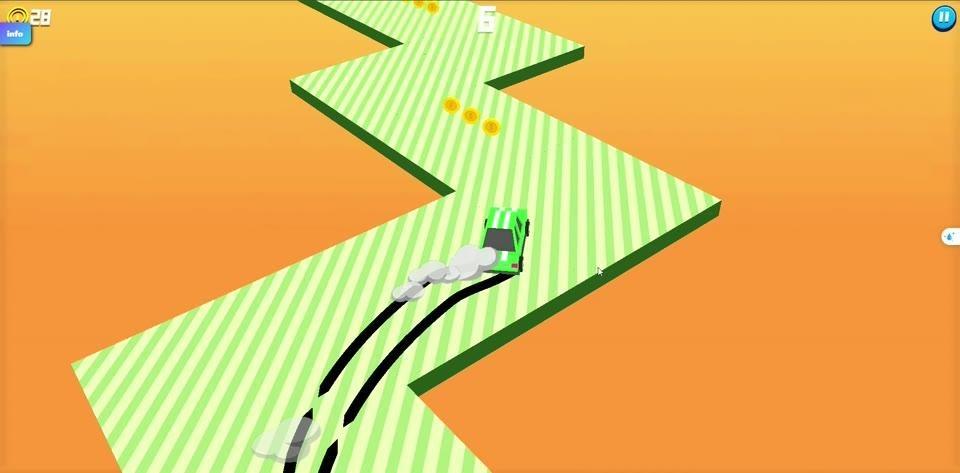
Figure 8. The upper display tracks the run while the car follows the elevated course.
If the car slips off the road, that attempt ends. With active Car Insurance, one such fall is rescued and the protection expires; without that rescue, you must begin another run. Starting again resets the distance score for the new attempt. Collected coins and cars already unlocked remain available even after the game page is reloaded, allowing later runs to benefit from earlier pickups. The road keeps presenting new bends, but staying on it is what keeps each attempt alive.
The screen keeps the key information close to the action: coins at the upper left, distance score near the center, and a blue circular pause symbol at the upper right. You can watch the next corner without losing track of your progress. When a run ends, the useful choice is whether to chase a longer score, gather more coins, or prepare a booster for the next drive.
Visual Style
Drift Boss uses a simple, bright scene that makes the car and road easy to spot. The squat green vehicle sits against mint-and-white pavement, dark green road borders, and a flat orange background. Each raised stretch bends at a sharp angle, so the next direction is visible at a glance. We chose that strong separation of colors to keep attention on the edge you are approaching.
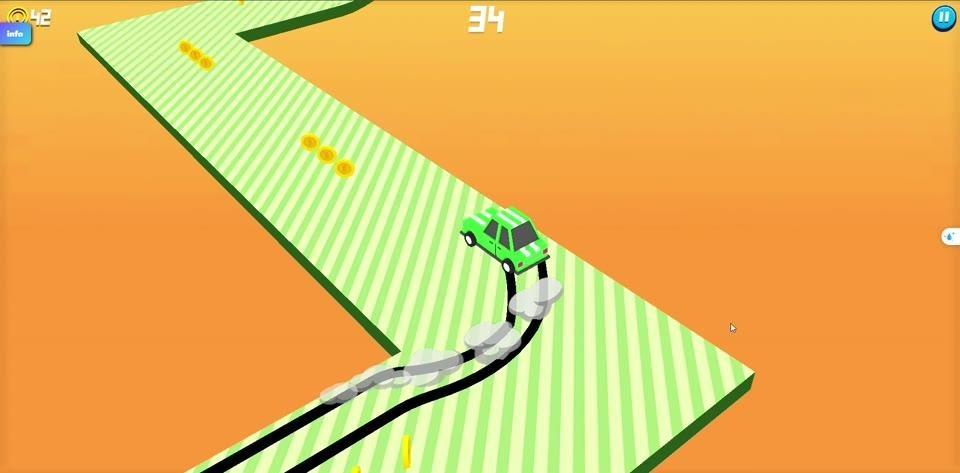
Figure 9. The green car and striped zigzag track stand out against a warm orange background.
Two dark curved tire marks and soft white puffs accompany the drifting car. They give each turn a lively visual trail while keeping the scene uncluttered. Gold coins add small bright targets along the road, and the large white score number remains readable above the action. There are no mountains to block the view here: the floating road is the whole stage.
Standout Features
The essential challenge comes from a tiny set of choices. The car advances on its own, and the steering input switches between two drift directions. That makes each corner easy to understand while leaving very little room for late timing. A clean sequence of bends can feel smooth; one badly timed change sends the car beyond the edge.
The exposed zigzag road gives every mistake a clear cause. There are no roadside barriers to hide a wide turn, and the contrasting stripes help you read where the pavement ends. The same layout also gives coins a meaningful place in the action: reaching a pickup requires attention to the road around it, not just to the coin itself.
Coins, car unlocks, the three priced boosters, and the reward wheel give short drives a longer purpose. You might aim for a better distance score on one attempt, then use a later run to collect currency or try the one-fall safety net. Every return puts the same central skill back in your hands: recognize the next bend and change direction in time. Take another turn in Drift Boss at slope3.com.
Controls
PC
1. Select Start Drift to begin; the green car moves forward automatically.
2. Hold the left mouse button or the Space key to drift right.
3. Release the mouse button or Space to drift left. Alternate holding and releasing to follow each turn and avoid the road edge.
Mobile
1. Tap Start Drift to begin; the car drives ahead on its own.
2. Touch and hold the play area to drift right.
3. Lift your finger to drift left. Repeat the hold-and-release rhythm as the zigzag road changes direction.
References
[1] Mountain pass. https://en.wikipedia.org/wiki/Mountain_pass
[2] Hairpin turn. https://en.wikipedia.org/wiki/Hairpin_turn
[3] Stelvio Pass. https://en.wikipedia.org/wiki/Stelvio_Pass
[4] Trollstigen. https://en.wikipedia.org/wiki/Trollstigen
[5] Examining the Effect of Geometric Design Features on the Speed in Horizontal Curve on Mountain Road. https://doi.org/10.26552/com.c.2024.037
[6] Optimization of Combined Horizontal and Vertical Curves Design of Mountain Road Based on Vehicle-Road Coordination Model. https://doi.org/10.1109/ictis.2019.8883680
[7] Passengers’ comfort in horizontal curves on mountain roads: a field study using lateral accelerations. https://doi.org/10.17533/udea.redin.20200578
[8] Look-ahead fixations in curve driving. https://doi.org/10.1080/00140139.2012.739205
Image Credits
Green-Harris retaining wall and cribbing above their parking lot, Hot Springs National Park. This unstable situation is (40068cc260f54b9bacddb36819cc2ffa).jpg — George A. Grant — publicdomain. https://commons.wikimedia.org/wiki/File:Green-Harris_retaining_wall_and_cribbing_above_their_parking_lot,_Hot_Springs_National_Park._This_unstable_situation_is_(40068cc260f54b9bacddb36819cc2ffa).jpg
From a Chester-Holyhead train - Retaining wall and Conway Mountain - geograph.org.uk - 7608587.jpg — Nigel Thompson — ccby-sa2.0. https://commons.wikimedia.org/wiki/File:From_a_Chester-Holyhead_train_-_Retaining_wall_and_Conway_Mountain_-_geograph.org.uk_-_7608587.jpg License: https://creativecommons.org/licenses/by-sa/2.0