Concept and Inspiration
Picture the moment before a golf drive: the ball rests on a little tee, the club hovers behind it, and an entire fairway lies ahead. A conventional golf course leads players from the teeing area through fairway, rough, and hazards toward a green with a cup marked by a flagstick. Distance matters, but so does where the ball finally comes to rest. [1] That quiet instant before the swing is where our much less sensible adventure begins.

Figure 1. A golfer lines up a drive on a sunny course, with a broad green fairway stretching ahead.
Photo: PattayaPatrol | ccby-sa4.0
There is already a real sport built around the question, How far can one shot go? In long-drive golf, competitors try to send a ball farther than anyone else's. [2] The challenge starts well before the ball lands. Research on golf swings has found that clubhead speed, orientation, path, and quality of contact help explain differences in a ball's early flight. [3] A tiny change at impact can turn into a very different journey across the grass. For a game about chasing another few feet, that makes the split second of the swing a wonderful place to put the player's attention.
Even the little white ball is an impressive piece of sporting equipment. Under the rules of golf, a regulation ball cannot weigh more than 1.620 ounces (45.93 grams) and must measure at least 1.680 inches (42.67 millimeters) across. [4] Look closely and its dimpled skin tells another story. A study of different dimple arrangements found that adding smaller dimples between existing ones increased the predicted lift coefficient in its simulations. [5] Another investigation, using wind-tunnel measurements, found differences in lift and drag between balls with hexagonal and round dimples. [6] A conventional golf ball's dimples affect lift and drag, helping shape its flight; distance depends on more than how hard it is struck.

Figure 2. A dimpled white golf ball rests on a colorful tee, showing the textured surface that helps shape real-world ball flight.
Photo: PattayaPatrol | ccby-sa4.0
A spinning ball can also experience the Magnus effect: as it moves through air, rotation can produce a lift force that bends its path. [7] Researchers have compared smooth, grooved, and dimpled golf balls under matched launch conditions and found substantial differences in predicted flight distance. [8] Real golf is full of these careful measurements and compromises. We liked the idea of taking that measured world and stretching it until a familiar drive felt wildly larger than life: past the nearest flag, beyond the hills, and toward a starry horizon.
We developed Golf Orbit for Slope3 around that playful leap from the fairway to the impossible. Here, the object is not simply to finish a hole in fewer strokes. You time one swing on a colorful power gauge, watch a white ball soar, and read the distance in feet as it flies, bounces, and rolls. Coins from your drives help improve Strength, Speed, and Bounce for the next attempt. The faraway dream of reaching Mars gives our game its outsized sense of adventure, while the glowing, planet-filled sky turns that ambition into a visual joke of cosmic proportions. One swing is simple. Finding out how much farther the next one can go is the hook.
Story
Imagine a cheerful golfer in a pink cap standing on a sunny patch of grass with one ridiculous promise: someday, a ball will fly so far that Mars might have to duck. There is no rocket on the tee, no launch crew, and certainly no sensible reason to make that promise. Just a club, a white ball, an orange flag in the distance, and a pair of bright shoes planted firmly on Earth. The golfer takes a deep breath and swings. The first shot clears a hill. The next one goes farther. Suddenly, the little course does not seem quite big enough for the dream.
Of course, the landscape has opinions. One ball clips a tree and springs back toward the grass. Another loses speed after meeting a bird in the sky. A particularly hopeful drive splashes into water, ending that attempt before the golfer can celebrate. Our would-be space explorer returns to the tee, brushes off the disappointment, and studies the next swing a little more carefully. Every distance on the counter becomes a line in an imaginary logbook: not a tale of perfect shots, but a record of stubborn attempts.
The coins earned along the way are small steps toward an enormous goal. A stronger strike carries the ball out over the hills; a little more speed gives it another chance to travel; an improved bounce can keep the journey alive after landing. Soon the orange flags feel like roadside markers on an expedition rather than its final destination. The golfer dreams of green valleys shrinking below, of clouds giving way to darkness, and of distant planets lining up like spectators waiting for the most improbable golf shot in history.
Mars remains the shining idea at the end of this imagined journey, a place the golfer can point to whenever today's best drive starts to feel ordinary. A new personal record is a triumph, but never the last chapter. The golfer sets another ball on the tee, looks at the swinging pointer, and wonders whether this will be the shot that makes yesterday's impossible distance look small. The answer begins with one carefully timed release.
Gameplay
Golf Orbit is built around one repeatable drive. You control the timing of the golfer's swing: on PC, hold the left mouse button while the pointer moves across the colored power gauge, then release it, ideally in the green Perfect zone. The golfer hits the ball, and you follow its arc over the landscape as a distance counter measures the trip in feet. The ball can keep traveling after its first landing by bouncing or rolling. When the shot ends, use Collect to claim your coin reward, which depends mainly on the distance traveled. Spend coins on Strength, Speed, or Bounce, then take another shot and try to beat your record.
The Golfer, Ball, and Perfect Swing
Your golfer has a bright pink cap, light blue shirt, white skirt, and pink shoes. A slim club with a purple-toned head waits beside the small white ball, which sits on a narrow gray tee. Next to them is the important part: a large fan-shaped meter divided into green, yellow, and orange bands. Watch its moving pointer as you time the shot. Releasing in the green Perfect area produces a stronger strike and gives the ball a better chance to fly farther. The scene is easy to read because you can see the golfer, ball, club, and power gauge together before every attempt.
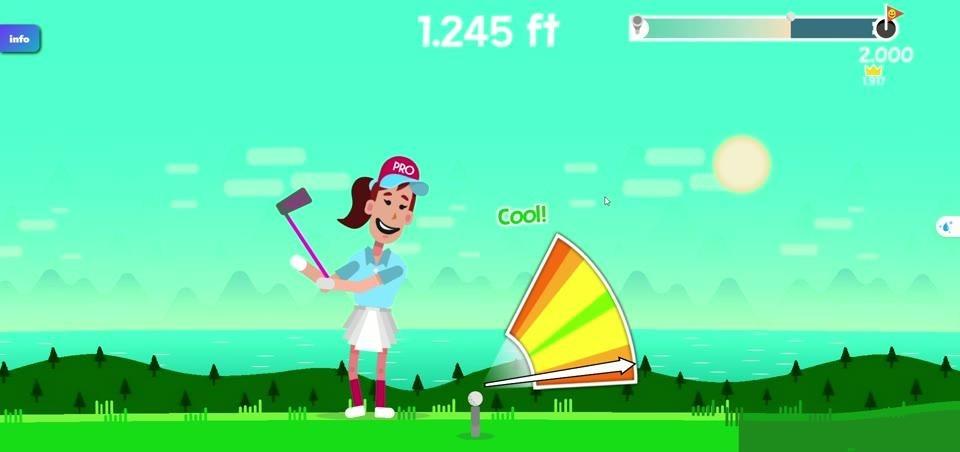
Figure 3. The pink-capped golfer prepares to swing beside a white ball and a fan-shaped timing gauge with colored power zones.
After the strike, a thin white trail, sometimes sprinkled with warm-colored sparks, traces the ball's route. Look at the number near the top of the screen: its ft label tells you how far the ball has traveled. A useful first attempt is simply to time the pointer near the middle of the green zone, release, watch the ball travel, and check that distance. On the next attempt, try again with a better-timed strike or a purchased upgrade. You do not need to steer the ball through a complicated series of midair commands; the core choice is when to swing.
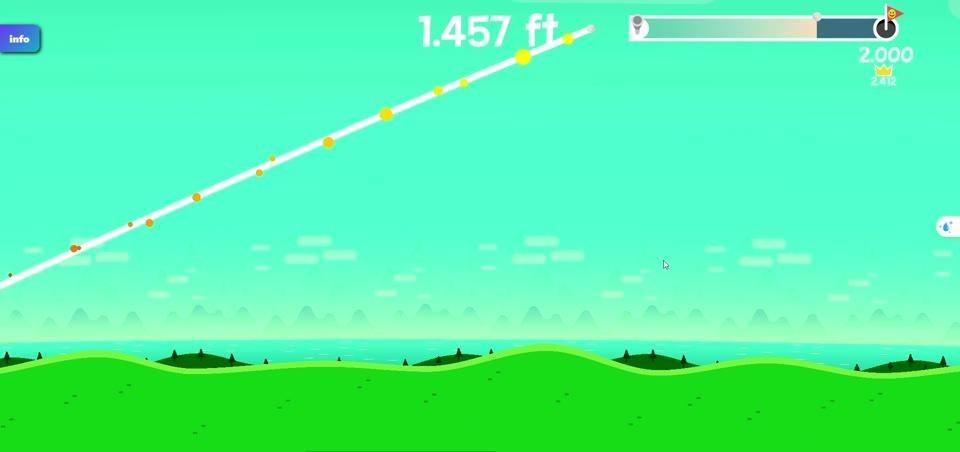
Figure 4. A bright curved trail stretches across the sky as the shot-distance display tracks the ball's travel.
Golf Holes, Hills, and Hazards
The course is a long sweep of lime-green hills, with darker earth below the grass and small orange flags marking real golf holes. Each flag stands above a dark cup opening. Those holes matter for rewards as well as scenery: sinking a ball can bring a larger payout, and achievements such as Birdie, Eagle, or Albatross can add to the reward. A long drive is still the main way to build coins, but an especially well-placed shot has a reason to be celebrated too.
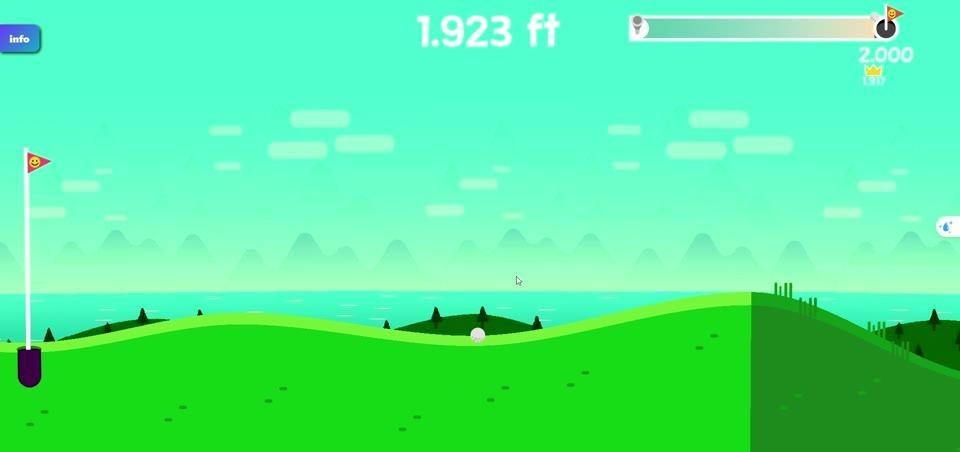
Figure 5. Orange flags mark golf holes along a rolling green course beneath a clear cartoon sky.
Not everything along the route is friendly. The dark tree and shrub silhouettes can meet the ball and either stop it or knock it back. Small pale birds flying over the grass can collide with it and reduce its speed. Watch the angular blue water patches, too: a ball landing in water loses that attempt immediately. Landing in sand has the same losing result. The scenery may look cheerful, but a stray bounce can turn a promising long drive into a very short story.
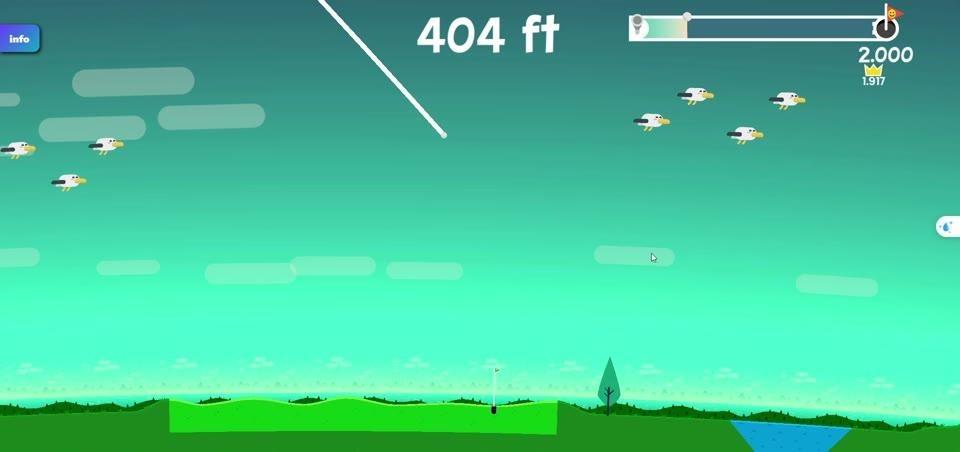
Figure 6. Pale birds cross above the green course while a blue water patch interrupts the ground below.
Coins, Upgrades, and Extra Rewards
Once a shot is complete, choose Collect to take the coin reward. Distance is the main factor, including the extra ground covered when the ball bounces or rolls. Terrain and obstacle collisions can change the final result by changing the ball's route; there is no need to calculate a secret point formula as you play. Hole achievements offer other reward opportunities, while Jackpot features and special balls can also increase coin earnings. The gold coin balance on the preparation screen shows the currency available for your next improvements.
Three upgrade cards are stacked along the left side of the preparation screen. The upper Strength card improves the force of your strike, Speed increases how quickly the ball travels, and the lower Bounce card improves its ability to keep moving after it lands. Each purchase uses accumulated coins. On the right, the green Clubhouse tile leads to a shop for buying clubs. The nearby timed gift opens a lucky wheel with possible prizes including clubs, balls, and coins. These extras give you more to work toward between swings without changing the basic timing control.
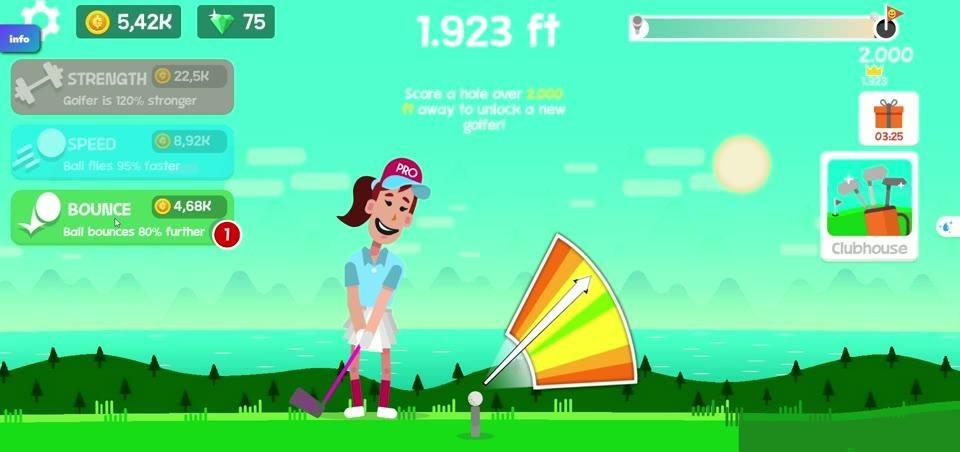
Figure 7. The shot-preparation screen shows Strength, Speed, and Bounce upgrades at left, with Clubhouse and a timed gift at right.
Records, Losses, and More Maps
There is no single final victory that ends Golf Orbit. Your ongoing aim is to push the distance farther, improve your personal best, and work toward buying or unlocking other maps. A successful drive gives you a measured result and coins to reinvest; a new record gives you a fresh target to beat. The game keeps that goal alive across repeated attempts instead of asking you to finish a fixed sequence of golf holes.
A shot that lands in water or sand stops and counts as a loss for that attempt. You can return to another swing, and the coins you have collected, upgrades you have purchased, and your personal best distances are retained between shots and when the game is restarted. That makes one unlucky splash a setback for the current drive rather than the end of your broader distance chase. Keep watching where the ball goes, decide which upgrade will help your next attempt, and try again.
Visual Style
We chose a bright, playful 2D cartoon look for Golf Orbit. The pink-capped golfer has an instantly recognizable silhouette, the grass forms big rolling green shapes, and dark little trees stand out clearly against the hills. Farther back, triangular mountains, thin strips of cloud, and a soft yellow sun sit beneath a turquoise sky. The whole course feels like a cheerful postcard that has been stretched into an enormous runway for your next drive.
The swing meter is as bold as the landscape. Its green, yellow, and orange wedges sit right beside the ball, so you can focus on the exact moment to release. Once the club connects, the glowing trail and large feet counter take over. You can follow the white arc across the screen even when the ball becomes tiny against the hills. The art keeps the action readable while leaving plenty of room for an absurdly long shot.
Long flight scenes also bring a striking change of mood: the bright course gives way to a black-purple starfield, a curved glowing horizon, round celestial bodies, and little floating shapes. A blue-gray, winglike craft silhouette adds to the space-themed scene. The planets and craft are decorative artwork, carrying the golfer's huge Mars-bound dream across the sky rather than serving as physical targets. They make an already exaggerated golf shot feel gloriously out of scale.
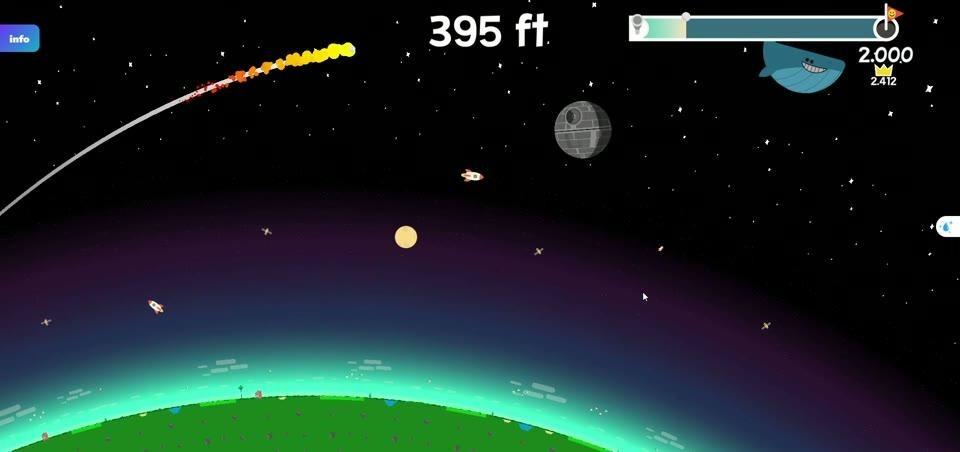
Figure 8. A shining ball-flight trail crosses a star-filled sky with round planets, a glowing horizon, and a blue-gray craft-like silhouette.
Standout Features
Golf Orbit turns a familiar sporting question into a wonderfully exaggerated challenge. On a regular golf course, each hole is associated with a target cup and a par score; long-drive sport, by comparison, puts maximum distance at the center of the contest. [1] [2] Our game follows that distance-first impulse, then lets a single timed swing send the ball across hills and into space-themed artwork. The distance counter makes the result immediate: you can tell exactly which attempt went farther without waiting for a match scorecard.
The interesting part of the one-button swing is what happens after the release. Trees can reverse a promising flight, birds can slow the ball, and water or sand can end an attempt. At the same time, a clean bounce or roll can carry the ball past the distance you first expected. These visible outcomes make every drive a little story with its own lucky breaks and disappointing turns. A well-timed Perfect hit is a strong start, but the trip across the course gives you the suspense.
The upgrade loop gives all those repeated shots a purpose. Strength, Speed, and Bounce improve different parts of the journey, while coins earned mainly through distance let you decide what to develop next. Golf holes, named shot achievements, the Clubhouse, and the lucky-wheel gift add smaller goals along the way. With other maps to unlock and no fixed final winning shot, there is always a reason to tee up another ball. Try Golf Orbit on Slope3 and see how far one more swing can take you.
Controls
On PC
1. Find the golfer and white ball on the tee, then look at the large fan-shaped power gauge beside them. 2. Press and hold the left mouse button while the gauge pointer moves. 3. Watch for the green Perfect zone. 4. Release the left mouse button when the pointer reaches that zone to make the golfer swing. The ball launches, leaves a visible trail, and the counter at the top tracks its distance in feet. Release outside the ideal zone and the shot uses that less favorable timing instead.
5. After the shot ends, left-click Collect to claim the available coin reward. 6. On the next preparation screen, left-click Strength, Speed, or Bounce in the stack of upgrade cards on the left when you want to spend coins on that improvement. You can also click Clubhouse on the right to shop for clubs or the timed gift to open its prize wheel. Then hold and release the left mouse button for your next drive.
On Mobile
1. Find the golfer, ball, and colored swing gauge. 2. Watch the moving pointer and tap the screen as it enters the green Perfect zone. That timed tap triggers the swing and sends the ball into flight. In mobile versions that use the hold-and-release pattern, touch and hold to time the gauge, then lift your finger when the pointer reaches the green zone. 3. Follow the ball and the distance counter as it flies, lands, and travels along the course.
4. When the attempt ends, tap Collect to receive the coin reward. 5. Tap Strength, Speed, or Bounce on the upgrade cards to spend your coins and improve a future drive. The Clubhouse tile opens the club shop, and the timed gift leads to the lucky wheel. After a water or sand landing ends the current attempt, return to the swing gauge and try another shot. Your purchased upgrades and best distances remain part of your continuing progress.
References
[1] Golf course. https://en.wikipedia.org/wiki/Golf_course
[2] Long drive. https://en.wikipedia.org/wiki/Long_drive
[3] The influence of club-head kinematics on early ball flight characteristics in the golf drive. https://doi.org/10.1080/14763141.2013.772225
[4] Golf ball. https://en.wikipedia.org/wiki/Golf_ball
[5] EFFECTS OF GOLF BALL DIMPLE CONFIGURATION ON AERODYNAMICS, TRAJECTORY, AND ACOUSTICS. https://doi.org/10.1615/jflowvisimageproc.v14.i2.40
[6] Golf Ball Aerodynamics. https://doi.org/10.1017/s0001925900007617
[7] Magnus effect. https://en.wikipedia.org/wiki/Magnus_effect
[8] Aerodynamics of a golf ball with grooves. https://doi.org/10.1177/1754337114543860
Image Credits
DSC 7039 Golfer in a bucket hat lines up a drive on a sunny day at the course.jpg — PattayaPatrol — ccby-sa4.0. https://commons.wikimedia.org/wiki/File:DSC_7039_Golfer_in_a_bucket_hat_lines_up_a_drive_on_a_sunny_day_at_the_course.jpg License: https://creativecommons.org/licenses/by-sa/4.0
DSC 6916 A golf ball perched on a colorful tee ready for the next drive on a sunny course.jpg — PattayaPatrol — ccby-sa4.0. https://commons.wikimedia.org/wiki/File:DSC_6916_A_golf_ball_perched_on_a_colorful_tee_ready_for_the_next_drive_on_a_sunny_course.jpg License: https://creativecommons.org/licenses/by-sa/4.0