Concept and Inspiration
A ski jumper's most dramatic moment happens in the air, but the story of each leap starts on the hill. The athlete gathers speed down a sloping approach, rises from the takeoff, and must come back to earth with control. Competitive ski jumping emerged in Norway in the late nineteenth century and later spread across Europe and North America. Even today, its appeal lies in that brief meeting of speed, height, and a carefully judged return to the ground. [1]
A ski-jumping hill is shaped for the whole journey. Its in-run lets the athlete build speed; the takeoff table leads into open flight; a landing slope receives the jumper; and an out-run provides room to slow down afterward. These connected parts make the slope beneath the athlete just as important as the air above it. [2]
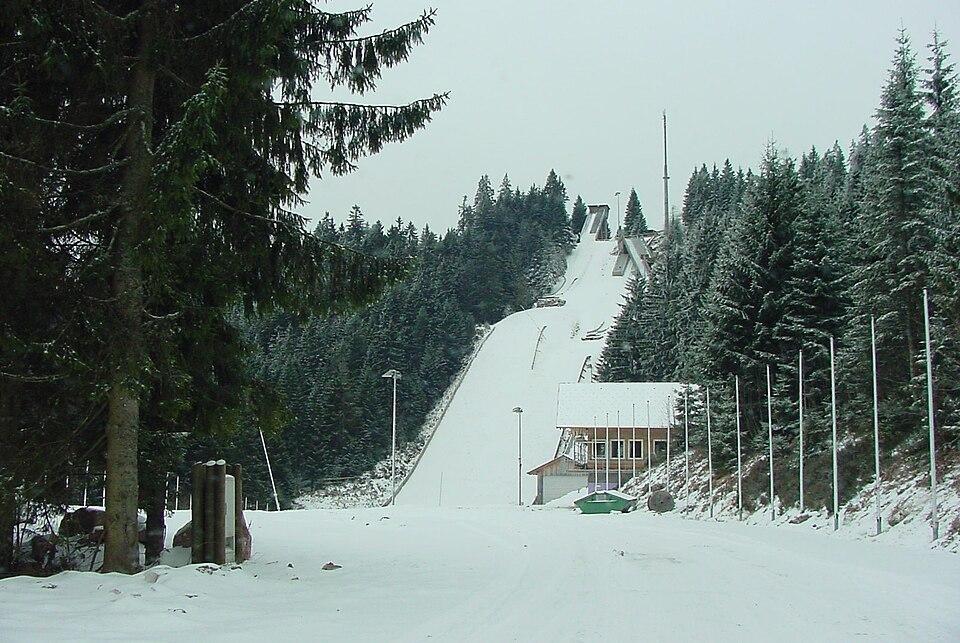
Figure 1. The snow-covered ski-jumping hills at Ruhestein, where two approaches share a sloping landing area.
Photo: Globetrotter51 | ccby-sa3.0
The sport even gives its landscape a measuring line. The K-point is a marked reference on the landing hill used to calculate distance points, while ski-jumping results also take the athlete's style into account. [3] [1] The idea of making a flight meaningful through a visible marker is wonderfully simple, even though the way Curve Rush awards points is its own arcade rule.
Landing deserves as much attention as takeoff. A scientific review of ski-jumping biomechanics examines how athletes prepare to land, the forces involved, and injuries connected with touchdown. [4] Research using wearable sensors and force insoles also highlights the importance of the skier's orientation before contact in reducing landing impact. [5]
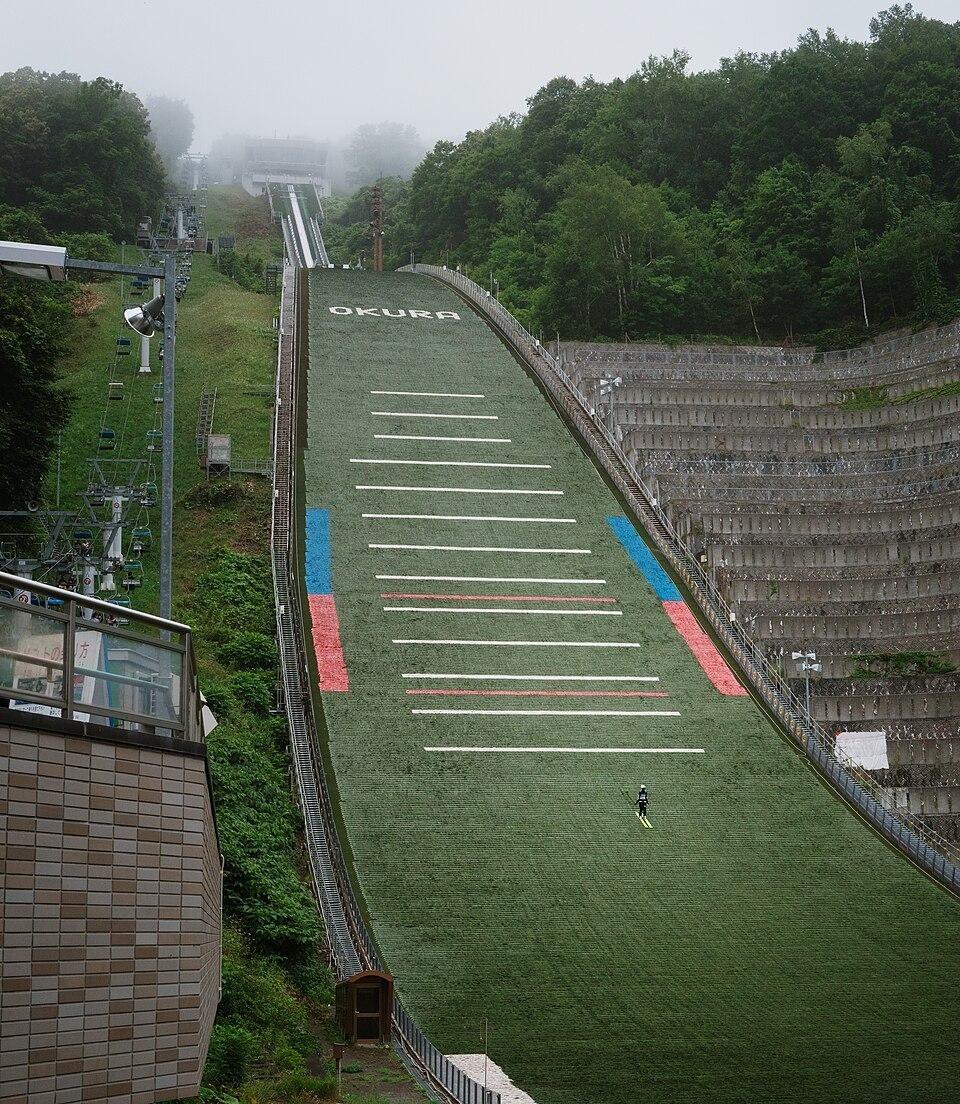
Figure 2. A ski jumper approaching a landing on the green summer slope at Okurayama in Sapporo.
Photo: Sergiy Galyonkin | ccby-sa4.0
Sports researchers describe a jump in distinct phases: the in-run, takeoff, early flight, stable flight, and landing. [6] Ski flying pushes the airborne part much farther, yet a stable landing remains part of the event. [7] Both offer a useful way to picture the tension between staying aloft and returning safely to a slope.
We developed Curve Rush at slope3.com as our playful take on that tension. Our tiny ball gathers momentum across rounded ridges, vaults into the sky, and needs a welcoming downhill curve for its return. A bright height line turns a soaring leap into a clear achievement. Golden dunes and a distant snowcapped mountain carry the same rise-and-land rhythm through very different landscapes.
Story
In the little fable we imagine for Curve Rush, a white wanderer called the Skylighter crosses a country where the hills never settle. Golden dunes roll toward the horizon like waves, and somewhere beyond them stands a mountain whose last glimmer has disappeared into the dusk. The Skylighter is small enough to fit in the hollow of a hand, yet determined to carry a spark of brightness from one valley to the next.
At the bottom of each valley, the world goes quiet for an instant. Then the next ridge lifts the traveler into the open sky. Far below, the dunes curl away; ahead, a pale line cuts across the blue like a promise. The higher the Skylighter climbs, the farther it can glimpse the violet mountains. But every leap comes with a choice: chase one more moment of flight, or prepare for the slope waiting below.
The journey grows stranger as warm sand gives way to dark rock and snow-bright peaks. The Skylighter learns that courage is more than rising high; it is knowing how to return and begin again. There is no need for a grand villain here. The changing hills, the fading light, and the next uncertain landing give this imagined journey all the suspense it needs.
Gameplay
You guide a small ball across a rolling course. Hold the control while the ball travels downhill to build speed, then release to send it flying. Time the next hold and the return toward a descending slope: a soft landing keeps the run going, while a hard impact or a crash into rising ground can end it. Repeat that downhill rush, leap, and landing to travel farther, cross the white height line for points, and touch floating coins to collect them.

Figure 3. The white ball travels over golden dunes beneath a horizontal scoring line.
The Ball, Its Motion, and the Course
Your ball is a small, bright white circle against broad yellow hills. The track alternates between dips that help build momentum and crests that launch the next flight. When the ball speeds up, it can glow orange with a bright streak. A curved scatter of dark dots is a trail left by the moving ball, while the separate tapered white streak helps show its fast motion.
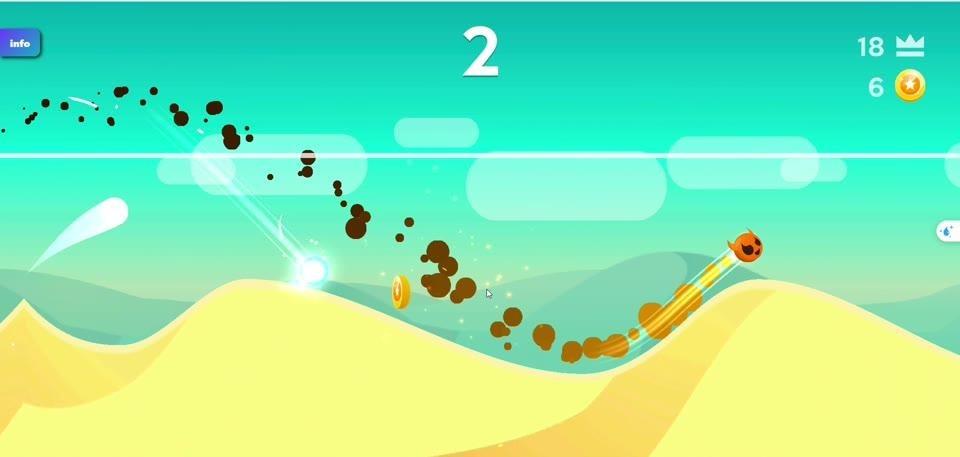
Figure 4. An accelerated orange-glowing ball leaves a dotted trail above the curved desert track.
Later scenery replaces the pale dunes with steep brown-orange ridges and darker rock faces. A towering snowcapped mountain rises behind them, but the important surface is still the slope directly ahead. Watch whether the ground is descending or climbing before the ball comes down.
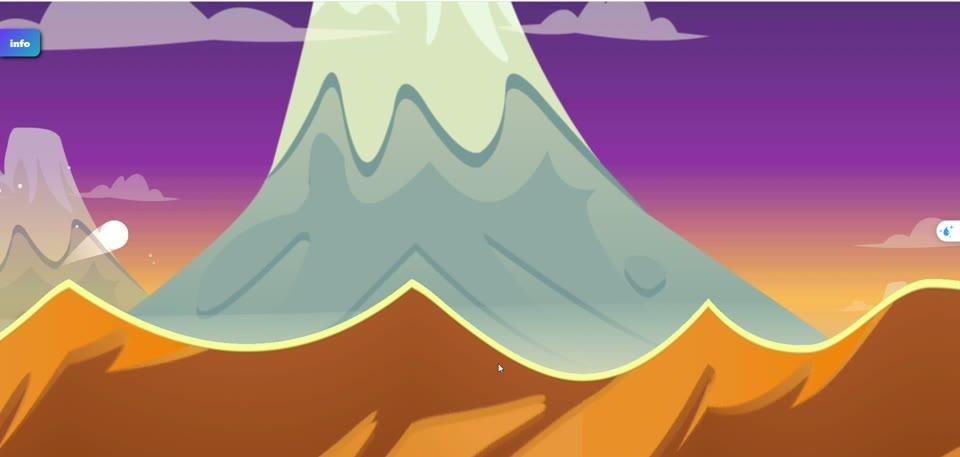
Figure 5. The ball's route winds through orange rocky ridges below a large snowcapped mountain.
The Height Line, Score, and Coins
The thin horizontal white line above the dunes is a scoring threshold. Each time the ball flies across it, you earn one point. The large white number near the upper center shows the accumulated crossings in the current run; crossing the line matters, rather than simply staying airborne longer. Consecutive smooth landings can also build a score bonus, beginning with a streak of two successful landings.

Figure 6. A large score number sits above the bright horizontal height threshold and dune course.
Gold circles floating near the course are coins. Guide the ball through one and it disappears, adding one coin to the coin balance; no separate pickup button is needed. Coins and points have different jobs: points measure your airborne achievements, while saved coins can unlock ball looks, environments, and visual settings. The gold-icon count in the upper-right area tracks your coin balance.

Figure 7. Gold coins float near the dunes as the accelerated ball crosses the sky.
Smooth Landings, Crashes, and Retries
A smooth landing means touching down lightly on a downhill slope. Coming down too hard, striking a crest or uphill face at speed, or otherwise crashing into the terrain ends the run immediately. Leaving the ground is part of play; the dangerous moment is an unsafe collision on the way back. For example, build speed through a valley, launch above the height line, and settle onto the next descending face to keep moving.
In Endless mode, there is no final finish line or last victory screen: the aim is to survive farther and earn a better score. After a crash, a new attempt starts with a fresh run score, while your separate best-score record remains available. Collected coins and previously unlocked appearances stay saved, including in the browser's local game data. If you fail a Cup stage, you replay that stage from its start rather than continuing from the point of the crash.
Endless Runs and Cup Challenges
Curve Rush also has a goal-based Cups mode: four Cups with 35 levels each, for 140 challenges in all. Unlike Endless, a Cup level has an objective and a finish line. You must meet its stated requirement before reaching the end. A stage may ask for a target score or a number of smooth landings; one visible challenge asks you to complete at least one smooth landing.
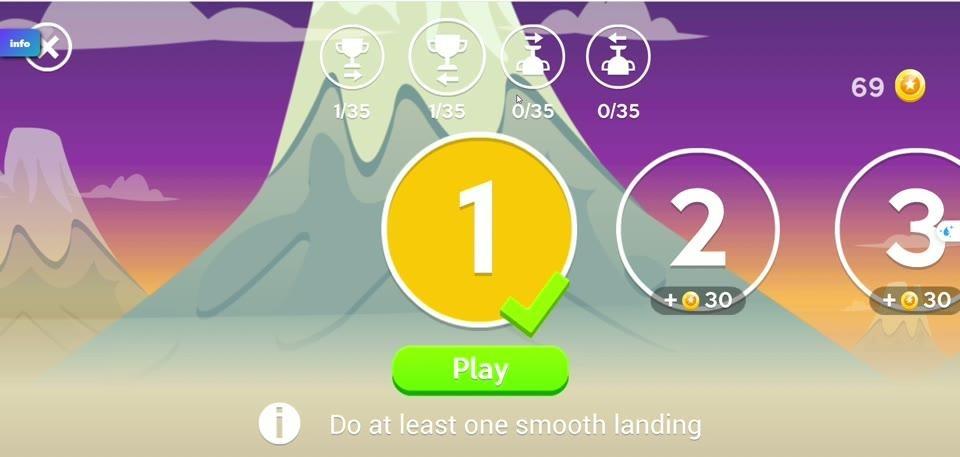
Figure 8. The Cup level-selection screen shows numbered stages, a smooth-landing objective, and a green Play button.
The numbered circles select Cup stages, and the green Play button sits below the selected stage. A label such as +30 indicates a coin reward for completing the relevant level, not a price to enter it. Meeting challenge goals earns the listed rewards and can unlock further content. Small goal counters show progress in the current Cup task; the crown symbol at the upper right represents achievement or ranking progress rather than your number of lives or levels.
Appearance Choices and Useful Screen Cues
The selection screen lets you browse ball skins, environments, and time-of-day or weather looks. Its fraction counters tell you how many options are unlocked in each category: for example, 1/30 ball looks, 2/8 environments, and 4/9 time settings. Large round previews show choices, and the green Use button applies a choice you have already unlocked. Pressing Use does not spend another coin. These options change the look of play, not the ball's scoring rules or its power.

Figure 9. The customization menu shows round previews, unlock counters, and the green Use button.
For a quick check during a run, the central white number shows your height-line score, while coin and crown indicators occupy the upper-right area. A small blue Info tab at the upper left opens our game menu. The simple display keeps the next slope and the ball's position easy to follow.
Visual Style
Our desert setting uses a turquoise-to-mint sky, soft green hill layers, rounded translucent clouds, and a pale-yellow track shaded with orange. The white ball, its speed streak, and the thin height marker stand out clearly against those broad colors. You can spot the next valley without a busy background competing for attention.

Figure 10. Soft green hills and a turquoise sky frame the golden dune course and its white score line.
The mountain setting changes the mood: a huge gray-blue snowy peak rises over a violet-and-pink sunset, while the playable ground turns into rust-colored rock. Some Cup scenes even display this landscape in an inverted orientation as part of that stage's world and viewpoint. The scenery changes, but the ball and the contour you must meet remain the focus.
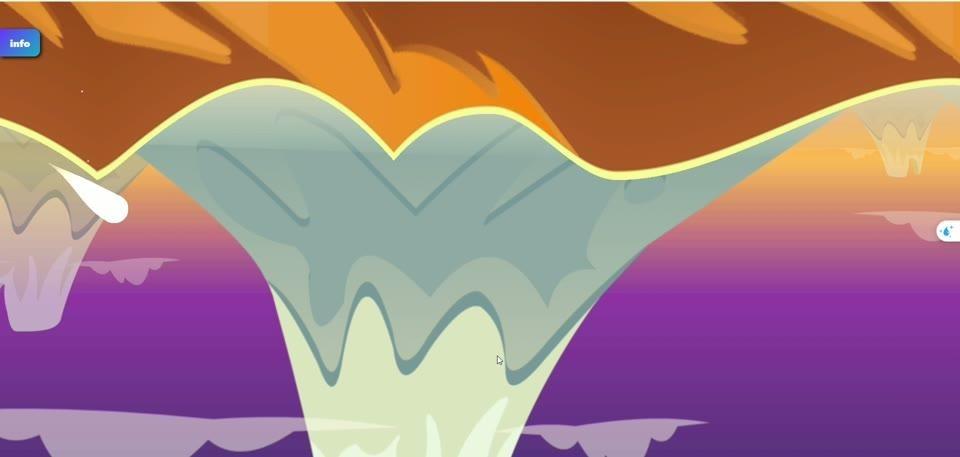
Figure 11. An inverted mountain scene presents the rocky course against a purple twilight sky.
Standout Features
Curve Rush gives every leap two distinct tests: reaching high enough to cross a visible point line and returning gently enough to keep the run alive. That makes a huge jump exciting without making a rough landing a success. The combination of height points, landing streaks, and separate collectible coins gives you different reasons to shape each flight.
There is a useful contrast with Alto's Odyssey, an endless sandboarding game built around travel through different desert biomes. [8] Our game centers on a single rolling ball, a clear airborne height threshold, and the choice between open-ended high-score runs and Cup stages with specific finishing goals. Try Curve Rush on slope3.com and see how many good landings you can string together.
Controls
PC
1. While the ball rolls downhill, press and hold Space, the Up Arrow, or the left mouse button to build speed and momentum.
2. Release that key or mouse button to launch the ball into the air. The moment you release affects how high it rises and when it returns to the ground.
3. After a safe touchdown, hold the same control on the next descent to gather momentum for another leap.
Mobile
1. Touch and hold the screen while the ball moves downhill to gain speed.
2. Lift your finger to launch the ball upward.
3. As the ball falls, touch and hold again to adjust the landing toward the next downhill slope. Repeat after a gentle touchdown.
References
[1] Ski jumping. https://en.wikipedia.org/wiki/Ski_jumping
[2] Ski jumping hill. https://en.wikipedia.org/wiki/Ski_jumping_hill
[3] Construction point. https://en.wikipedia.org/wiki/Construction_point
[4] Landing in Ski Jumping: A Review About its Biomechanics and the Connected Injuries. https://doi.org/10.1007/s42978-020-00096-9
[5] Biomechanical Analysis of Ski Jumping Landing by means of Wearable Sensors. https://openalex.org/W3001369348
[6] Biomechanics research in ski jumping, 1991–2006. https://doi.org/10.1080/14763140701687560
[7] Ski flying. https://en.wikipedia.org/wiki/Ski_flying
[8] Alto's Odyssey. https://en.wikipedia.org/wiki/Alto%27s_Odyssey
Image Credits
Ruhesteinschanze-12-20-01.JPG — Globetrotter51 — ccby-sa3.0. https://commons.wikimedia.org/wiki/File:Ruhesteinschanze-12-20-01.JPG License: https://creativecommons.org/licenses/by-sa/3.0
Ski jumper on the summer slope at Okurayama (55525543808).jpg — Sergiy Galyonkin — ccby-sa4.0. https://commons.wikimedia.org/wiki/File:Ski_jumper_on_the_summer_slope_at_Okurayama_(55525543808).jpg License: https://creativecommons.org/licenses/by-sa/4.0