Concept and Inspiration
A tropical rainforest holds more than one world beneath its canopy. Leaves high overhead intercept much of the sunlight, so the understory remains shaded and supports plants adapted to lower light. [1] [2] Down on the forest floor, fallen leaves and wood become food for fungi and other decomposers, which help return nutrients to the ecosystem. [3]
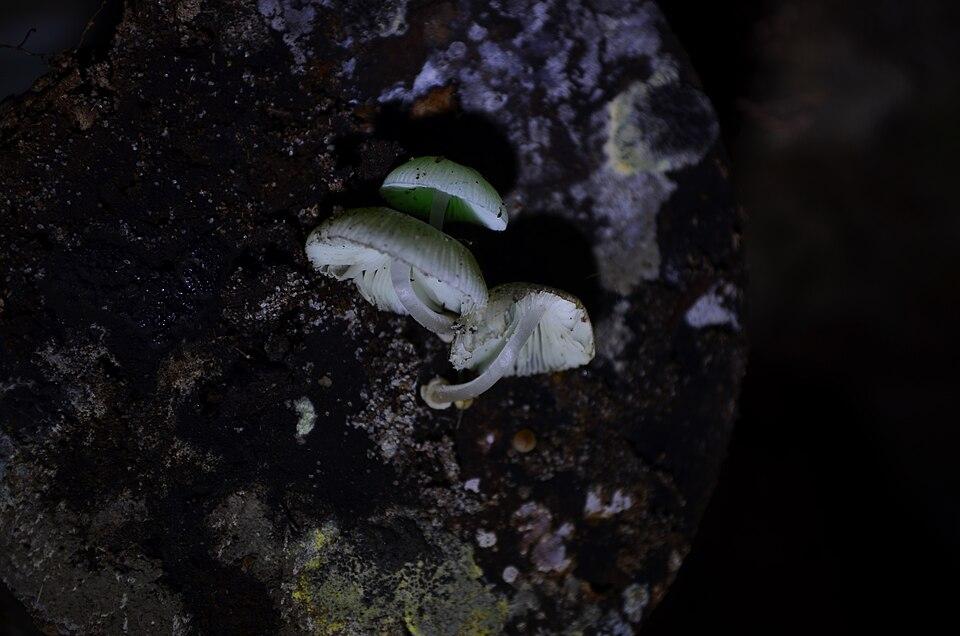
Figure 1. Pale Mycena chlorophos mushrooms growing on dark wood.
Photo: This image was created by user Sam (Ctoan) at Mushroom Observer , a source for mycological images. You can contact this user here . | ccby-sa3.0
In a few remarkable fungi, that shadowy setting comes with its own green glow. Bioluminescent mushroom species can emit visible light, making their delicate caps and gills stand out against a dark background. [4] Researchers have also documented luminous fungi on fallen wood and leaf litter beneath forest cover, where the surrounding darkness makes the light especially striking. [5]
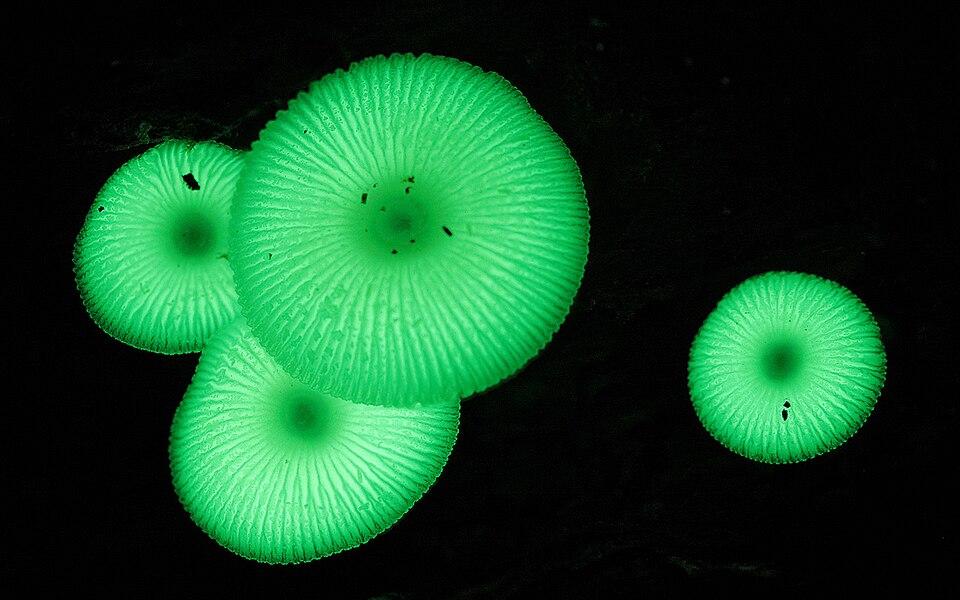
Figure 2. Green light shining from the gills of Mycena chlorophos mushrooms.
Photo: This image was created by user Steve Axford (steveaxford) at Mushroom Observer , a source for mycological images. You can contact this user here . | ccby-sa3.0
This glow comes from chemistry inside the fungus. Research identifies 3-hydroxyhispidin as a fungal luciferin involved in the light-producing reaction. [6] A luciferase enzyme helps turn that chemical process into visible light, and later work mapped enzymes in a pathway connecting fungal bioluminescence to caffeic acid. [7] [8] The result is a small natural spectacle: living light in a place where daylight struggles to reach.
We at slope3.com developed Avatar Game around a playful version of that contrast. Our blue traveler races through a giant mushroom jungle where dark stone shapes, vivid green edges, and bright cyan hazards fill the route. We chose that meeting of shadow and color to give the forest a mysterious mood while making the next safe foothold and the next danger easy to pick out. The real fungi offer the spark for the setting; the obstacle course is our own lively fantasy.
Story
Deep below a roof of enormous mushroom caps, a small blue traveler follows a thread of light through a forest that has forgotten the sun. A night storm has fractured the old stone path, leaving raised platforms hanging over black drops. Far beyond the trees, a distant ridge catches the first pale hint of morning. That is where the traveler hopes to arrive before the forest goes completely dark.
The trail is beautiful, but it offers no easy passage. White thorns rise from the ground like teeth, strange cyan growths crowd the narrow spaces, and broken towers force a choice between a careful leap and a dangerous fall. For a moment, the path climbs into the air. The traveler glides between a spiked roof and a spiked floor, following the thin corridor of safety through the shadows.
Each stretch brings another glimpse of the ridge. The traveler cannot mend every bridge or chase away the night, but every clean landing carries the journey farther. In this little forest tale, reaching the other side means keeping a fragile light moving, one brave leap at a time.
Gameplay
In Avatar Game, you guide a small blue-and-white helmeted traveler that runs forward automatically along a side-scrolling course. Time jumps to clear spikes, blocks, and gaps; when the route changes to Ship flight, adjust your height to pass between hazards above and below. Keep the traveler clear of obstacles and reach the end of the course to finish the level. A collision or fall ends the current attempt.
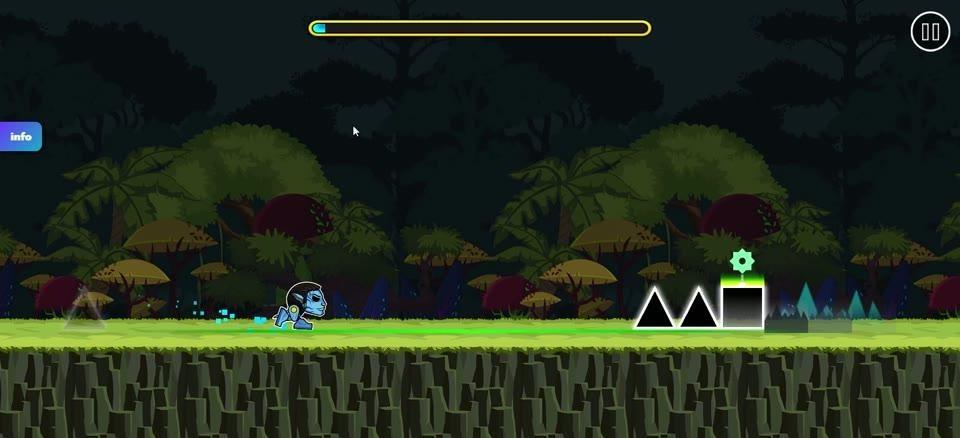
Figure 3. The blue traveler approaches white triangular spikes on a dark forest path.
The Traveler and the Terrain
Your runner is a compact, round figure with a bright blue-and-white helmet, easy to track against the dark scenery. Solid ground has a glowing yellow-green top edge, while short floating ledges offer higher places to land. Tall gray pillars and wide raised blocks have a square grid pattern that makes their shape stand out from the softer forest background.
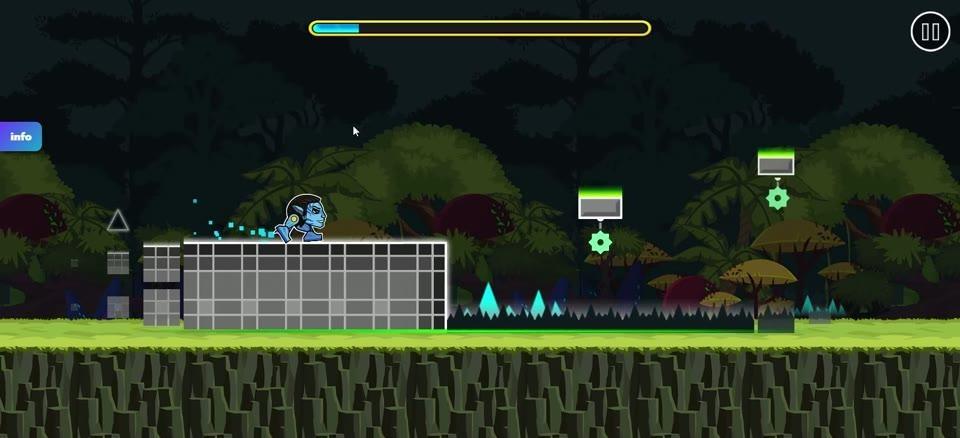
Figure 4. Grid-patterned gray platforms and luminous ledges shape an elevated obstacle course.
The course moves from relatively open stretches to tighter groups of structures. A landing on a green-topped ledge may give you a moment of solid footing, but the runner continues toward whatever comes next. Read the edge of each platform as carefully as the obstacle sitting on it.
Hazards and Safe Ground
Rows of thin white triangular spikes threaten the floor and, in some passages, the ceiling. Pointed cyan clusters add another bright danger near the route. Large gray blocks stand in the travel lane, and black gaps separate stretches of walkable ground. Spikes and solid obstacles must be avoided; falling into a gap also ends the attempt.
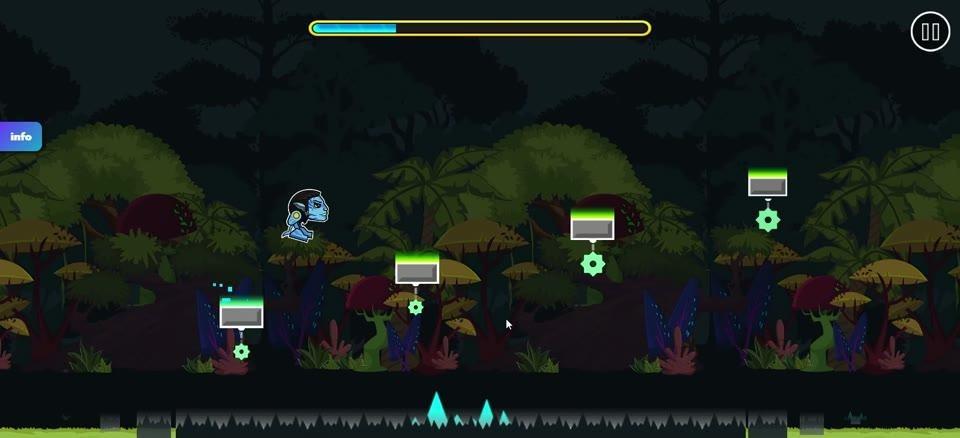
Figure 5. A break in the dark stone path leaves a gap between safe landing surfaces.
When a row of ground spikes leads into a gap, jump while the traveler still has solid ground beneath them. Clear the sharp points and land on the next platform, ready for another obstacle as the runner keeps moving. In Back on Track, jump pads launch the traveler high enough to clear tall walls; use that lift to reach safe ground beyond them.
Ship Flight
In Ship flight, press and hold the left mouse button to climb through a narrow lane, then release it to descend. Rise above spikes along the floor and drop beneath spikes overhead; hitting either row ends the attempt. An orange-red trail follows the airborne traveler against the black background, making its position easier to track.
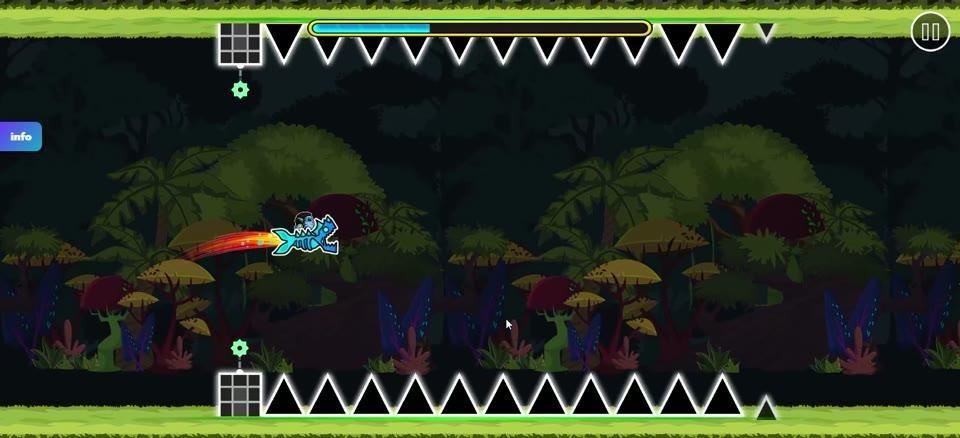
Figure 6. An airborne figure leaves an orange-red trail between white spikes above and below.
The task in these corridors is to stay inside the open space from one end to the other. The upper and lower spike rows can make the safe lane feel thin, so the important decision is whether the traveler needs more height or less.
Modes, Progress, and Outcomes
The level selection screen includes Stereo Madness, Back on Track, and Polargeist. On Back on Track, you can choose Normal Mode or Practice Mode. The yellow star marked 2 shows Back on Track's two-star difficulty rating. During a run, a slim bar near the top shows how far the traveler has progressed, while a small two-bar pause icon sits at the upper right.
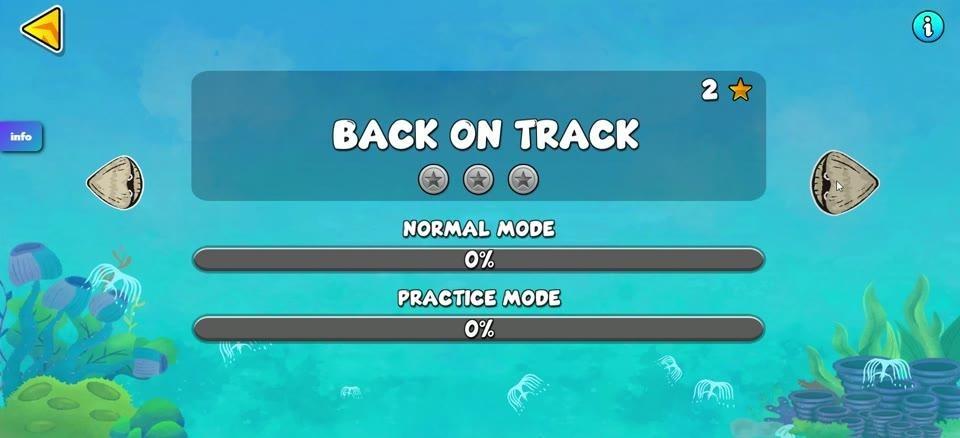
Figure 7. The turquoise Back on Track selection screen shows Normal Mode, Practice Mode, and a two-star difficulty badge.
The finish is the goal: reaching the end clears the level. Getting through a difficult group of spikes or watching the progress bar advance marks progress along that route, but the level is complete only when you make it all the way through. Your reward for a successful attempt is that completed course.
If you hit spikes or another blocking hazard, or fall off the path, that attempt ends. Normal Mode restarts the route from its beginning. Practice Mode lets you set checkpoints and resume from a checkpoint after a mistake, so you can work through a difficult section without repeating the entire course. A new attempt still has to survive the remaining obstacles to reach the finish.
Visual Style
We built the forest around strong, readable layers. Broad mushroom caps and dark tree silhouettes rise behind the route, while green, pink, purple, and blue plant shapes add small bursts of color. Dark stone platforms carry bright yellow-green rims; sharp white triangles and cyan clusters cut cleanly across them. The cheerful color accents make the jungle feel alive without hiding its hazards.
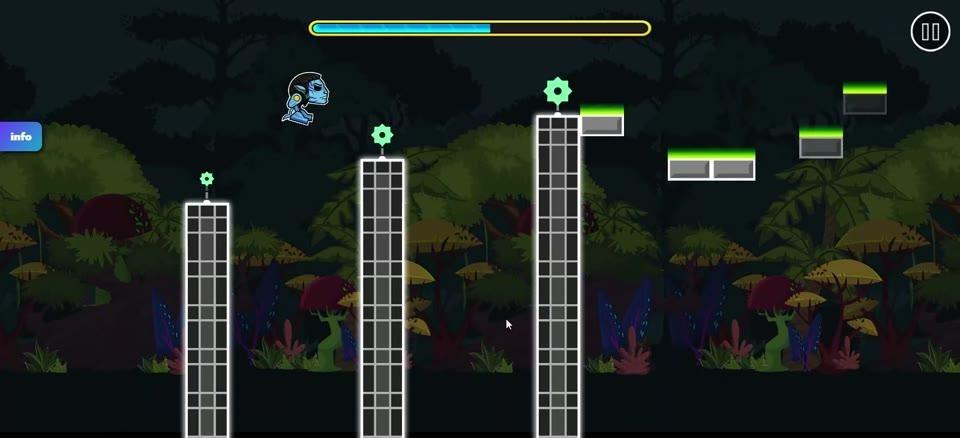
Figure 8. Bright-edged stone terrain stands against layered plants and giant mushroom silhouettes.
The menus offer a change of scene. Their luminous turquoise and blue panels have an underwater feel, while the actual runs take place in a dim, earthy landscape. That shift makes the first step into the mushroom jungle more dramatic. In the flying stretches, the orange-red trail adds a warm streak that contrasts with the cool spikes and shadowed terrain.
Standout Features
Avatar Game changes the decisions you make without changing the basic goal of reaching the finish. On the ground, success depends on the timing of a jump and the safety of the next landing. In Ship flight, the challenge becomes managing height through a corridor with hazards on both sides. The switch gives each route a different kind of pressure.
For comparison, The Impossible Game is known for guiding a moving cube past spikes and pits with a single-button jump. [9] Avatar Game uses that same kind of quick hazard reading during its running stretches, then adds airborne height control and a mushroom-forest setting. BIT.TRIP RUNNER takes another approach with rhythm-focused arcade running. [10] Here, the changing terrain and the choice between a ground jump and Ship flight keep your attention on the next opening.
Practice Mode also gives you a practical way to learn the hardest stretches: place a checkpoint, test the route ahead, and try the tricky passage again after a mistake. When you are ready to put the whole journey together, return to Normal Mode and aim for one clean finish. Play Avatar Game on slope3.com and follow the blue traveler into the glowing forest.
Controls
PC Controls
1. While the traveler is running on the ground, click the left mouse button, press Space, or press the Up arrow to jump over an approaching obstacle.
2. In Ship flight, press and hold the left mouse button to make the airborne traveler rise away from lower hazards.
3. Release the left mouse button during Ship flight to make the traveler descend beneath hazards above.
4. In Practice Mode, press Z to place a checkpoint. After a failed attempt, you resume from that checkpoint.
5. In Practice Mode, press X to remove a checkpoint.
Mobile Controls
1. During ground-running sections, tap the screen to make the blue traveler jump over an approaching obstacle.
References
[1] Tropical rainforest. https://en.wikipedia.org/wiki/Tropical_rainforest
[2] Understory. https://en.wikipedia.org/wiki/Understory
[3] Forest floor. https://en.wikipedia.org/wiki/Forest_floor
[4] List of bioluminescent fungi. https://en.wikipedia.org/wiki/List_of_bioluminescent_fungi
[5] Diversity, Distribution, and Evolution of Bioluminescent Fungi. https://doi.org/10.3390/jof11010019
[6] The Chemical Basis of Fungal Bioluminescence. https://doi.org/10.1002/anie.201501779
[7] Mechanism and color modulation of fungal bioluminescence. https://doi.org/10.1126/sciadv.1602847
[8] Genetically encodable bioluminescent system from fungi. https://doi.org/10.1073/pnas.1803615115
[9] The Impossible Game. https://en.wikipedia.org/wiki/The_Impossible_Game
[10] Bit.Trip Runner. https://en.wikipedia.org/wiki/Bit.Trip_Runner
Image Credits
2012-06-13 Mycena chlorophos (Berk. & M.A. Curtis) Sacc 227390.jpg — This image was created by user Sam (Ctoan) at Mushroom Observer , a source for mycological images. You can contact this user here . — ccby-sa3.0. https://commons.wikimedia.org/wiki/File:2012-06-13_Mycena_chlorophos_(Berk._%26_M.A._Curtis)_Sacc_227390.jpg License: https://creativecommons.org/licenses/by-sa/3.0
Mycena chlorophos (Berk. & M.A. Curtis) Sacc 77081.jpg — This image was created by user Steve Axford (steveaxford) at Mushroom Observer , a source for mycological images. You can contact this user here . — ccby-sa3.0. https://commons.wikimedia.org/wiki/File:Mycena_chlorophos_(Berk._%26_M.A._Curtis)_Sacc_77081.jpg License: https://creativecommons.org/licenses/by-sa/3.0