Concept and Inspiration
A square drawn on scrap paper can become a meeting place for two minds. Paper-and-pencil games need little more than a writing surface and something that leaves a mark, which helps explain why a quick round can fit into the gaps of an ordinary day. [1] At Slope3, we developed Tic Tac Toe around that familiar moment: two people facing the same small problem, each trying to see one move farther than the other.
Everyday writing surfaces also have a history of being used again and again. A writing slate, for example, could be cleared so its surface was ready for fresh marks. [2] A historic classroom photograph, with chalk writing and drawings spread across a large board, recalls that broader world of temporary lines. Our game carries the same satisfying rhythm: make your marks, find an outcome, and begin with a clear board.
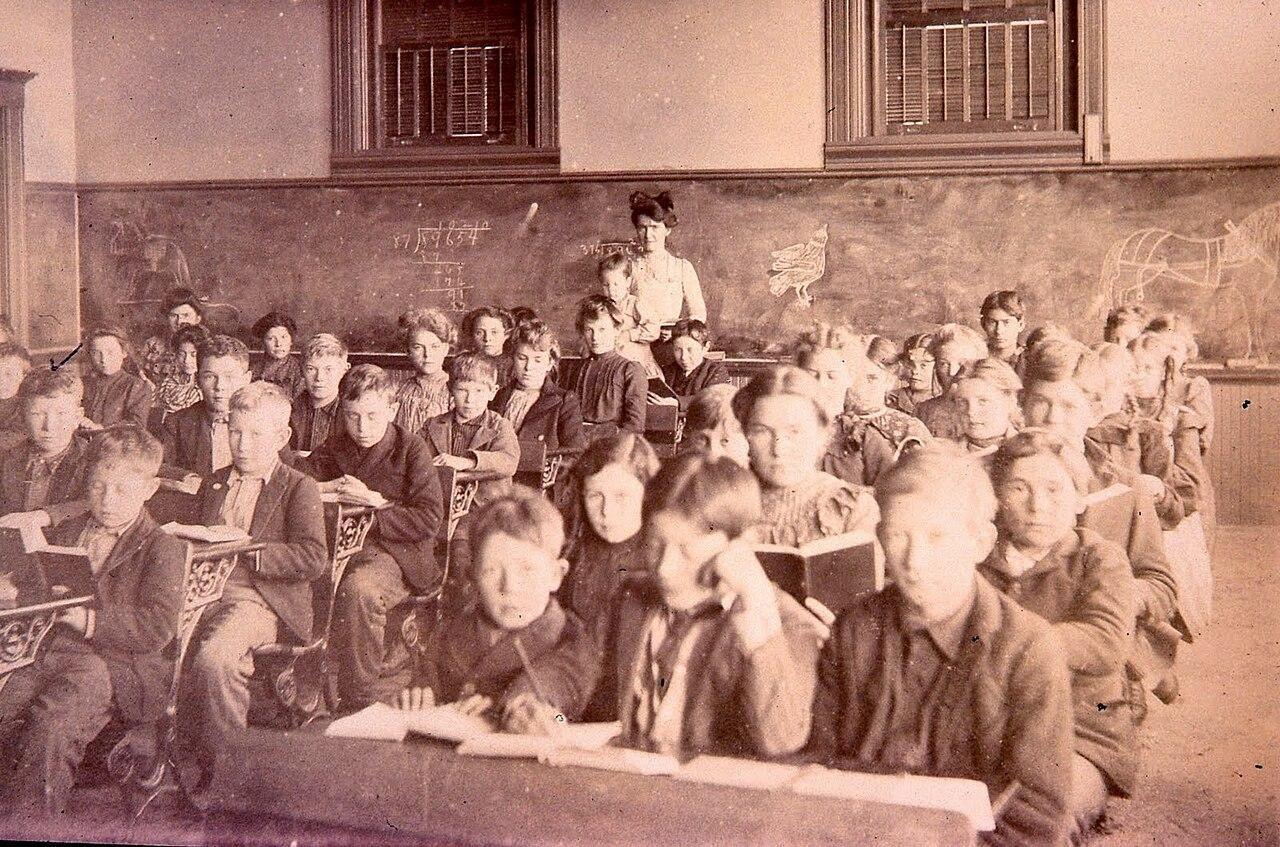
Figure 1. Historic classroom with students, a teacher, and chalk writing and drawings on a large board.
Photo: Unknown author Unknown author | publicdomain
A game board gives an otherwise ordinary surface a set of boundaries and shared rules. Boards have taken many forms across history, from ancient tabletop games to grids for abstract contests. [3] Even a wooden three-dimensional tic-tac-toe set, with carved crosses and round pieces, shows how recognizable the X-and-O idea can remain when its materials and shape change. Our version brings the contest back to a flat nine-square grid, dressed in warm wood tones.
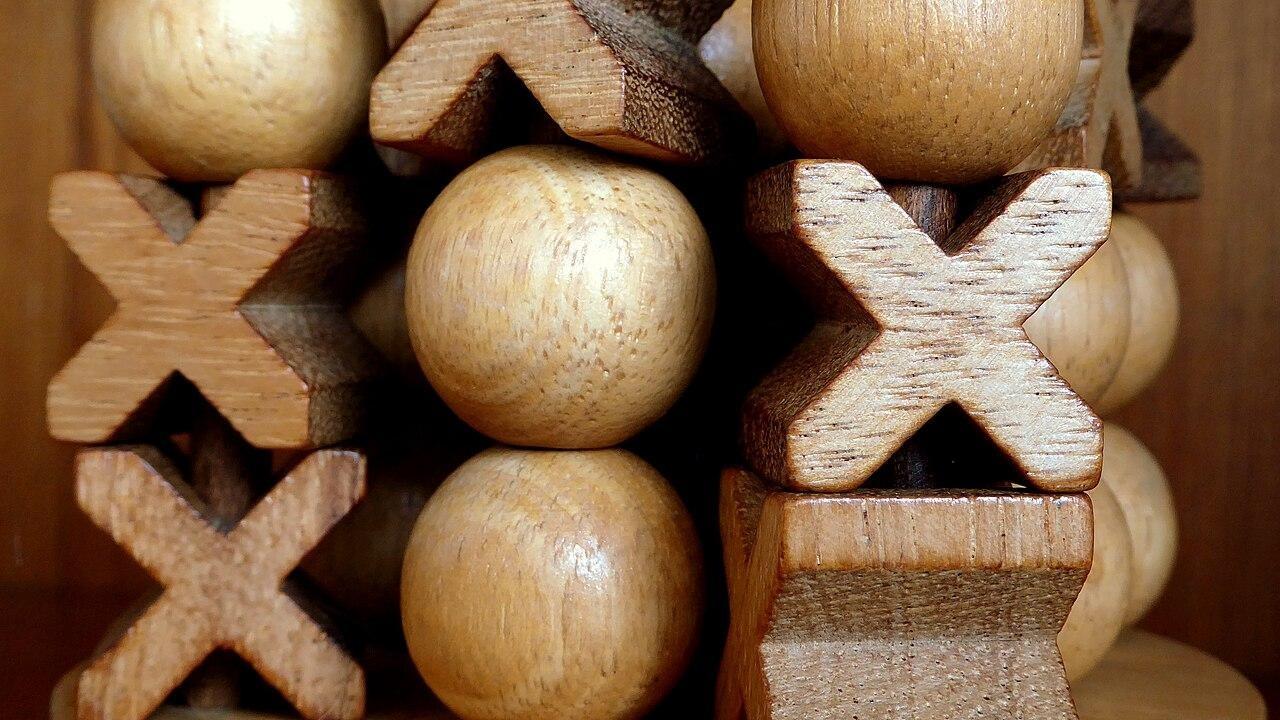
Figure 2. Carved wooden crosses and round pieces arranged as a three-dimensional tic-tac-toe set.
Photo: Chenspec | ccby-sa4.0
Public spaces have sometimes served as play surfaces, too. Research on ancient Athens examines patterns cut into stone pavements and steps, while also warning that identifying a carved pattern as a game board is not always straightforward. [4] A separate study documents game-board graffiti on blocks from the Roman theater at Nicaea. [5] These findings do not establish a family tree for modern tic-tac-toe; they reveal a larger human habit of making places to play wherever people gather.
That habit survives the move from a physical table to a screen. Research on contemporary board-game culture describes a continuing interest in hands-on social play alongside digital forms of gaming. [6] We chose a wooden look for Tic Tac Toe to preserve the feeling of a small, shared tabletop contest while making it easy to start another round online or against the computer.
The classic rule is almost disarmingly simple: two players place Xs and Os in a three-by-three grid, and three in a straight line wins. Perfect play can also bring the contest to a draw. [7] That narrow space between a winning line and a blocked one is our central idea: a tiny board that remembers a rivalry through its match tally, even as each round begins fresh.
Story
Rain has washed the chalk signs from the market stalls, and the town square is almost empty. Beneath a shop awning, a young sign painter named Mara finds an old wooden board left on a bench. Nine squares have been traced into its surface so many times that the corners feel smooth. Across the square, a traveling mapmaker named Eli recognizes it immediately. Years ago, their small contests could hold up an entire evening.
Mara believes a bold move can settle any argument. Eli would rather wait, study the empty spaces, and let an impatient opponent make the first mistake. They agree to decide who will paint the festival's new sign by playing a match. One round ends with a neat diagonal. The next fills with blocked paths and no winner. Each time the board is cleared, the town's old rivalry finds room for another beginning.
As the rain softens to a drizzle, they stop arguing about whose style is best. Mara notices how much patience a winning line can require; Eli discovers the pleasure of taking a chance. By the last round, the sign they want to make has become a shared idea. That imagined evening gives our Tic Tac Toe matches their spirit: the marks disappear, but the little victories, near misses, and friendly challenges give people a reason to return.
Gameplay
Your goal is to claim three squares in a straight line before your opponent does. You control one mark, O or X, and place it in an empty square of the wooden three-by-three board when it is your turn. The opponent marks another empty square; turns continue until someone completes a horizontal, vertical, or diagonal line, or all nine squares are filled. A completed round clears automatically, and the next round begins as the match moves toward its selected win target.
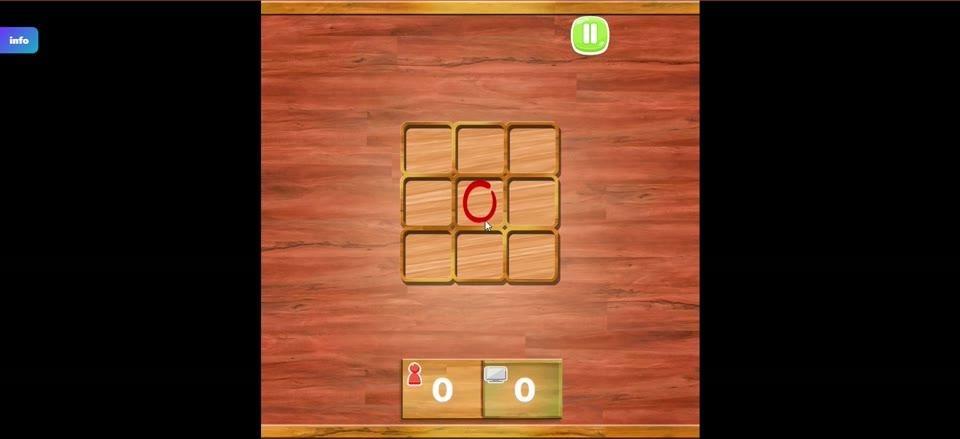
Figure 3. The wooden nine-square board with a red O placed in its center.
Choose Your Opponent and Match Length
The opening menu offers a person-versus-computer icon for a solo challenge and a person-versus-person icon for a match against an online opponent. Four numbered options, 1, 2, 3, and 4, set the number of round victories needed to win the match. Pick one opponent mode and a win target before playing. A one-win match is over quickly; a four-win match leaves more room for a comeback.
The Grid, the Marks, and Who Starts
Nine pale wooden squares form the playing area. Red circular Os and bright green Xs occupy squares as the round develops. Only empty squares accept a new mark, and a marked square stays taken until that round ends. For example, if O takes the center and X takes the upper-left corner, both squares are unavailable for the remaining turns of that round.
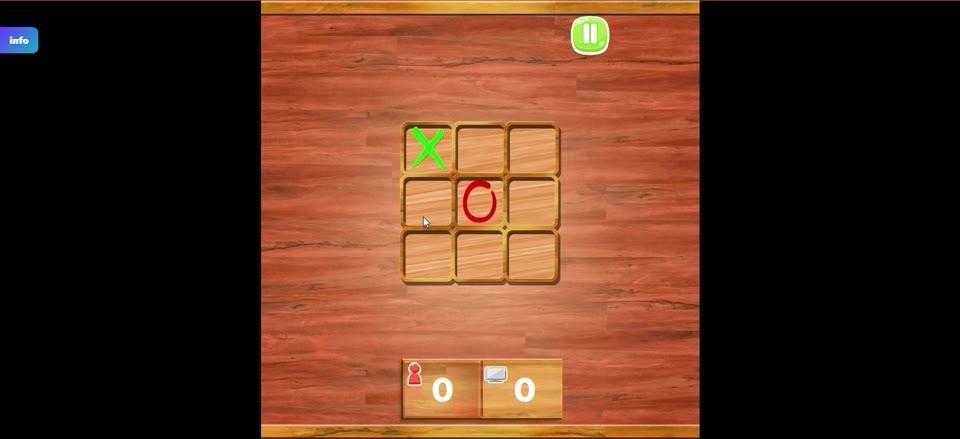
Figure 4. A green X in the upper-left square and a red O at the center of the grid.
O always opens a round. Against the computer, you play as the red O and the computer plays as the green X. In online play, the first round assigns O at random. After a decisive round, its winner receives O and starts the next round; after a draw, the players keep their previous marks. Online match scores follow the people playing, even when their X and O assignments switch.
Winning a Round, Drawing, and Winning the Match
Three matching marks across any row, down any column, or along either diagonal win one round. That victory adds one to the winner's match tally. When all nine cells are occupied without a completed line, the round is a draw and neither player gains a win. The board then clears for another round; clearing it does not erase the match tally.
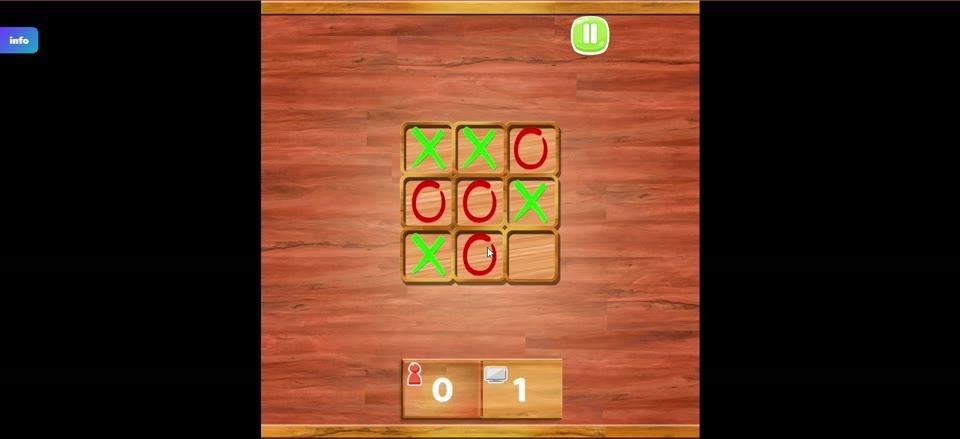
Figure 5. A nearly filled board above the two-player match tally after a round has been scored.
The match ends when one player reaches the chosen target of one, two, three, or four round wins. Reaching that target is the final victory; a single winning line is only progress toward it when you selected a longer match. The reward is the match result and the chance to outplay your rival, with no extra unlock or prize attached. Losing means the opponent reached the target first. After a lost match, a five-second advertisement countdown must finish before you can continue to another match.

Figure 6. A dark advertisement screen displaying a Continue countdown between matches.
At the end of a match, Play Again begins another contest and Home returns to the menu. A new match starts with both tallies reset to zero. The wooden board is also empty again, so neither player carries occupied squares into the rematch; only the next match's rounds determine its winner.
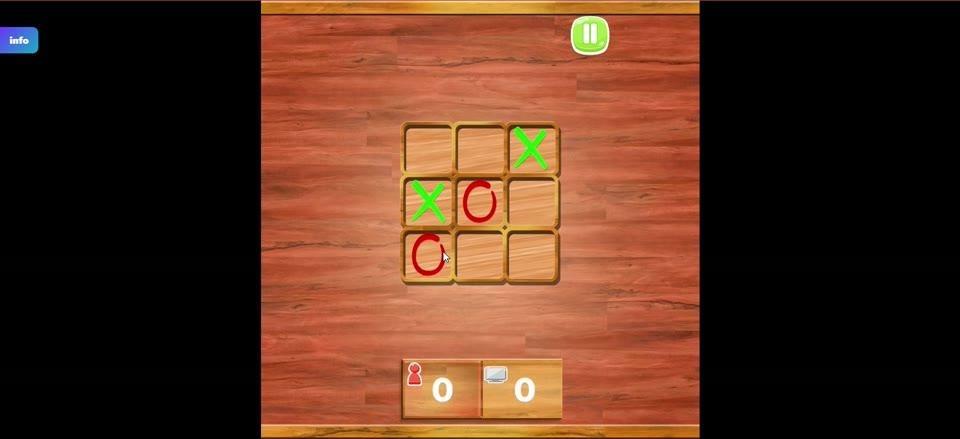
Figure 7. A fresh empty wooden grid with both match counters at zero.
Reading the Score and Screen Buttons
The gold-brown strip below the board keeps score by player. On the left, a white number beside a red person-shaped icon shows your round wins. On the right, a white number beside a light-blue flag-shaped icon shows your opponent's round wins. The positions keep their meaning even if the online players change between O and X.
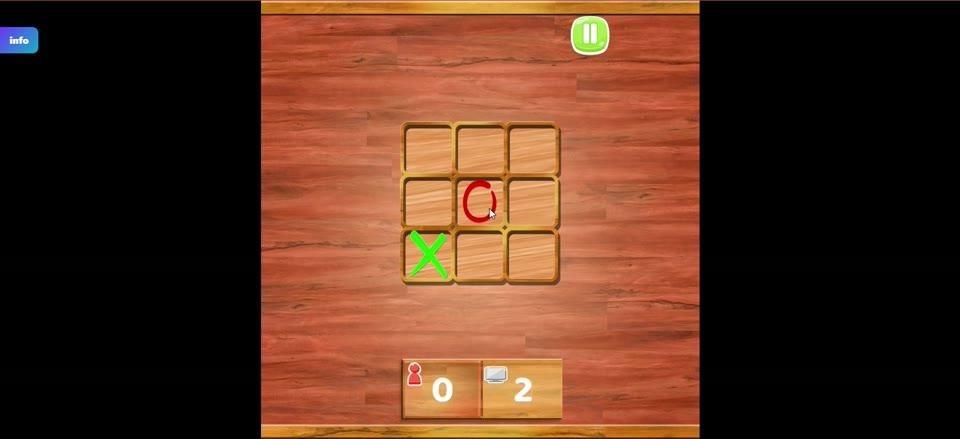
Figure 8. The wooden game board with the opponents' round-win counters displayed below.
A small blue Info icon at the upper left opens the Slope3 game menu. The small green circular button at the upper right, marked by two white vertical bars, pauses the game. While paused, use Resume to return to the current match. These buttons are separate from the nine squares where you place your marks.
Visual Style
Tic Tac Toe uses a narrow, upright play area with a reddish wood-grain background and dark space on either side. The board is divided into nine lightly raised, pale-brown squares by thin outlines. That contrast makes it easy to pick out each available space before choosing your next move.
The marks are deliberately bold: each O forms a thick red ring, while each X crosses the square in vivid lime green. We chose colors and shapes that remain distinct even when the board is almost full. At the bottom, the two white win counts sit on a warm gold-brown strip; the small blue Info and green pause buttons stay near the top corners without competing with the grid.
Standout Features
Traditional pencil-and-paper tic-tac-toe can be played with a hand-drawn board and a few marks. [1] Our game keeps that direct, alternating-turn challenge but adds a visible, continuing match tally and a choice of one to four round victories. You can settle a contest in a single quick round or keep playing through draws and changing leads.
The familiar three-in-a-row rule leaves room for a surprisingly tense finish: one open corner can complete a diagonal, while another move may block the only threat. The underlying game is known to end in a draw when both sides play perfectly. [7] Here the interest lies in the actual choices made from turn to turn, especially when a rematch gives each opponent another chance to read the board.
Computer and online opponent modes make the same little board useful in different moments. The wood texture, bright marks, and separate win counters tie each round to the next without crowding the screen. When you want a familiar contest with someone across the internet or a quick game on your own, find Tic Tac Toe on Slope3 and start with an empty square.
Controls
PC (Mouse)
1. On the opening menu, left-click the person-versus-computer or person-versus-person icon, then left-click a numbered 1, 2, 3, or 4 win target to set up your match.
2. On your turn, move the pointer to an empty square and left-click once. Your O or X appears there. A square that already contains a mark cannot be selected again during that round.
Mobile (Touch)
1. On the opening menu, tap the computer-opponent or person-versus-person icon, then tap the number 1, 2, 3, or 4 to choose the match's win target.
2. When it is your turn, tap an empty square on the wooden grid. Your mark fills that square. A square with an O or X is already occupied and cannot take another mark in the same round.
References
[1] Paper-and-pencil game. https://en.wikipedia.org/wiki/Paper-and-pencil_game
[2] Slate (writing). https://en.wikipedia.org/wiki/Slate_(writing)
[3] Game board. https://en.wikipedia.org/wiki/Game_board
[4] Pavement Designs and Game Boards from Public Spaces of Ancient Athens: A Review Across the Board. https://doi.org/10.2478/bgs-2022-0008
[5] GRAFFITI GAME BOARDS FOUND IN THE ROMAN THEATRE IN NICAEA. https://doi.org/10.21550/sosbilder.1983006
[6] Board games and postdigital consumer culture. https://openalex.org/W7135568003
[7] Tic-tac-toe. https://en.wikipedia.org/wiki/Tic-tac-toe
Image Credits
Pinto Colvig, classroom group portrait (Jacksonville, Oregon School Kids 1890 - 1960) (number 540).jpg — Unknown author Unknown author — publicdomain. https://commons.wikimedia.org/wiki/File:Pinto_Colvig,_classroom_group_portrait_(Jacksonville,_Oregon_School_Kids_1890_-_1960)_(number_540).jpg
3D Tic Tac Toe made of wood 10.jpg — Chenspec — ccby-sa4.0. https://commons.wikimedia.org/wiki/File:3D_Tic_Tac_Toe_made_of_wood_10.jpg License: https://creativecommons.org/licenses/by-sa/4.0